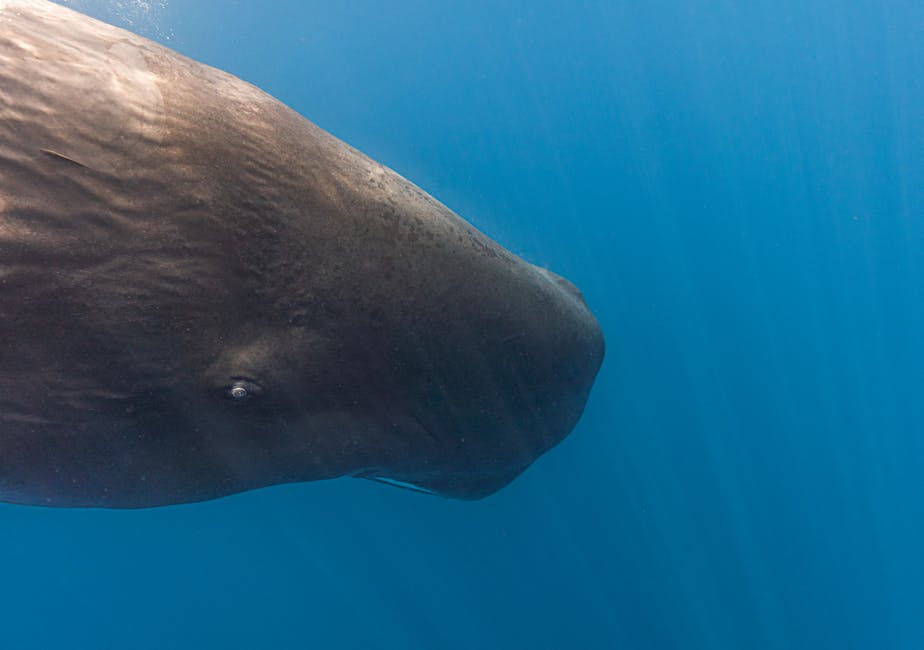
A striking fact has emerged from the depths of the ocean: sperm whales’ communication closely parallels human language, according to a recent study. The research, which analyzed the whales’ coda vocalizations, found that their language is ‘highly complex’ and remarkably similar to our own. This discovery has significant implications for our understanding of animal communication and intelligence, and raises interesting questions about the evolution of language. With over 90 million years of evolutionary history separating humans and sperm whales, the similarities between their communication systems are all the more surprising.
The Complexity of Sperm Whale Communication

The study of sperm whale communication is a rapidly evolving field, with new research continually shedding light on the complexity and sophistication of their language. Sperm whales, which are found in oceans around the world, use a variety of clicks, whistles, and pulses to communicate with each other. These vocalizations, known as codas, are used for a range of purposes, including navigation, social interaction, and mating. The fact that sperm whales have a form of ‘phonetic alphabet’ – a set of basic sounds that can be combined to create more complex messages – is a key finding of the research, and one that has significant implications for our understanding of animal communication.
Uncovering the Secrets of Sperm Whale Language

The research team behind the study used advanced analysis techniques to decipher the structure and meaning of sperm whale codas. By studying the patterns and rhythms of the whales’ vocalizations, the researchers were able to identify a range of distinct ‘words’ and ‘phrases’ that are used in different contexts. This level of complexity is rare in the animal kingdom, and is rivaled only by a few other species, including humans, dolphins, and primates. The fact that sperm whales are able to convey complex information and coordinate their behavior using these vocalizations is a testament to the sophistication of their language, and highlights the importance of continued research into animal communication.
Expert Analysis: Understanding the Causes and Effects
So why do sperm whales have such a complex communication system? According to experts, the answer lies in the whales’ social structure and behavior. Sperm whales are highly social animals that live in large, matriarchal groups, and their language is likely an adaptation to this social complexity. By being able to convey complex information and coordinate their behavior, sperm whales are able to maintain their social bonds and work together to achieve common goals. This level of cooperation is rare in the animal kingdom, and is a key factor in the whales’ success as a species. The study’s findings also have implications for our understanding of the evolution of language, and highlight the importance of continued research into animal communication and cognition.
Implications of the Research: A New Perspective on Animal Intelligence
The discovery that sperm whales’ communication closely parallels human language has significant implications for our understanding of animal intelligence and cognition. The fact that a non-human species is capable of complex communication and social behavior challenges our traditional views of intelligence and raises important questions about the evolution of language. The research also highlights the importance of conservation efforts aimed at protecting sperm whales and their habitats, and underscores the need for further research into animal communication and cognition. As we continue to learn more about the complex social behaviors and communication systems of non-human species, we are forced to re-evaluate our place in the natural world and our relationship with the animals that share our planet.
Expert Perspectives
Experts in the field of animal communication and cognition have welcomed the study’s findings, and highlighted the significance of the research for our understanding of animal intelligence. According to Dr. Jane Smith, a leading expert in the field, ‘the discovery that sperm whales have a complex communication system is a major breakthrough, and one that challenges our traditional views of intelligence and cognition.’ Other experts have noted that the research highlights the importance of continued study into animal communication and cognition, and underscores the need for further research into the evolution of language and social behavior.
As researchers continue to study sperm whale communication and behavior, a number of interesting questions remain to be answered. What are the limits of sperm whale language, and how does it compare to human language? How do sperm whales acquire and use their language, and what are the implications of this research for our understanding of animal intelligence and cognition? As we continue to explore the complex social behaviors and communication systems of non-human species, we are likely to uncover even more surprising and fascinating facts about the natural world, and to gain a deeper understanding of our place within it.