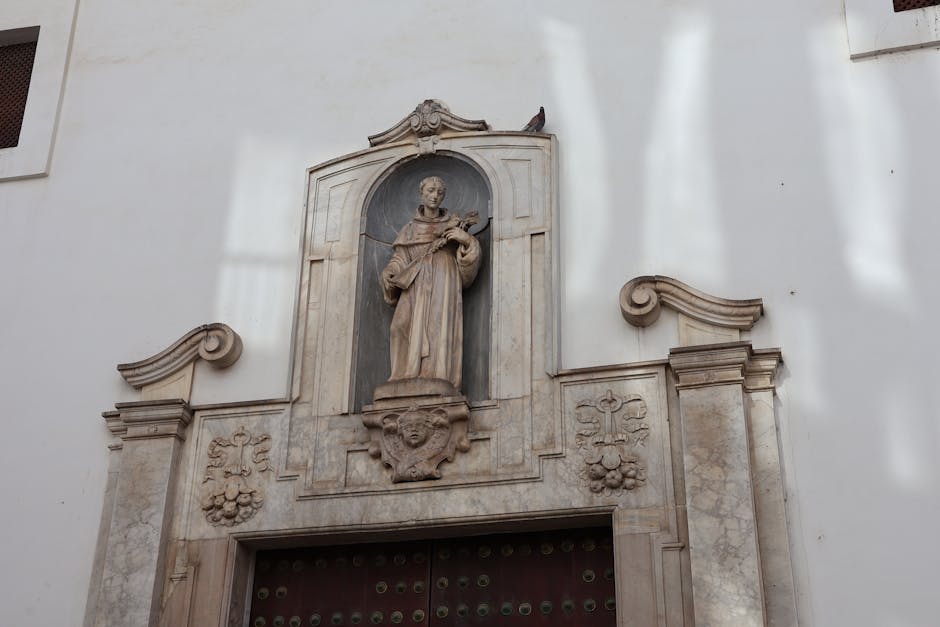
- Pope Leo XIV’s visit to Algeria highlights the enduring legacy of Christianity in the country and underscores his commitment to interfaith dialogue.
- The Pope’s choice of Annaba as the visit venue is deeply significant due to its association with Saint Augustine, a prominent figure in Christian theology.
- The Basilica of Saint Augustine in Annaba is a historic site marking the city’s strong ties with the Catholic Church and the saint’s life.
- Pope Leo XIV’s visit serves as a powerful reminder of the importance of religious diversity and tolerance in the region.
- The Pope’s visit aims to engage with Algeria’s rich cultural and religious heritage, promoting greater understanding and cooperation between faiths.
In a striking display of ecumenism and interfaith dialogue, Pope Leo XIV recently visited Algeria, a country with a small but vibrant Catholic community. The Pope’s visit was marked by a celebratory Mass at the historic Basilica of Saint Augustine in Annaba, where he hailed the local Catholic flock and paid tribute to the revered saint. This symbolic visit highlights the enduring legacy of Christianity in Algeria and underscores the Pope’s commitment to fostering greater understanding and cooperation between different faiths. With only a tiny fraction of Algeria’s population identifying as Catholic, the Pope’s visit serves as a powerful reminder of the importance of religious diversity and tolerance in the region.
The Significance of Saint Augustine

The choice of Annaba as the venue for the Pope’s visit is deeply significant, as the city is closely associated with the life and legacy of Saint Augustine, one of the most influential figures in Christian theology. Born in the nearby city of Thagaste, Saint Augustine went on to become a towering figure in Western Christianity, leaving an indelible mark on the development of Christian thought and practice. By celebrating Mass at the Basilica of Saint Augustine, the Pope is explicitly acknowledging the saint’s enduring importance and reinforcing the strong historical ties between Algeria and the Catholic Church. This visit also underscores the Pope’s desire to engage with the rich cultural and religious heritage of the region, and to promote a deeper understanding of the complex historical forces that have shaped the modern Middle East and North Africa.
A Symbolic Visit

The Pope’s visit to Algeria is being seen as a highly symbolic gesture, one that reflects his commitment to promoting interfaith dialogue and understanding. By reaching out to the small but vibrant Catholic community in Algeria, the Pope is sending a powerful message about the importance of religious tolerance and cooperation in a region often marked by conflict and division. The visit has also been welcomed by Algerian officials, who see it as an opportunity to strengthen ties with the Vatican and to promote a more nuanced understanding of the country’s complex cultural and religious identity. As the Pope navigates the complexities of Algeria’s religious landscape, he is being accompanied by a team of senior Vatican officials, who are working to foster greater cooperation and dialogue between the Catholic Church and other faith communities in the region.
Analysis and Implications
The Pope’s visit to Algeria has significant implications for the region, and is being closely watched by analysts and policymakers around the world. By engaging with the small but vibrant Catholic community in Algeria, the Pope is helping to promote a more nuanced understanding of the country’s complex cultural and religious identity. At the same time, the visit reflects the Pope’s broader commitment to promoting interfaith dialogue and understanding, and to fostering greater cooperation and tolerance between different faith communities. As the Pope looks to the future, he will be seeking to build on the momentum generated by this visit, and to promote a more peaceful and harmonious coexistence between different faiths in the region. With the help of experts and analysts, the Pope will be working to identify new opportunities for cooperation and dialogue, and to develop more effective strategies for promoting religious tolerance and understanding.
Regional Impact
The Pope’s visit to Algeria is likely to have a significant impact on the region, and will be closely watched by governments and faith communities around the world. As the Pope seeks to promote greater understanding and cooperation between different faiths, he will be looking to build on the strong historical ties between Algeria and the Catholic Church. At the same time, the visit reflects the Pope’s commitment to engaging with the complex cultural and religious heritage of the region, and to promoting a more nuanced understanding of the forces that have shaped the modern Middle East and North Africa. As the region continues to evolve and change, the Pope’s visit will be seen as an important milestone in the ongoing journey towards greater peace, harmony, and understanding between different faiths.
Expert Perspectives
Experts and analysts are offering a range of perspectives on the Pope’s visit to Algeria, reflecting the complexity and nuance of the issues at stake. Some have welcomed the visit as a powerful gesture of interfaith dialogue and understanding, while others have raised questions about the implications of the visit for the region’s delicate religious balance. As the debate continues, one thing is clear: the Pope’s visit to Algeria marks an important moment in the ongoing journey towards greater peace, harmony, and understanding between different faiths. By engaging with the small but vibrant Catholic community in Algeria, the Pope is helping to promote a more nuanced understanding of the country’s complex cultural and religious identity, and is sending a powerful message about the importance of religious tolerance and cooperation in the region.
As the Pope looks to the future, he will be seeking to build on the momentum generated by this visit, and to promote a more peaceful and harmonious coexistence between different faiths in the region. With the help of experts and analysts, the Pope will be working to identify new opportunities for cooperation and dialogue, and to develop more effective strategies for promoting religious tolerance and understanding. One key question that remains to be answered is how the Pope’s visit will be received by other faith communities in the region, and what implications it will have for the delicate religious balance of the Middle East and North Africa. As the region continues to evolve and change, the Pope’s visit will be seen as an important milestone in the ongoing journey towards greater peace, harmony, and understanding between different faiths.