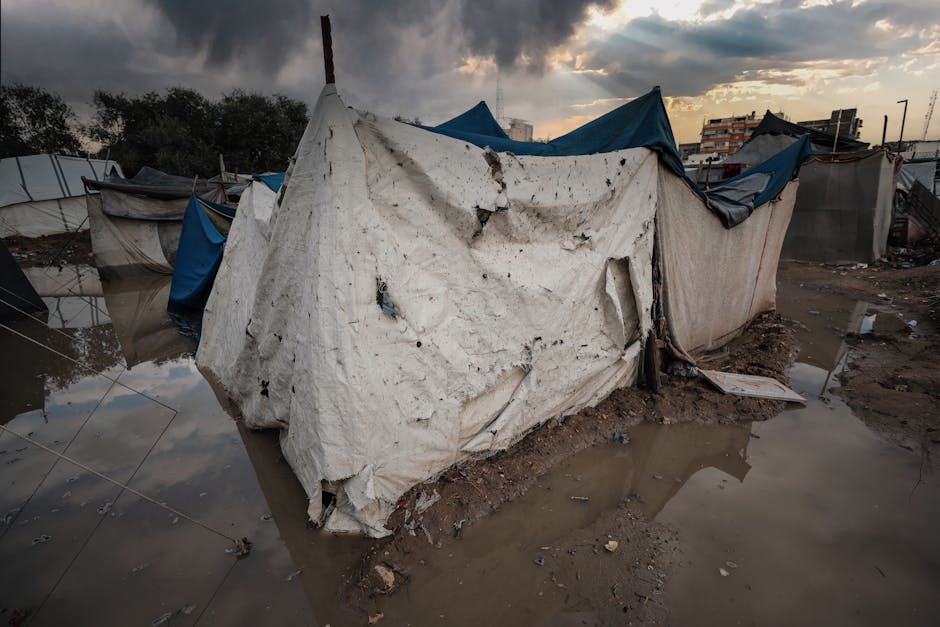
- Israel’s 16-year blockade of Gaza has led to a severe humanitarian crisis, with medical facilities on the verge of collapse.
- The blockade has resulted in a significant increase in mortality rates, particularly among vulnerable groups like children, women, and the elderly.
- Unemployment rates in Gaza have soared to over 50% and poverty affects over 70% of the population due to the blockade.
- The Gaza Strip’s economy has been severely impacted, with severe shortages of essential supplies like fuel, food, and medicines.
- The blockade has restricted movement of people and goods, leading to a significant deterioration in living standards for Palestinians.
The Gaza Strip, home to over 2 million Palestinians, is facing an unprecedented humanitarian crisis as Israel’s blockade of the territory enters its 16th year. A striking fact is that the World Health Organization (WHO) has reported that the Gaza Strip’s medical facilities are on the verge of collapse, with many hospitals struggling to provide even basic healthcare services due to severe shortages of fuel, medicines, and equipment. This has resulted in a significant increase in mortality rates, particularly among vulnerable groups such as children, women, and the elderly. The situation is further exacerbated by the fact that the Gaza Strip’s economy has been severely impacted by the blockade, with unemployment rates soaring to over 50% and poverty rates affecting over 70% of the population.
Blockade and Its Consequences

The Israeli blockade of the Gaza Strip, which was imposed in 2007, has had a devastating impact on the territory’s infrastructure, economy, and humanitarian situation. The blockade has restricted the movement of people and goods in and out of the Gaza Strip, resulting in severe shortages of essential supplies such as fuel, food, and medicines. This has led to a significant deterioration in living standards, with many Palestinians struggling to access basic necessities such as healthcare, education, and sanitation. The situation is further complicated by the fact that the Gaza Strip’s border with Egypt has also been largely closed, leaving the territory with limited access to the outside world.
Key Players and Their Roles

The Israeli government has been at the center of the blockade, with Prime Minister Benjamin Netanyahu’s administration maintaining that the restrictions are necessary to prevent the entry of weapons and militants into the Gaza Strip. However, Palestinian officials and human rights groups have argued that the blockade is a form of collective punishment, which is illegal under international law. The United Nations has also been critical of the blockade, with the UN Secretary-General António Guterres calling for an immediate lifting of the restrictions to prevent a humanitarian catastrophe. Other key players, including the European Union and the United States, have also urged Israel to ease the blockade and allow for the free movement of people and goods in and out of the Gaza Strip.
Analysis of the Crisis
The crisis in the Gaza Strip is a complex issue, with multiple factors contributing to the humanitarian crisis. One of the main causes of the crisis is the Israeli blockade, which has restricted the movement of people and goods in and out of the territory. This has resulted in severe shortages of essential supplies, including fuel, food, and medicines. The situation is further exacerbated by the fact that the Gaza Strip’s economy has been severely impacted by the blockade, with unemployment rates soaring to over 50% and poverty rates affecting over 70% of the population. Experts have also pointed to the role of international donors, who have failed to provide adequate funding to support the humanitarian response in the Gaza Strip. According to the UN, the humanitarian response plan for the Gaza Strip is currently facing a funding shortfall of over 50%, which is further exacerbating the crisis.
Implications of the Crisis
The implications of the crisis in the Gaza Strip are far-reaching, with the humanitarian situation likely to deteriorate further unless urgent action is taken. The crisis is not only affecting the Palestinian population but also has regional and international implications. The blockade has created a sense of desperation and frustration among Palestinians, which has contributed to an increase in militant activity and violence. The crisis is also having a significant impact on the Israeli economy, with the blockade costing the Israeli government millions of dollars each year. Furthermore, the crisis is damaging Israel’s international reputation, with many countries and organizations criticizing the blockade as a form of collective punishment.
Expert Perspectives
Experts have expressed contrasting viewpoints on the crisis in the Gaza Strip, with some arguing that the Israeli blockade is necessary to prevent the entry of weapons and militants into the territory. However, others have argued that the blockade is a form of collective punishment, which is illegal under international law. According to Dr. Sara Roy, a senior research scholar at Harvard University, ‘the blockade is a deliberate policy of engineering starvation, and it is having a devastating impact on the Palestinian population.’ In contrast, Israeli officials have maintained that the blockade is necessary to protect Israel’s security interests. As Dr. Efraim Inbar, the president of the Jerusalem Institute for Strategic Studies, has argued, ‘the blockade is a necessary measure to prevent the entry of weapons and militants into the Gaza Strip, and it is not a form of collective punishment.’
Looking forward, it is clear that the crisis in the Gaza Strip will require a comprehensive and sustainable solution. This will involve not only the lifting of the Israeli blockade but also the provision of adequate funding to support the humanitarian response. The international community will need to play a critical role in supporting the humanitarian response and in urging the Israeli government to ease the blockade. As the situation continues to deteriorate, it is essential that the international community takes urgent action to prevent a humanitarian catastrophe and to support the Palestinian population in their time of need. One of the key questions that remains to be answered is how the international community will respond to the crisis, and whether they will be able to provide a comprehensive and sustainable solution to the humanitarian crisis in the Gaza Strip.