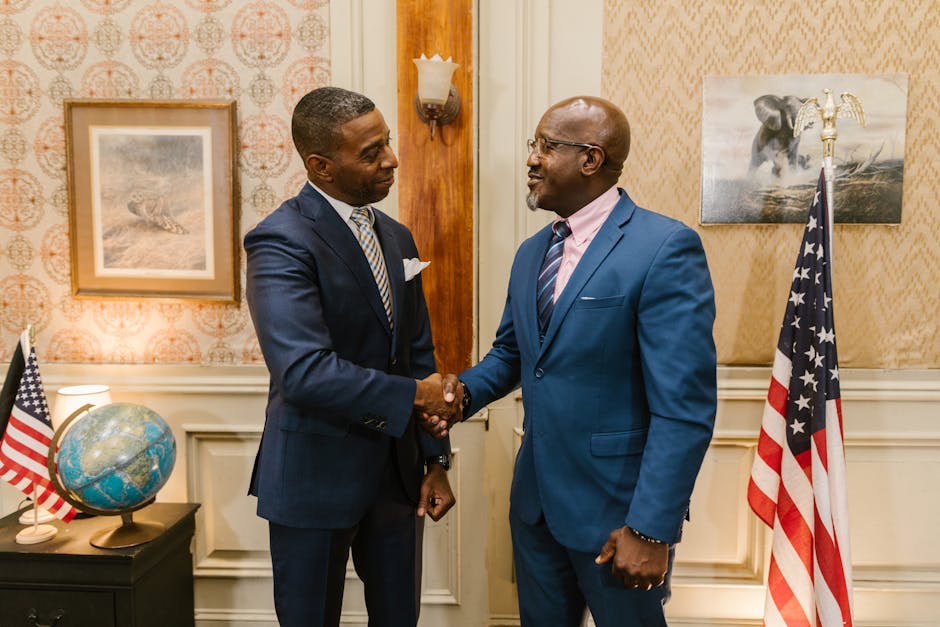
- South Africa appointed Roelf Meyer, a former apartheid-era negotiator, as its new ambassador to the United States.
- Meyer’s appointment is seen as a strategic move to navigate the complex relationship between South Africa and the US.
- The move comes after President Trump expelled the previous South African ambassador in 2025.
- Roelf Meyer has played a key role in shaping South Africa’s transition from apartheid to democracy.
- The appointment marks a significant shift in South Africa’s diplomatic approach with the United States.
In a move that has sent shockwaves through diplomatic circles, South Africa has appointed Roelf Meyer, a former apartheid-era negotiator, as its new ambassador to the United States. This development comes on the heels of the expulsion of the previous South African ambassador by President Donald Trump in 2025, marking a significant shift in the country’s diplomatic approach. Meyer’s appointment is seen as a strategic move by the South African government to navigate the complex and often tumultuous relationship with the United States. With a career spanning over three decades, Meyer has been instrumental in shaping South Africa’s transition from apartheid to democracy, making his appointment a fascinating and potentially pivotal moment in the country’s diplomatic history.
A New Chapter in US-South Africa Relations

The appointment of Roelf Meyer as the US ambassador is a timely reminder of the evolving nature of international relations. As the world grapples with geopolitical tensions, economic uncertainty, and social unrest, the diplomatic corps plays a vital role in fostering cooperation and understanding between nations. South Africa, in particular, has been seeking to strengthen its ties with major world powers, including the United States, as it navigates its own domestic challenges and regional responsibilities. The expulsion of the previous ambassador by President Trump highlighted the fragility of these relationships, making Meyer’s appointment a critical step towards mending fences and exploring new avenues of cooperation.
Meyer’s Background and the Road to Washington

Roelf Meyer’s career is a testament to his enduring commitment to public service and his ability to adapt to changing political landscapes. As a key figure in the apartheid-era government, Meyer was instrumental in the negotiations that led to South Africa’s transition to democracy. His involvement in the drafting of the country’s constitution and his subsequent role in the Government of National Unity underscore his capacity for compromise and leadership. Meyer’s appointment as US ambassador is not without controversy, however, given his complex past and the sensitivity of his new role. Despite this, his experience and diplomatic acumen make him an intriguing choice for this critical position, and his success will depend on his ability to navigate the intricacies of US-South Africa relations.
Analysis of the Appointment and Its Implications
The decision to appoint Roelf Meyer as US ambassador has been subject to intense scrutiny, with many analysts pointing to the potential benefits and drawbacks of this move. On one hand, Meyer’s experience and knowledge of the US political landscape could prove invaluable in strengthening bilateral ties and promoting South African interests abroad. On the other hand, his apartheid-era legacy may complicate relations with certain segments of the US political establishment and civil society. Furthermore, the appointment highlights the ongoing challenges faced by South Africa in balancing its domestic priorities with its international obligations. As the country seeks to assert its influence on the global stage, it must also contend with the historical baggage of its past and the expectations of its citizens for a more equitable and just society.
Implications for US-South Africa Relations
The implications of Roelf Meyer’s appointment as US ambassador are far-reaching and multifaceted. For South Africa, the move represents an opportunity to reboot its relationship with the United States and explore new areas of cooperation, from trade and investment to security and cultural exchange. For the United States, Meyer’s appointment presents a chance to reengage with a key partner in Africa and advance shared interests in the region. However, the success of this endeavor will depend on the ability of both countries to navigate their differences and find common ground. The appointment also underscores the importance of diplomatic relations in shaping the trajectory of international affairs and the need for visionary leadership in times of uncertainty.
Expert Perspectives
Experts have weighed in on the significance of Roelf Meyer’s appointment, offering contrasting viewpoints on the potential impact of this move. Some have hailed the decision as a masterstroke, citing Meyer’s experience and diplomatic prowess as key assets in strengthening US-South Africa relations. Others have expressed skepticism, pointing to the potential risks and challenges associated with Meyer’s complex past. As one analyst noted, “The appointment of Roelf Meyer as US ambassador is a bold move that reflects the South African government’s desire to think outside the box and explore new avenues of cooperation with the United States.” Another expert cautioned, “However, the success of this endeavor will depend on Meyer’s ability to navigate the intricacies of US politics and build trust with his American counterparts.”
As the diplomatic community waits with bated breath to see how Meyer’s appointment will play out, one thing is clear: the coming months will be crucial in determining the trajectory of US-South Africa relations. Will Meyer’s experience and diplomatic acumen be enough to overcome the challenges ahead, or will the ghosts of the past continue to haunt this critical relationship? Only time will tell, but one thing is certain – the appointment of Roelf Meyer as US ambassador marks a new chapter in the complex and often tumultuous history of US-South Africa relations, and the world will be watching with great interest.