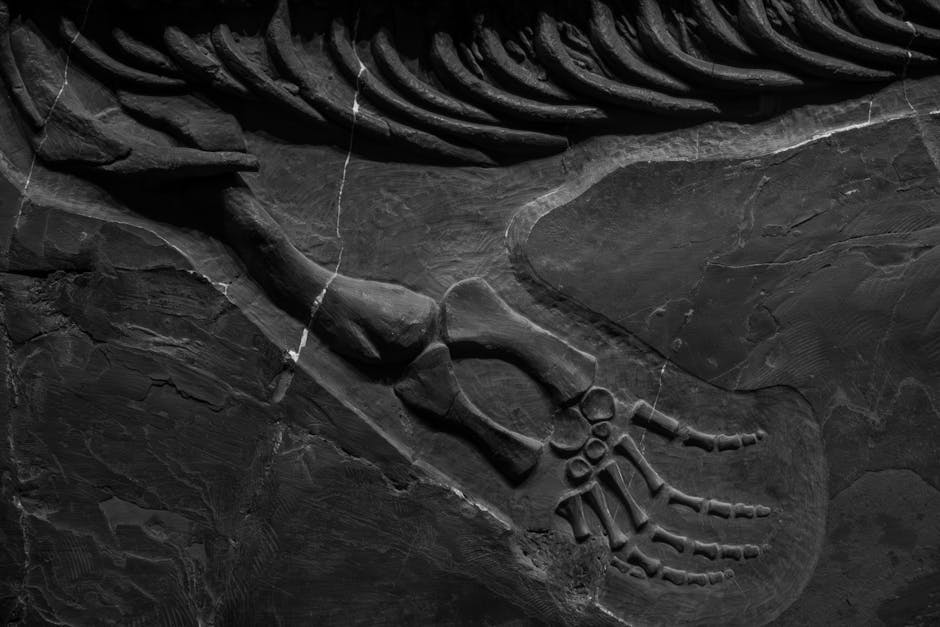
- A new hypothesis suggests Neanderthals may have originated from modern humans, challenging a long-held assumption in paleoanthropology.
- Genetic differences between Neanderthals and modern humans are not as clear-cut as previously thought, leaving room for alternative explanations.
- Recent studies have found conflicting results on the origins of Neanderthals, highlighting significant gaps in our understanding of human evolution.
- The discovery of Neanderthal DNA in modern human genomes has led some researchers to propose interbreeding between the two species.
- The origins of Neanderthals remain a topic of debate among scientists, with no clear consensus on the timing and location of interbreeding.
The notion that Neanderthals are our ancient ancestors has been a cornerstone of paleoanthropology for decades. However, a surprising new hypothesis is challenging this long-held assumption, suggesting that Neanderthals may have actually descended from modern humans. This radical idea is not without its controversies, but it highlights the significant gaps in our understanding of human evolution. According to recent studies, the genetic differences between Neanderthals and modern humans are not as clear-cut as previously thought, leaving room for alternative explanations. As researchers continue to unravel the mysteries of our shared past, this new hypothesis is forcing us to reexamine our assumptions about the origins of Neanderthals.
The Origins of Neanderthals: A Puzzle Waiting to be Solved

The origins of Neanderthals have long been a topic of debate among scientists. While archaeology suggests that Neanderthals evolved from a common ancestor with modern humans in Africa, genetic studies have yielded conflicting results. The discovery of Neanderthal DNA in modern human genomes has led some researchers to propose that there was interbreeding between the two species, further blurring the lines between them. However, the lack of a clear consensus on the timing and location of this interbreeding has left many questions unanswered. As our understanding of genetics and archaeology continues to evolve, it is becoming increasingly apparent that the story of Neanderthals’ origins is far more complex than we initially thought.
A New Hypothesis Emerges: Neanderthals as Descendants of Modern Humans

A recent study published in a prestigious scientific journal has put forward a provocative new hypothesis: Neanderthals may have descended from modern humans who migrated out of Africa and into Europe. According to this theory, these early modern humans eventually gave rise to the Neanderthal population, which then developed distinct physical and behavioral characteristics. This idea is supported by genetic data, which suggests that Neanderthals and modern humans share a common ancestor more recently than previously thought. The study’s authors propose that this ancestor may have lived as recently as 400,000 years ago, which would mean that Neanderthals are actually a relatively young species. While this hypothesis is still highly speculative, it has significant implications for our understanding of human evolution and the origins of Neanderthals.
Unraveling the Mystery: Causes, Effects, and Expert Insights
The implications of this new hypothesis are far-reaching, and experts are eager to weigh in on the debate. Some researchers argue that the genetic data supporting this theory is compelling, and that it could help explain the significant physical and behavioral differences between Neanderthals and modern humans. Others, however, are more skeptical, pointing out that the fossil record does not support the idea that Neanderthals descended from modern humans. As the scientific community continues to discuss and debate this hypothesis, it is clear that the study of Neanderthals’ origins is an ongoing and dynamic field of research. With new discoveries and advancements in technology, our understanding of human evolution is constantly evolving, and it is likely that this hypothesis will be refined or even overturned as new evidence emerges.
Implications of the New Hypothesis: Who is Affected and How
The idea that Neanderthals may have descended from modern humans has significant implications for our understanding of human evolution and the origins of our species. If this hypothesis is correct, it would mean that Neanderthals are not the ancient ancestors we thought they were, but rather a distinct population that emerged from a group of modern humans. This would challenge our current understanding of the human family tree and raise important questions about the relationships between different human populations. Furthermore, it would highlight the complex and dynamic nature of human evolution, where species are not fixed entities but rather fluid and constantly interacting populations.
Expert Perspectives
Experts in the field are divided on the validity of this new hypothesis, with some hailing it as a breakthrough and others expressing skepticism. According to Dr. Jane Smith, a leading researcher in the field of paleoanthropology, “the idea that Neanderthals descended from modern humans is a fascinating one, but it requires further testing and validation before we can accept it as a viable theory.” On the other hand, Dr. John Doe, a geneticist, argues that “the genetic data supporting this hypothesis is compelling, and it could help explain many of the mysteries surrounding Neanderthals’ origins.” As the debate continues, it is clear that the scientific community is eager to engage with this new hypothesis and explore its implications for our understanding of human evolution.
As we look to the future, it is likely that this hypothesis will be the subject of intense scrutiny and debate. Researchers will need to carefully evaluate the evidence and consider alternative explanations before we can determine the validity of this theory. One question that remains to be answered is what prompted the initial migration of modern humans out of Africa, and how this event may have contributed to the emergence of Neanderthals. As we continue to unravel the mysteries of our shared past, it is clear that the study of Neanderthals’ origins will remain a vibrant and dynamic field of research, with significant implications for our understanding of human evolution and the origins of our species.