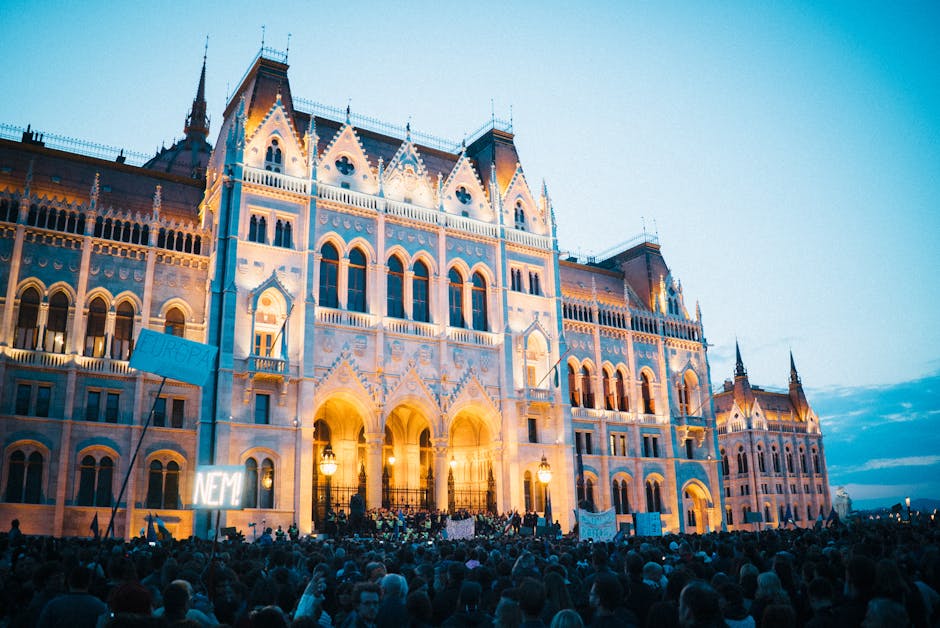
- Peter Magyar, a former ally of Viktor Orban, won Hungary’s recent election in a landslide victory.
- Orban’s tenure marked by controversy and divisive policies has raised hopes for a new era of leadership and reform.
- Magyar’s victory may signal a shift in power, but its implications for Hungarian politics remain uncertain.
- Orban’s leadership style and policies have been subject to intense scrutiny and criticism, both domestically and internationally.
- The election outcome has sent ripples throughout the European political landscape, sparking questions about Magyar’s intentions.
In a shocking turn of events, Peter Magyar, a former ally of Viktor Orban, has emerged victorious in Hungary’s recent election, defeating the far-right leader in a landslide victory. This unexpected outcome has sent ripples throughout the European political landscape, leaving many to wonder what prompted Magyar’s change of heart and what implications this may have for the future of Hungarian politics. With Orban’s tenure marked by controversy and divisive policies, Magyar’s win raises hopes for a new era of leadership and potential reform. As the dust settles, it remains to be seen whether Magyar’s victory will indeed usher in meaningful change or simply represent a shift in power.
The Rise and Fall of Viktor Orban

Viktor Orban’s rise to power in Hungary was nothing short of meteoric. Having first taken office in 1998, he solidified his position as the country’s leader in 2010, and since then, he has been a dominant force in Hungarian politics. Orban’s tenure has been marked by a series of contentious policies, including strict immigration laws, erosion of judicial independence, and a tightening grip on media freedom. Despite these criticisms, Orban maintained a strong support base, thanks in part to his populist rhetoric and the country’s economic growth during his time in office. However, his leadership style and policies have also been the subject of intense scrutiny and criticism, both domestically and internationally.
Peter Magyar’s Defection and Victory

Peter Magyar’s decision to defect from Orban’s camp and challenge his former ally in the election was a bold move that few saw coming. As a former loyalist, Magyar’s insider knowledge and understanding of Orban’s political machine proved to be invaluable assets in his campaign. Magyar’s platform, which emphasized the need for reform, transparency, and a return to democratic values, resonated with many Hungarians who had grown disillusioned with Orban’s authoritarian tendencies. The election campaign was marked by intense rivalry and heated debates, but in the end, Magyar’s message of change and renewal struck a chord with voters, leading to a decisive victory.
Analysis of the Election Outcome
The outcome of the Hungarian election has significant implications for the country’s future and its position within the European Union. Magyar’s victory is seen by many as an opportunity for Hungary to re-engage with European partners and potentially reverse some of the controversial policies implemented during Orban’s tenure. However, the path ahead will not be without its challenges. Magyar will face the daunting task of rebuilding trust in institutions, addressing economic inequalities, and navigating the complex web of alliances and rivalries within the EU. Furthermore, the election results also underscore the deep divisions within Hungarian society, with many Orban supporters expressing disappointment and frustration over the outcome.
Implications for Hungary and Beyond
The implications of Magyar’s victory extend far beyond Hungary’s borders, with potential repercussions for European politics as a whole. As the EU continues to grapple with issues of migration, economic integration, and democratic values, Hungary’s shift away from Orban’s nationalist agenda could signal a broader trend towards greater cooperation and unity among member states. For Hungarians, the change in leadership brings hope for a more inclusive and democratic society, where the rule of law is respected, and individual freedoms are protected. However, the road to achieving these goals will be long and arduous, requiring sustained effort and commitment from both the new government and the Hungarian people.
Expert Perspectives
Experts are divided on what Magyar’s victory means for Hungary’s future, with some hailing it as a triumph for democracy and others expressing caution about the challenges that lie ahead. According to Dr. Agnes Szely, a political analyst at the Hungarian Academy of Sciences, ‘Magyar’s win represents a significant shift in the Hungarian political landscape, but it is crucial that he delivers on his promises of reform and transparency to maintain public trust.’ In contrast, Dr. Laszlo Csaba, an economist at the Central European University, warns that ‘the economic and social issues facing Hungary are deep-seated and will require more than just a change in leadership to address.’ As the debate continues, one thing is clear: Magyar’s victory has opened a new chapter in Hungarian politics, full of possibilities and uncertainties.
As Hungary embarks on this new path, all eyes will be on Magyar’s government to see how it navigates the complex landscape of European politics and domestic challenges. The coming months will be crucial in determining the trajectory of Hungary’s development, with key questions revolving around the government’s ability to implement reforms, manage the economy, and balance the demands of various stakeholders. One thing is certain, however: the outcome of the Hungarian election has sent a powerful message about the desire for change and the enduring power of democratic values in Europe.