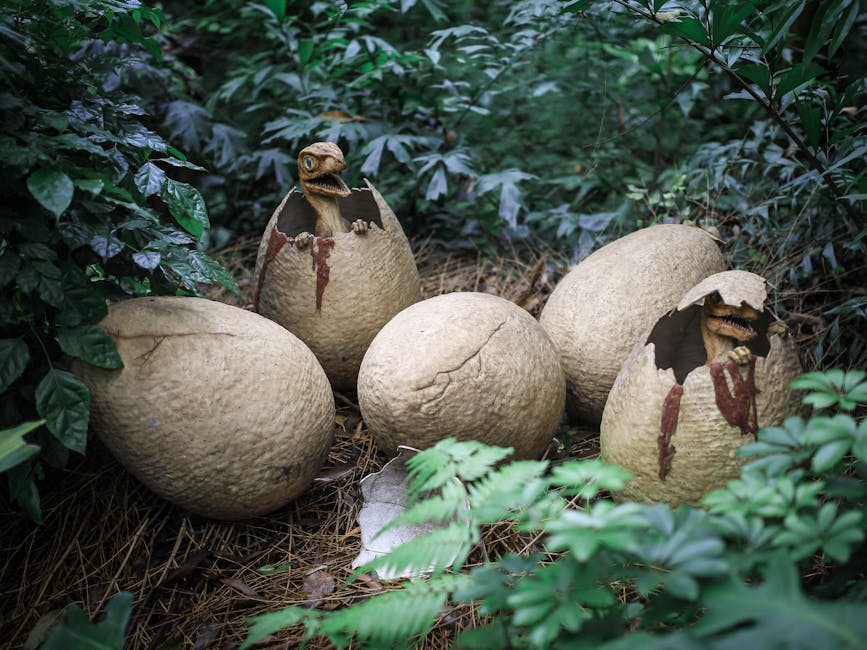
- A 250-million-year-old fossil in South Africa contains a perfectly preserved embryo of Lystrosaurus, challenging assumptions about early mammalian reproductive methods.
- The fossil provides concrete evidence that mammalian ancestors laid eggs, contradicting previous theories.
- Lystrosaurus thrived in the aftermath of the Permian-Triassic extinction, which wiped out over 90% of Earth’s species.
- The discovery offers a new perspective on early mammalian evolution and their reproductive strategies.
- The fossil’s preservation is a significant find, offering insights into the lives of ancient creatures.
In a groundbreaking discovery that has captivated the scientific community, a 250-million-year-old fossil has finally provided concrete evidence that the ancestors of modern mammals laid eggs. The fossil, unearthed in the Karoo Basin of South Africa, contains a perfectly preserved embryo of Lystrosaurus, a hardy creature that thrived in the aftermath of the Permian-Triassic extinction event, which wiped out more than 90% of Earth’s species. This finding, published in the journal Nature, challenges long-held assumptions about the reproductive methods of early mammalian ancestors and offers a new perspective on their evolutionary journey.
The Permian-Triassic Extinction and the Rise of Lystrosaurus

The Permian-Triassic extinction, often referred to as the “Great Dying,” occurred approximately 252 million years ago and is considered the most severe mass extinction in Earth’s history. It decimated both marine and terrestrial life, leaving only a few survivors to repopulate the planet. Among these survivors was Lystrosaurus, a dicynodont that managed to thrive in the harsh post-extinction environment. This creature, characterized by its robust build and beak-like mouth, became one of the dominant land animals during the early Triassic period. The resilience of Lystrosaurus has long intrigued paleontologists, but the recent discovery of an egg containing its embryo has provided unprecedented insights into its reproductive strategies.
The Discovery: An Egg with an Embryo

The fossil in question was discovered by a team of international researchers led by Dr. Jennifer Botha-Brink from the South African National Museum. The egg, measuring about 5 centimeters in length, was found alongside the remains of an adult Lystrosaurus. Inside the egg, the team identified a curled-up embryo, which they meticulously studied using advanced imaging techniques, including synchrotron radiation and micro-CT scans. These methods allowed the scientists to examine the egg’s internal structure without causing any damage to the delicate fossil. The findings revealed that the egg was large and had a soft, leathery shell, suggesting that Lystrosaurus and other early mammalian ancestors laid eggs rather than giving birth to live young.
Reproductive Methods and Survival
The confirmation that Lystrosaurus laid eggs has significant implications for understanding the evolution of mammalian reproduction. Scientists believe that the ability to lay large, nutrient-rich eggs was a crucial factor in the survival and success of these early mammals in the post-extinction world. The eggs would have provided a protected environment for the developing embryos, allowing them to grow and develop without the risk of predation. This reproductive strategy, combined with the robust physiology of Lystrosaurus, may have given it a competitive advantage over other species that did not survive the Permian-Triassic extinction. The discovery also aligns with the hypothesis that the transition from egg-laying to live birth in mammals was a gradual process, driven by environmental pressures and evolutionary adaptations over millions of years.
Implications for Early Mammalian Evolution
The finding that Lystrosaurus and other early mammalian ancestors laid eggs has far-reaching implications for our understanding of mammalian evolution. It suggests that the reproductive methods of these creatures were more diverse than previously thought and that the transition to live birth, a defining characteristic of modern mammals, was a complex and gradual process. The ability to lay eggs may have been a key survival mechanism during the harsh conditions of the early Triassic period, allowing these animals to thrive in a world where many other species had perished. This discovery not only fills a critical gap in the fossil record but also provides valuable insights into the evolutionary adaptations that led to the emergence of mammals as we know them today.
Expert Perspectives
Dr. Christian Sidor, a paleontologist at the University of Washington, noted that the discovery of the Lystrosaurus egg is a “milestone” in the study of early mammalian evolution. “This finding challenges our understanding of how these ancient creatures reproduced and survived in a post-apocalyptic world,” he said. Dr. Sarah Werning, a biologist at the University of California, Berkeley, added, “The soft, nutrient-rich eggs of Lystrosaurus may have been a key factor in its success, but it also raises questions about the timing and mechanisms of the transition to live birth in mammals.”
As researchers continue to analyze the Lystrosaurus fossil and its implications, the next steps will involve exploring other early mammalian fossils to see if similar reproductive methods were common. The discovery opens new avenues for understanding the evolutionary history of mammals and the factors that contributed to their survival and dominance. What remains to be seen is how this new information will influence our understanding of the broader patterns of life on Earth during one of its most critical periods.