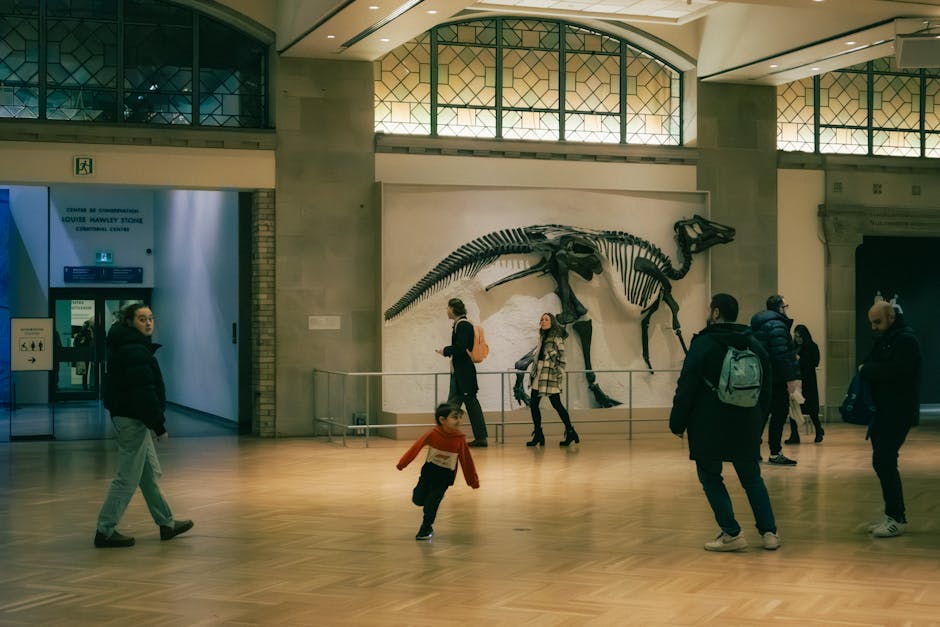
- The American Museum of Natural History in New York has a vast collection of over 33 million specimens, making it a hub for groundbreaking discoveries.
- Fossil hunter Mark Norell has spent his career uncovering the secrets of the ancient world, contributing significantly to the museum’s collection.
- A new exhibition at the museum honors the work of renowned fossil hunters, showcasing a vast array of fossils on display.
- The museum’s commitment to fossil hunting dates back to the early 20th century, with curators and researchers traveling the world for new discoveries.
- The museum’s collection is a testament to the dedication and perseverance of its fossil hunters, with many specimens considered among the most important in the world.
The American Museum of Natural History in New York has long been a hub for groundbreaking discoveries, with a collection of over 33 million specimens. One of the most significant contributors to this collection is Mark Norell, a paleontologist who has spent his career uncovering the secrets of the ancient world. Along with other renowned fossil hunters, Norell’s findings have shed new light on the history of our planet, and a new exhibition at the museum is honoring their work. With a vast array of fossils on display, the exhibition is a must-see for anyone interested in the natural world.
The History of Fossil Hunting at the American Museum of Natural History

The American Museum of Natural History has a long and storied history of fossil hunting, dating back to the early 20th century. During this time, the museum’s curators and researchers have traveled the world in search of new and exciting discoveries. From the badlands of Montana to the deserts of Mongolia, these fossil hunters have braved treacherous terrain and harsh conditions to uncover the remnants of ancient creatures. The museum’s collection is a testament to their dedication and perseverance, with many of the specimens on display considered to be among the most important in the world. As the museum continues to grow and evolve, its commitment to fossil hunting remains unwavering, with new discoveries being made regularly.
Key Discoveries and the Fossil Hunters Behind Them

One of the most significant discoveries made by Mark Norell and his team is the fossil of a Velociraptor, found in the Gobi Desert in 1993. This discovery helped to shed new light on the behavior and biology of these fascinating creatures, and has been the subject of much study and research. Other notable discoveries include the fossil of a giant Tyrannosaurus Rex, found in Montana in 1912, and the fossil of a massive Apatosaurus, found in Colorado in 1900. These discoveries, along with many others, have helped to shape our understanding of the ancient world and the creatures that inhabited it. The fossil hunters responsible for these discoveries, including Norell, Roy Chapman Andrews, and Henry Fairfield Osborn, are true pioneers in their field, and their work continues to inspire new generations of researchers and scientists.
Analysis of the Exhibition and its Significance
The new exhibition at the American Museum of Natural History is a comprehensive and engaging look at the world of fossil hunting, with a focus on the discoveries made by Mark Norell and other renowned fossil hunters. The exhibition features a wide range of fossils, including many that have never been seen before, and provides a unique glimpse into the history of the museum’s collection. With interactive displays and immersive exhibits, the exhibition is designed to educate and entertain, and is suitable for visitors of all ages. The significance of the exhibition cannot be overstated, as it highlights the importance of fossil hunting and the role that it plays in our understanding of the natural world. By showcasing the work of fossil hunters like Norell, the exhibition helps to promote a greater appreciation for the science of paleontology and the many discoveries that have been made in this field.
Implications of the Exhibition and its Potential Impact
The new exhibition at the American Museum of Natural History has the potential to inspire a new generation of fossil hunters and scientists, and to promote a greater appreciation for the natural world. By showcasing the discoveries made by Mark Norell and other renowned fossil hunters, the exhibition highlights the importance of this field of study and the many contributions that it has made to our understanding of the world. The exhibition also serves as a reminder of the importance of preserving our natural heritage, and the need to protect and conserve our planet’s precious resources. As the exhibition continues to attract visitors from around the world, it is likely to have a significant impact on the way that we think about the natural world and our place within it.
Expert Perspectives
According to Dr. Norell, the exhibition is a testament to the power of fossil hunting and the many discoveries that have been made in this field. “The fossils on display in this exhibition are a reminder of the awe-inspiring diversity of life on Earth, and the many mysteries that still remain to be uncovered,” he said. Other experts in the field agree, noting that the exhibition is a major milestone in the history of the American Museum of Natural History and a significant contribution to the field of paleontology. As one expert noted, “The exhibition is a must-see for anyone interested in the natural world, and a powerful reminder of the importance of preserving our planet’s precious resources.”
As the exhibition continues to attract visitors and inspire new generations of fossil hunters and scientists, it is likely to remain a major topic of discussion in the scientific community. With many questions still remaining to be answered, the exhibition serves as a reminder of the importance of continued research and discovery in the field of paleontology. As we look to the future, it will be exciting to see what new discoveries are made, and how they will help to shape our understanding of the natural world. One thing is certain, however: the new exhibition at the American Museum of Natural History is a major milestone in the history of fossil hunting, and a testament to the power of human curiosity and discovery.