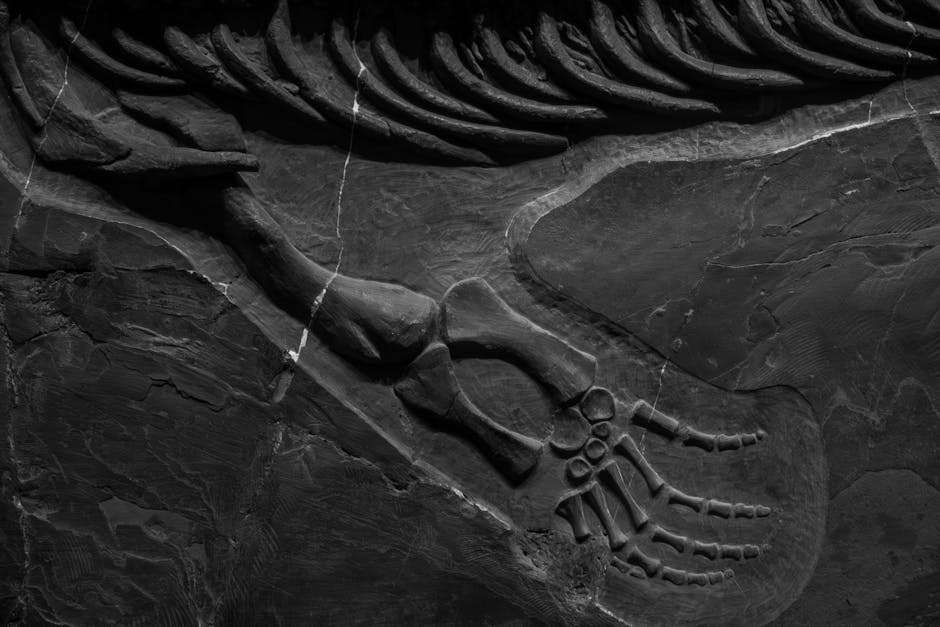
- A 550-million-year-old sponge fossil sheds light on the ‘missing years’ of early sponge evolution.
- The fossil is estimated to be 160 million years older than previously thought, helping to explain the scarcity of earlier sponge fossils.
- The discovery provides valuable insights into the history of life on Earth, including how animal life evolved on our planet.
- Researchers are gaining a better understanding of the evolution of sponges, a crucial part of understanding the history of life on Earth.
- The fossil is a rare find, with one scientist remarking, ‘I’ve never seen anything like it.’
The discovery of a 550-million-year-old sponge fossil is sending shockwaves through the scientific community, as it sheds light on the “missing years” of early sponge evolution. This rare find is providing valuable insights into the history of life on Earth, with one scientist remarking, “I’ve never seen anything like it.” The fossil, which is estimated to be around 160 million years older than previously thought, is helping to explain why earlier fossils of sponges are so scarce. With this new information, researchers are gaining a better understanding of how animal life evolved on our planet.
Uncovering the Mysteries of the Past

The evolution of sponges is a crucial part of understanding the history of life on Earth. As one of the simplest forms of animal life, sponges have been around for millions of years, yet their early evolution remains somewhat of a mystery. The scarcity of early sponge fossils has long been a topic of debate among scientists, with many wondering why these ancient creatures left behind so few remnants. Now, with the discovery of this 550-million-year-old fossil, researchers are finally starting to uncover the secrets of the past. This finding is not only helping to explain the lack of early sponge fossils but also providing valuable insights into the development of animal life.
A Major Breakthrough in Fossil Research

The discovery of this ancient sponge fossil is a major breakthrough in the field of fossil research. The fossil, which was found in a remote region, is remarkably well-preserved, considering its age. Scientists believe that this sponge likely lacked hard skeletal parts, which would have made it difficult to fossilize. This supports the idea that the earliest sponges were soft-bodied and rarely preserved, explaining why earlier fossils are so scarce. The team of researchers who made the discovery used advanced techniques to analyze the fossil and confirm its age. This finding is a significant milestone in the study of early animal life and is changing the way researchers approach the search for the origins of animal life.
Understanding the Implications of the Discovery
The discovery of this 550-million-year-old sponge fossil has significant implications for our understanding of the evolution of animal life. By studying this ancient creature, scientists can gain insights into the development of more complex life forms. The fact that this sponge likely lacked hard skeletal parts suggests that early animal life may have been much more fragile and susceptible to extinction than previously thought. This finding also highlights the importance of preserving and studying fossils, as they provide a unique window into the past. As researchers continue to study this fossil and others like it, they may uncover even more secrets about the history of life on Earth.
Far-Reaching Consequences
The discovery of this ancient sponge fossil is having far-reaching consequences for the scientific community. The finding is changing the way researchers approach the search for the origins of animal life, with many now focusing on the study of soft-bodied fossils. This shift in focus is likely to lead to new discoveries and a deeper understanding of the evolution of life on Earth. The discovery is also highlighting the importance of interdisciplinary research, as scientists from a range of fields come together to study the fossil and its implications. As the scientific community continues to learn more about this ancient creature, it is likely that our understanding of the natural world will be significantly expanded.
Expert Perspectives
Experts in the field of fossil research are hailing the discovery of the 550-million-year-old sponge fossil as a major breakthrough. “This finding is a game-changer for our understanding of early animal life,” said one scientist. “It’s providing us with a unique window into the past and is helping to explain many of the mysteries surrounding the evolution of sponges.” Others are more cautious, noting that there is still much to be learned about this ancient creature and its place in the history of life on Earth. Despite these differing perspectives, it is clear that the discovery of this fossil is a significant milestone in the study of early animal life.
As researchers continue to study the 550-million-year-old sponge fossil, they are likely to uncover even more secrets about the history of life on Earth. One of the key questions that remains to be answered is how this ancient creature evolved into the diverse range of sponges that we see today. Scientists are also eager to learn more about the environment in which this sponge lived and how it interacted with other ancient creatures. As the study of this fossil continues, it is likely that we will gain a deeper understanding of the natural world and our place within it.