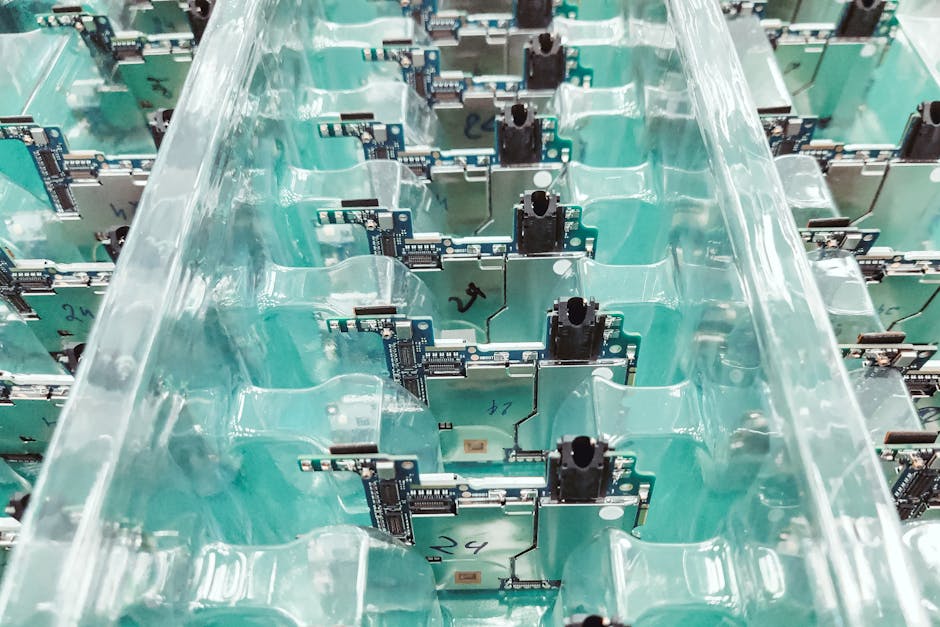
- The global semiconductor industry is experiencing a surge in demand, driven by the increasing use of AI and ML technologies.
- The market for AI-related semiconductors is expected to grow exponentially, reaching billions of dollars in the next few years.
- ASML, a leading chip manufacturing equipment supplier, has been at the forefront of this growth with its cutting-edge technology.
- The demand for high-performance chips is fueled by advancements in natural language processing, computer vision, and predictive analytics.
- ASML’s recent announcement of beating first-quarter revenue and profit expectations highlights the strong demand for its products and services.
The global semiconductor industry has witnessed a significant surge in recent years, driven primarily by the increasing demand for artificial intelligence (AI) and machine learning (ML) technologies. A striking fact that underscores this trend is that the market for AI-related semiconductors is expected to grow exponentially, with estimates suggesting it could reach billions of dollars in the next few years. This growth is largely attributed to the expanding applications of AI across various sectors, including healthcare, finance, and automotive. ASML, a leading chip manufacturing equipment supplier, has been at the forefront of this growth, providing cutting-edge technology that enables the production of advanced semiconductors. The company’s recent announcement that it has beaten first-quarter revenue and profit expectations and raised its sales guidance for 2026 is a testament to the strong demand for its products and services.
Riding the Wave of Semiconductor Demand

The current landscape of the semiconductor industry is characterized by an unprecedented level of demand, particularly for high-performance chips that are crucial for AI and ML applications. This demand has been fueled by the rapid advancement of technologies such as natural language processing, computer vision, and predictive analytics, which require significant computational power and memory. As a result, companies like ASML are experiencing a surge in orders for their equipment, which is essential for the fabrication of these advanced semiconductors. The raised guidance by ASML for 2026 indicates that the company anticipates this demand to persist, driven by the continuous innovation and adoption of AI technologies across industries. This trend not only reflects the growing importance of semiconductors in the digital economy but also highlights the critical role that companies like ASML play in enabling this growth.
Key Developments and Players

ASML’s strong first-quarter performance and the subsequent raising of its 2026 sales guidance are key developments that underscore the company’s strategic position in the semiconductor supply chain. The company’s products, including its extreme ultraviolet (EUV) lithography systems, are critical for the production of the most advanced chips, making it an indispensable partner for leading semiconductor manufacturers. The involvement of major industry players, such as Intel, Samsung, and TSMC, in the development and procurement of these advanced manufacturing technologies further emphasizes the significance of ASML’s role. Moreover, the company’s ability to innovate and deliver high-performance equipment has allowed it to maintain a competitive edge, contributing to its strong financial performance and optimistic outlook for the future.
Analyzing the Causes and Effects
The strong demand for AI-related semiconductors and ASML’s resultant success can be attributed to a combination of technological, economic, and strategic factors. From a technological standpoint, the advancements in AI and ML have created a new era of computing that requires specialized hardware, such as graphics processing units (GPUs) and tensor processing units (TPUs), which in turn has driven the demand for advanced semiconductor manufacturing equipment. Economically, the investment in AI technologies is seen as a strategic imperative by companies seeking to maintain competitiveness and innovate. ASML’s strategic positioning, coupled with its commitment to research and development, has enabled it to capitalize on these trends. The effects of this growth are multifaceted, including the potential for job creation, economic growth, and the development of new technologies and applications that can transform industries and improve lives.
Implications for the Industry and Beyond
The implications of ASML’s raised guidance and the underlying strong demand for AI semiconductors are far-reaching, affecting not only the semiconductor industry but also the broader economy and society. For the industry, this trend suggests a period of sustained growth and investment, as companies seek to enhance their manufacturing capabilities and meet the burgeoning demand for advanced chips. Beyond the industry, the development and deployment of AI technologies enabled by these semiconductors have the potential to drive innovation, improve efficiency, and solve complex problems across various sectors. However, it also raises important questions about the digital divide, job displacement, and the ethical use of AI, highlighting the need for a balanced approach that maximizes the benefits of these technologies while mitigating their risks.
Expert Perspectives
Experts in the field offer contrasting viewpoints on the future of the semiconductor industry and the role of AI. Some believe that the current demand is unsustainable and that the industry may face challenges such as supply chain disruptions and regulatory hurdles. Others are more optimistic, suggesting that the innovation driven by AI will continue to propel the industry forward, with companies like ASML at the forefront. These perspectives underscore the complexity and unpredictability of the industry, highlighting the need for continuous innovation, strategic investment, and adaptability in the face of changing market conditions and technological advancements.
Looking forward, the key question is how the semiconductor industry will navigate the challenges and opportunities presented by the growing demand for AI technologies. As companies like ASML continue to push the boundaries of what is possible with semiconductor manufacturing, the industry is likely to witness significant advancements in areas such as quantum computing, 5G networks, and the Internet of Things (IoT). The open question remains how these developments will shape the future of technology and society, and what role regulatory frameworks, ethical considerations, and public-private partnerships will play in ensuring that these technologies are developed and used for the greater good.