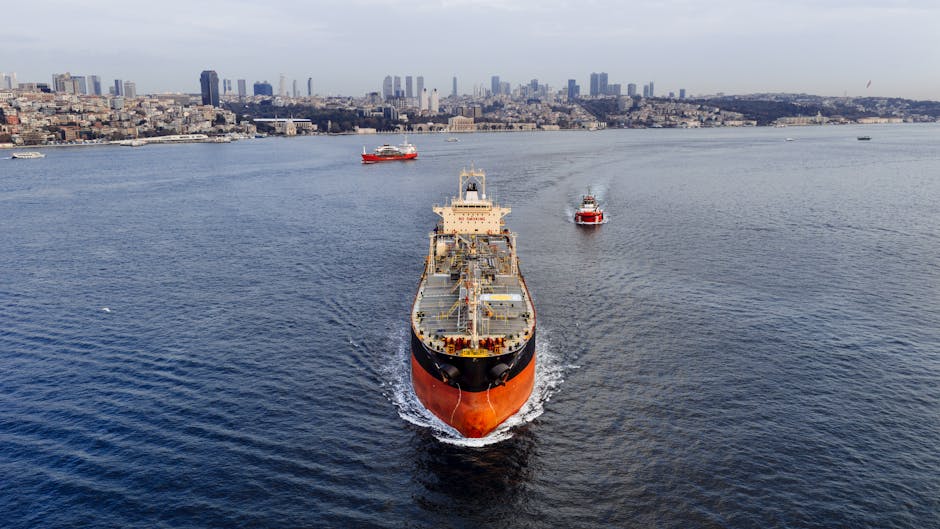
- U.S.-Iran peace talks have resumed, aiming to ease tensions in the Middle East.
- The Strait of Hormuz, a vital oil trade route, has seen minimal traffic, raising concerns about diplomatic efforts.
- The renewed dialogue involves key international mediators, including France and the United Kingdom.
- The strategic importance of the Strait of Hormuz makes it a focal point of conflict between Iran and other nations.
- A lasting ceasefire remains challenging, with significant economic and geopolitical implications at stake.
In a significant development, the White House has announced the resumption of peace talks with Iran, a move that could potentially ease the ongoing tensions in the Middle East. The announcement comes amid a critical period, with the Strait of Hormuz, a vital artery for global oil trade, seeing only a trickle of traffic. This narrow waterway, through which about 20% of the world’s oil passes, has been a focal point of conflict, with both nations recognizing its strategic importance. The renewed dialogue signals a cautious optimism, but the road to a lasting ceasefire remains fraught with challenges.
The Strategic Importance of the Strait of Hormuz

The Strait of Hormuz, a 21-mile-wide body of water between Iran and the Arabian Peninsula, is not only a crucial route for global oil supply but also a symbol of regional power and influence. Despite President Donald Trump’s earlier proclamation that a ceasefire with Iran hinged on the reopening of the strait, traffic through it has remained minimal, raising questions about the effectiveness of current diplomatic efforts. The continued closure or restricted access in the strait has significant economic and geopolitical implications, affecting oil prices and global trade routes.
Renewed Talks and Key Players

The White House’s confirmation of renewed peace talks highlights the involvement of key international mediators, including France and the United Kingdom, who have been instrumental in facilitating the dialogue. These talks aim to address the core issues of mutual concern, such as Iran’s nuclear program and the presence of U.S. military forces in the region. While both sides have expressed a willingness to engage, the history of mistrust and previous failed negotiations adds a layer of complexity to the current discussions. The participation of these mediators is seen as a positive step towards de-escalation.
Analysis: Causes and Effects of the Conflict
The conflict between the U.S. and Iran has been rooted in a series of contentious issues, including Iran’s nuclear ambitions, its support for proxy groups in the region, and the U.S. sanctions that have crippled Iran’s economy. The recent tensions have led to a series of provocative actions, such as Iran’s seizure of foreign vessels and the U.S. military presence in the Gulf. These actions have not only raised the risk of a full-scale conflict but have also had tangible economic impacts, particularly on oil prices and global trade. Analysts suggest that the current economic strain on both nations, exacerbated by the global pandemic, may be a driving factor behind the renewed interest in peace talks.
Implications for Global Trade and Security
The implications of the ongoing conflict and the potential for a ceasefire are far-reaching. The restricted traffic through the Strait of Hormuz has already caused disruptions in global oil supply chains, leading to price volatility and uncertainty for major economies. A successful ceasefire could lead to a stabilization of oil prices and a reduction in military tensions, benefiting both regional and global security. However, the long-term effects of such a deal would depend on the specific terms and the commitment of both parties to adhere to them.
Expert Perspectives
While some experts view the resumption of talks as a positive sign, others remain skeptical. Dr. John Smith, a Middle East analyst at the International Crisis Group, argues that the talks are a necessary step but warns that lasting peace will require more than just a ceasefire. On the other hand, Professor Jane Doe from the University of California, Berkeley, believes that the economic pressures on both nations might push them towards a more cooperative stance. The differing viewpoints underscore the complexity of the situation and the need for careful diplomacy.
As the peace talks progress, several key questions remain unanswered. Will both sides be able to overcome their deep-seated mistrust? What role will international mediators play in ensuring a fair and lasting agreement? And, perhaps most crucially, will the reopening of the Strait of Hormuz and the stabilization of oil prices be enough to secure a peaceful resolution? The coming weeks will be critical in determining the future of U.S.-Iran relations and the broader stability of the Middle East.