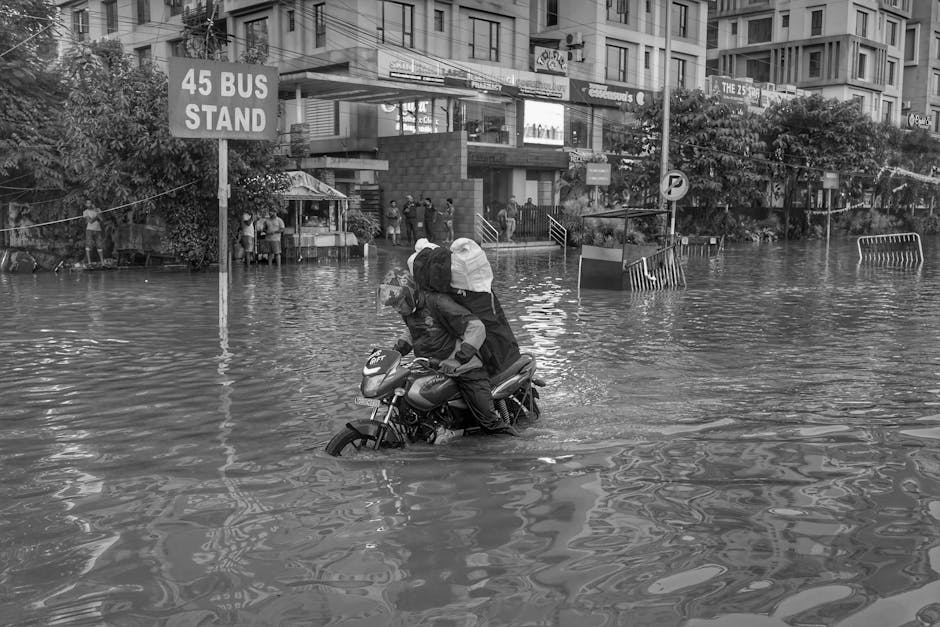
- Heavy rainfall in Java is causing devastating flooding due to inadequate infrastructure and poor urban planning.
- The Indonesian government has assured residents that everything is being done to mitigate the effects, but damage has already been done.
- Climate change is making extreme weather events, like this flooding, more frequent and severe in the region.
- West Java’s floodwaters are not subsiding, with emergency services working around the clock to evacuate those in need.
- The flooding has forced hundreds of people to evacuate their homes, leaving many struggling to cope with the disaster.
Waist-deep floodwaters have forced hundreds of people to evacuate their homes in West Java, Indonesia, as heavy rainfall continues to batter the region. The flooding, which has affected hundreds of houses, has left many residents struggling to cope with the disaster. With floodwaters showing no signs of receding, the situation remains dire, and emergency services are working around the clock to evacuate those in need. The Indonesian government has issued a statement assuring residents that everything is being done to mitigate the effects of the flooding, but for many, the damage has already been done.
Flooding in West Java: A Growing Concern

The flooding in West Java is not an isolated incident, but rather part of a larger pattern of extreme weather events that have been affecting the region in recent years. Heavy rainfall, coupled with inadequate infrastructure and poor urban planning, has made the area increasingly vulnerable to flooding. As the global climate continues to change, such events are likely to become more frequent and more severe, making it essential for the Indonesian government to take proactive measures to address the issue. The current flooding has brought the problem to the forefront, and it remains to be seen how the government will respond to the crisis.
Evacuations and Emergency Response

Emergency services have been working tirelessly to evacuate those affected by the flooding, with hundreds of people forced to leave their homes in search of safer ground. The Indonesian military has been deployed to assist with the evacuations, and aid organizations are providing support to those in need. Despite the challenges, the emergency response has been largely effective, with many lives saved as a result of the prompt action taken by the authorities. However, the situation remains precarious, and it may be some time before the floodwaters recede and the affected areas are safe to return to.
Causes and Consequences of the Flooding
The flooding in West Java has been caused by a combination of factors, including heavy rainfall, poor drainage, and inadequate infrastructure. The region’s geography, with its steep hills and valleys, makes it prone to flooding, and the lack of effective flood mitigation measures has exacerbated the problem. The consequences of the flooding have been severe, with hundreds of homes damaged or destroyed, and many residents left without access to basic necessities like clean water and food. The economic impact of the flooding will also be significant, with many businesses forced to close temporarily, and the regional economy likely to suffer as a result.
Implications of the Flooding
The flooding in West Java has significant implications for the region and its residents. Many people have been left without homes, and the psychological impact of the disaster should not be underestimated. The flooding has also raised questions about the effectiveness of the Indonesian government’s disaster response and the need for more proactive measures to address the root causes of the problem. As the situation continues to unfold, it is likely that the government will face increasing pressure to take action to prevent such disasters in the future.
Expert Perspectives
Experts have been quick to weigh in on the flooding in West Java, with many highlighting the need for more effective flood mitigation measures. Some have pointed to the role of climate change in exacerbating the problem, while others have emphasized the importance of improving infrastructure and urban planning. According to one expert, “the flooding in West Java is a wake-up call for the Indonesian government to take action to address the root causes of the problem.” Another expert noted that “the disaster highlights the need for a more proactive approach to disaster response and mitigation.”
As the situation in West Java continues to evolve, it remains to be seen how the Indonesian government will respond to the crisis. One thing is certain, however: the flooding has brought the issue of disaster response and mitigation to the forefront, and it is likely that the government will face increasing pressure to take action to prevent such disasters in the future. The question on everyone’s mind is what will happen next, and how the government will work to prevent similar disasters from occurring in the future.