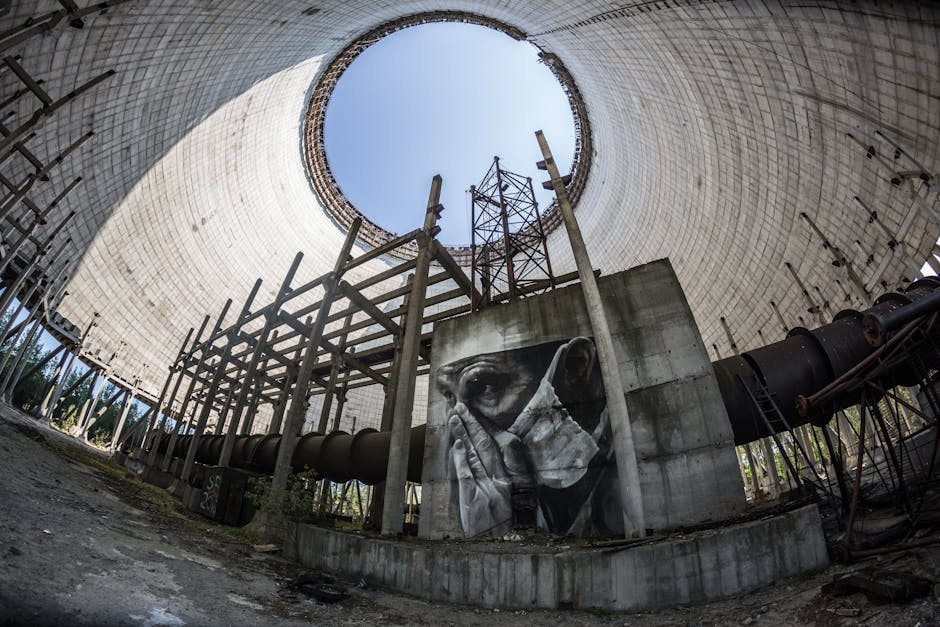
- The Chernobyl nuclear disaster remains one of the most catastrophic events in human history with far-reaching consequences.
- The site remains highly radioactive, posing a significant threat to human health and the environment.
- The Ukrainian government has established a 30-kilometer exclusion zone around the plant due to high levels of radiation.
- Scientists like Anatoly Doroshenko continue to monitor the site to ensure safety for future generations.
- The legacy of the disaster highlights the importance of safety protocols and emergency preparedness in the nuclear industry.
The Chernobyl nuclear disaster, which occurred in 1986, remains one of the most catastrophic events in human history, with far-reaching consequences that are still felt today. The explosion of the nuclear reactor released massive quantities of radioactive material into the environment, contaminating a vast area around the plant. Even 40 years later, the site remains highly radioactive, posing a significant threat to human health and the environment. Despite the risks, scientists like Anatoly Doroshenko continue to work at the site, monitoring radioactive conditions and ensuring that the area is safe for future generations.
The Ongoing Threat of Chernobyl

The Chernobyl disaster was a wake-up call for the nuclear industry, highlighting the importance of safety protocols and emergency preparedness. However, the legacy of the disaster continues to be felt, with many areas around the plant still heavily contaminated. The Ukrainian government has established a 30-kilometer exclusion zone around the plant, which remains largely uninhabited due to the high levels of radiation. Despite these efforts, there are still concerns about the long-term safety of the site, particularly with regard to the storage of nuclear waste and the potential for further accidents. As a result, scientists like Anatoly Doroshenko play a critical role in monitoring the site and ensuring that the risks are mitigated.
Life Inside the Exclusion Zone

Anatoly Doroshenko’s job is to monitor the radioactive conditions inside the Chernobyl exclusion zone. This involves collecting samples of air, water, and soil, as well as measuring radiation levels in different areas of the site. The work is highly specialized and requires a deep understanding of nuclear physics and radiation safety. Doroshenko and his team use specialized equipment, including Geiger counters and protective suits, to minimize their exposure to radiation. Despite these precautions, the work is still highly dangerous, and Doroshenko is acutely aware of the risks he faces every day. He has spoken publicly about the importance of his work, highlighting the need for continued monitoring and research to ensure the long-term safety of the site.
Understanding the Risks
The risks associated with working at Chernobyl are very real, and Doroshenko’s team takes every precaution to minimize their exposure to radiation. However, even with the best safety protocols in place, there is still a risk of accident or injury. The radiation levels at the site are extremely high, and prolonged exposure can cause serious health problems, including cancer and radiation sickness. Furthermore, the site is still highly unstable, with many areas prone to landslides and other geological hazards. As a result, Doroshenko’s team must be constantly on guard, monitoring the site for any signs of instability or increased radiation levels. By analyzing data and expert opinions, it is clear that the work of Doroshenko and his team is crucial to understanding the risks and mitigating the dangers associated with the Chernobyl site.
A Lasting Legacy
The implications of the Chernobyl disaster are far-reaching, and the site will likely remain contaminated for generations to come. The work of scientists like Anatoly Doroshenko is critical to ensuring that the site is safe for future generations, and that the risks associated with the disaster are mitigated. The legacy of Chernobyl serves as a reminder of the importance of nuclear safety and the need for continued research and monitoring. As the world moves forward with new technologies and energy sources, the lessons of Chernobyl must not be forgotten, and the work of Doroshenko and his team will play a critical role in ensuring that the site is remembered for its importance in the history of nuclear safety.
Expert Perspectives
Experts in the field of nuclear safety and radiation monitoring agree that the work of Anatoly Doroshenko and his team is critical to understanding the risks associated with the Chernobyl site. Some have praised the Ukrainian government for its efforts to establish a safe and secure exclusion zone, while others have raised concerns about the long-term safety of the site. As one expert noted, “The Chernobyl disaster was a wake-up call for the nuclear industry, and it is essential that we continue to monitor the site and learn from the lessons of the past.” Others have highlighted the importance of international cooperation and collaboration in addressing the challenges posed by the Chernobyl disaster.
Looking to the future, it is clear that the work of Doroshenko and his team will continue to play a critical role in ensuring the safety of the Chernobyl site. As new technologies and energy sources emerge, the lessons of Chernobyl will remain an important reminder of the importance of nuclear safety and the need for continued research and monitoring. One open question is how the site will be managed and secured in the long term, and what role international cooperation will play in addressing the challenges posed by the disaster. As the world moves forward, it is essential that the legacy of Chernobyl is remembered and that the work of scientists like Anatoly Doroshenko continues to inform our understanding of the risks and challenges associated with nuclear safety.