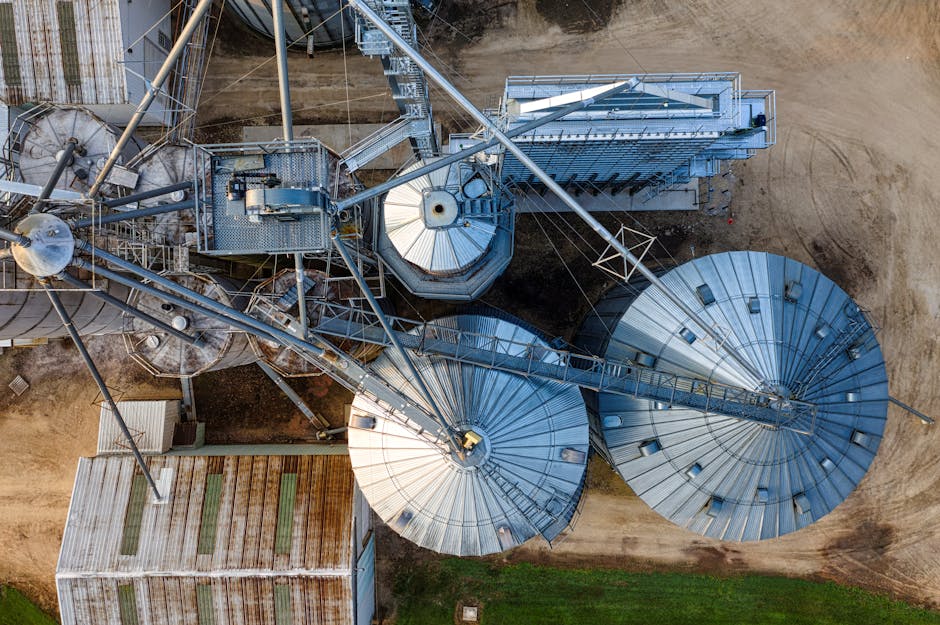
- The world’s first commercial-scale biomass carbon capture and storage (BECCS) project has stalled, casting doubt on its viability as a climate solution.
- BECCS, which captures and stores CO2 from biomass, was expected to remove one million tons of CO2 annually and pave the way for a new era of carbon removal.
- The project’s failure raises important questions about the global effort to combat climate change and the reliance on BECCS as a solution.
- BECCS has the potential to remove more CO2 from the atmosphere than it emits, making it a crucial component in the fight against climate change.
- The International Energy Agency estimates that BECCS could account for up to 10% of global emissions reductions by 2050.
The world’s first commercial-scale biomass carbon capture and storage (BECCS) project, hailed as a groundbreaking solution to climate change, has hit a major roadblock. The facility, designed to capture and store one million tons of CO2 annually, was expected to pave the way for a new era of carbon removal. However, with construction stalled and funding uncertain, it appears this flagship project may never come to fruition. This unexpected turn of events has significant implications for the global effort to combat climate change, and raises important questions about the viability of BECCS as a solution.
The Promise of BECCS

BECCS has long been touted as a crucial component in the fight against climate change. By capturing the carbon emitted from burning biomass, such as wood chips or agricultural waste, and storing it underground, BECCS has the potential to remove more CO2 from the atmosphere than it emits. This net negative emissions approach is seen as essential for meeting global climate targets, particularly in industries where emissions are difficult to reduce, such as aviation and cement production. The International Energy Agency (IEA) has estimated that BECCS could account for up to 10% of global emissions reductions by 2050, making it a vital tool in the transition to a low-carbon economy.
The Flagship Project Falters

The Drax power station in North Yorkshire, UK, was set to become the world’s first commercial-scale BECCS facility. The project, a collaboration between Drax Group and the UK government, aimed to capture and store 95% of the CO2 emitted from a dedicated biomass unit. However, despite initial enthusiasm and significant investment, the project has encountered numerous setbacks, including rising costs, technical challenges, and regulatory hurdles. With the project’s future now in doubt, many are left wondering what went wrong and what this means for the future of BECCS.
Analyzing the Challenges
Experts point to several key challenges that have contributed to the project’s stall. One major issue is the high cost of capturing and storing CO2, which makes BECCS a more expensive option than traditional fossil fuel-based power generation. Additionally, the technology itself is still in its infancy, and significant technical hurdles must be overcome before BECCS can be deployed at scale. Furthermore, the UK government’s decision to withdraw funding for the project has left Drax Group struggling to find alternative sources of support. As the industry struggles to come to terms with these challenges, it is clear that BECCS is not the silver bullet many had hoped for.
Implications and Consequences
The failure of the Drax BECCS project has significant implications for the global effort to combat climate change. If BECCS is unable to deliver on its promise, it may be necessary to rethink the role of carbon removal in the transition to a low-carbon economy. This could involve a greater focus on alternative technologies, such as direct air capture or afforestation, or a renewed emphasis on reducing emissions through traditional means, such as increasing energy efficiency and transitioning to renewable energy sources. The consequences of this failure will be felt across the industry, from investors and policymakers to the general public, who may begin to question the viability of climate change solutions.
Expert Perspectives
Experts are divided on the implications of the Drax project’s stall. Some argue that BECCS remains a crucial component in the fight against climate change, and that the challenges encountered by the Drax project are teething problems that can be overcome with further investment and research. Others, however, are more skeptical, pointing to the high costs and technical challenges associated with BECCS, and arguing that alternative solutions may be more effective in the long run. As the debate continues, one thing is clear: the future of BECCS is uncertain, and its role in the transition to a low-carbon economy must be carefully reevaluated.
As the world looks to the future, one question remains: what’s next for carbon removal? Will alternative technologies emerge to fill the void left by BECCS, or will the focus shift to more traditional approaches to reducing emissions? The answer to this question will have significant implications for the global effort to combat climate change, and will require careful consideration of the challenges and opportunities that lie ahead. As policymakers, investors, and the general public look to the future, it is clear that the path forward will be complex and uncertain, but also full of opportunity for innovation and growth.