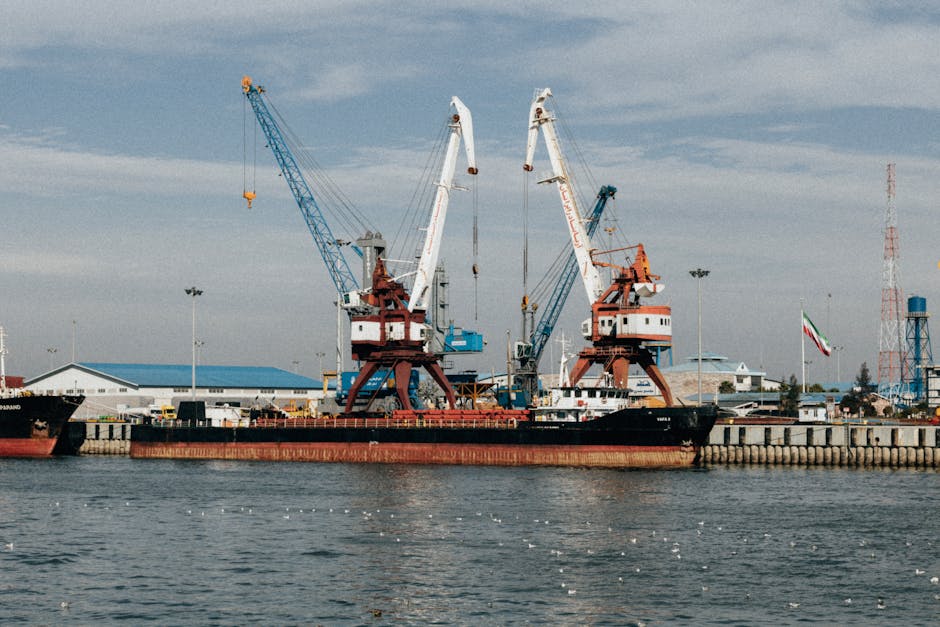
- The US has initiated a blockade of Iran, but ship-tracking data suggests several vessels have successfully crossed the Strait of Hormuz, raising questions about the blockade’s effectiveness.
- The US military aims to restrict Iranian oil exports to impose economic pressure on the government, but the complexities of enforcing a blockade in the region are significant.
- The Strait of Hormuz is a critical chokepoint for international trade, with 20% of the world’s oil passing through it, making the blockade a vital concern for global trade and security.
- The US must balance the need to restrict Iranian oil exports with the requirement to allow legitimate trade to continue, all while avoiding escalation with Iran and its allies.
- The ongoing tensions between the US and Iran have led to a significant escalation, with the region and the world at large impacted by the blockade’s consequences.
The ongoing tensions between the United States and Iran have led to a significant escalation in recent days, with the U.S. military initiating a blockade of the Islamic Republic. However, ship-tracking data has revealed that several vessels, including some that had been docked at Iranian ports, have successfully transited the Strait of Hormuz, casting doubt on the effectiveness of the blockade. This development has raised questions about the U.S. military’s ability to enforce the blockade and the potential consequences for global trade and security. With the situation continuing to unfold, it remains to be seen how the blockade will impact the region and the world at large.
Background and Context

The Strait of Hormuz, a vital waterway connecting the Persian Gulf to the Arabian Sea, is a critical chokepoint for international trade, with approximately 20% of the world’s oil passing through it. The U.S. blockade of Iran is intended to restrict the country’s ability to export oil and impose economic pressure on the Iranian government. However, the complexities of enforcing a blockade in such a strategically important and heavily trafficked region are significant. The U.S. military must balance the need to restrict Iranian oil exports with the requirement to allow legitimate trade to continue, all while avoiding escalation with Iran and its allies.
The Blockade: Key Details

According to ship-tracking data, several vessels have transited the Strait of Hormuz in recent days, including some that had been docked at Iranian ports. This has raised concerns about the U.S. military’s ability to enforce the blockade effectively. The ships in question appear to have been allowed to pass through the strait without being intercepted or boarded by U.S. naval vessels. The reasons for this are unclear, but it may be due to a variety of factors, including the need to avoid escalation, the complexity of identifying and intercepting specific vessels, or the limitations of U.S. naval resources in the region.
Analysis and Implications
The fact that some vessels have been able to transit the Strait of Hormuz despite the U.S. blockade has significant implications for the effectiveness of the measure. If the blockade is not enforced consistently, it may undermine the U.S. goal of restricting Iranian oil exports and imposing economic pressure on the Iranian government. Furthermore, the inconsistent enforcement of the blockade may create uncertainty and confusion among shipping companies and other stakeholders, potentially leading to unintended consequences such as increased insurance costs, reduced trade, and heightened tensions in the region. As the situation continues to evolve, it will be important to monitor the U.S. military’s approach to the blockade and its impact on regional security and global trade.
Regional Consequences
The U.S. blockade of Iran has the potential to affect a wide range of countries and stakeholders in the region. Iran’s neighbors, including the United Arab Emirates and Oman, may be impacted by the blockade, as may other countries that rely on the Strait of Hormuz for trade. The blockade may also have significant implications for global energy markets, as any disruption to oil supplies from the region could lead to price volatility and increased costs for consumers. As the situation continues to unfold, it will be important to consider the potential consequences of the blockade for regional security and global trade, and to monitor the responses of affected countries and stakeholders.
Expert Perspectives
Experts are divided on the effectiveness of the U.S. blockade of Iran, with some arguing that it is a necessary measure to restrict Iranian oil exports and impose economic pressure on the Iranian government, while others believe that it may be counterproductive and escalate tensions in the region. According to Dr. Sanam Vakil, a specialist in Middle East politics at Chatham House, “the blockade is a high-risk strategy that may not achieve its intended goals, and could potentially lead to unintended consequences such as increased support for the Iranian government or the escalation of tensions in the region.” In contrast, Dr. Michael Singh, a senior fellow at the Washington Institute for Near East Policy, argues that “the blockade is a necessary measure to restrict Iranian oil exports and impose economic pressure on the Iranian government, and that it can be an effective tool in the U.S. effort to counter Iranian aggression in the region.”
As the situation continues to evolve, it will be important to monitor the U.S. military’s approach to the blockade and its impact on regional security and global trade. The coming days and weeks will be critical in determining the effectiveness of the blockade and the potential consequences for the region and the world at large. One key question that remains to be answered is how the U.S. military will balance the need to enforce the blockade with the requirement to avoid escalation and protect global trade. As Dr. Vakil notes, “the U.S. must be careful to avoid overreach and to ensure that the blockade is enforced in a way that is consistent with international law and minimizes the risk of unintended consequences.”