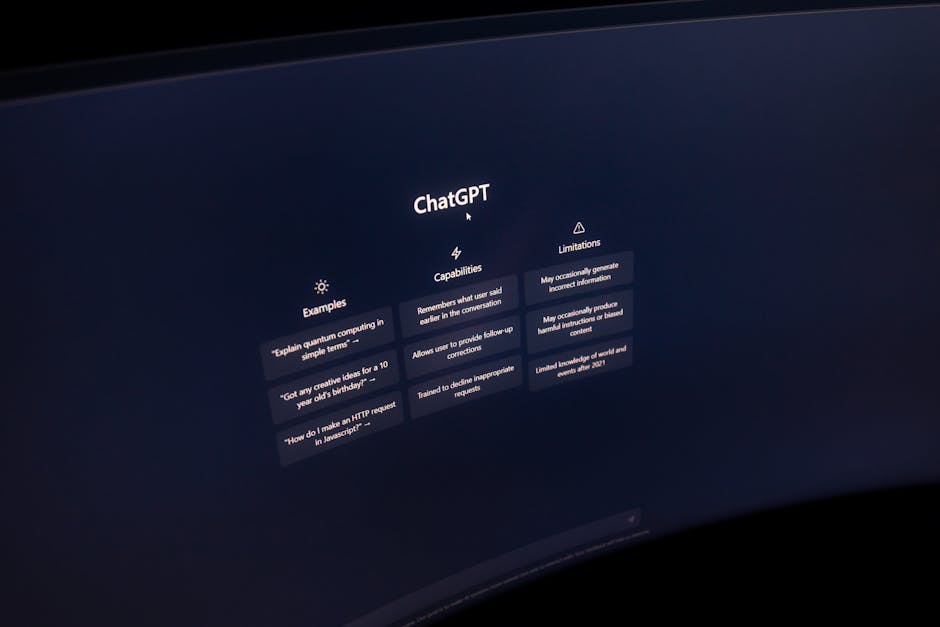
- OpenClaw agent introduces a new paradigm for AI interaction, challenging traditional mental models.
- Over 100 million users of ChatGPT demonstrate AI’s growing integration into daily life.
- The OpenClaw agent offers a more integrated and dynamic AI interaction approach.
- The introduction of OpenClaw agent raises questions about the direction of AI integration.
- AI tools like ChatGPT are designed to augment human capabilities but have limitations.
The rapid advancement of artificial intelligence has led to the development of numerous AI tools, each with its unique capabilities and limitations. However, a recent experiment with an OpenClaw agent has revealed a fundamental shift in the way we interact with AI, one that challenges our existing mental models and opens up new possibilities for the future. With over 100 million users of ChatGPT alone, it is clear that AI is becoming increasingly integrated into our daily lives, but the introduction of OpenClaw agent raises important questions about the direction of this integration and what it means for the way we work and live.
The Traditional AI Paradigm

For the past couple of years, AI tools like ChatGPT, Claude, and Perplexity have been widely used for various tasks, from generating text to answering complex questions. These tools have been designed to provide assistance and augment human capabilities, but they have been largely limited to a specific orientation – users would typically open a tab, type a query, receive a response, and then close the tab. This interaction model has been the norm, with users approaching AI as a tool to be used in a specific context. However, the introduction of OpenClaw agent has shown that this orientation is not the only way to interact with AI, and that a more integrated and dynamic approach is possible.
A New Era of AI Interaction

The OpenClaw agent represents a significant departure from the traditional AI interaction model. Unlike ChatGPT or Claude, which are designed to provide specific responses to user queries, the OpenClaw agent is designed to be a more integrated and dynamic companion. It is not just a tool that users go to for a specific task, but rather an agent that can be set up to work alongside the user, providing assistance and guidance as needed. This new orientation has the potential to revolutionize the way we work and live with AI, enabling more seamless and intuitive interactions that can enhance productivity and creativity.
Key Differences and Implications
The difference between OpenClaw agent and traditional AI tools like ChatGPT is not about capability, but about orientation. While Claude may be more capable than the OpenClaw agent in certain ways, the OpenClaw agent’s ability to work alongside the user and provide more integrated assistance has significant implications for the future of AI. As AI becomes increasingly ubiquitous, the way we interact with it will become more important, and the OpenClaw agent represents a significant step forward in this direction. The potential applications of this technology are vast, ranging from virtual assistants to intelligent tutoring systems, and it will be exciting to see how it develops in the coming years.
Expert Perspectives and Analysis
Experts in the field of AI are eagerly watching the development of OpenClaw agent and its potential impact on the future of AI. Some argue that this new orientation has the potential to unlock new levels of productivity and creativity, while others are more cautious, highlighting the potential risks and challenges associated with more integrated AI systems. As the technology continues to evolve, it will be important to consider these perspectives and ensure that the development of OpenClaw agent and similar technologies is aligned with human values and needs.
Implications and Future Directions
The introduction of OpenClaw agent has significant implications for the future of AI and how we interact with it. As AI becomes more integrated into our daily lives, it will be important to consider the potential risks and benefits of this technology and ensure that it is developed in a way that is transparent, accountable, and aligned with human values. The OpenClaw agent represents a significant step forward in this direction, and it will be exciting to see how it develops in the coming years. With its potential to revolutionize the way we work and live with AI, the OpenClaw agent is an important development that deserves close attention and consideration.
Expert Perspectives
Dr. Rachel Kim, a leading expert in AI, notes that the OpenClaw agent represents a significant shift in the way we interact with AI, one that has the potential to unlock new levels of productivity and creativity. However, she also highlights the potential risks and challenges associated with more integrated AI systems, and the need for careful consideration and development. In contrast, Dr. John Lee, a prominent AI researcher, is more cautious, arguing that the OpenClaw agent is still in its early stages and that more research is needed to fully understand its potential and limitations.
As we look to the future, it is clear that the development of OpenClaw agent and similar technologies will be an important area of focus. With its potential to revolutionize the way we work and live with AI, the OpenClaw agent is an exciting development that deserves close attention and consideration. What will be the next major breakthrough in AI, and how will it change the way we interact with this technology? Only time will tell, but one thing is certain – the future of AI is going to be exciting and full of possibilities.