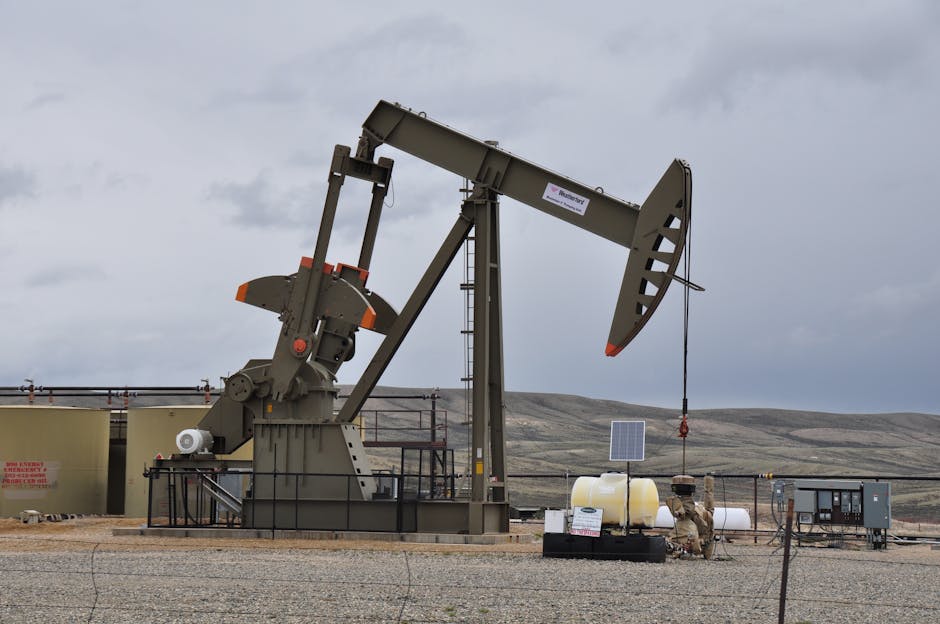
- Oil prices fall below $100 a barrel as US-Iran peace talks spark optimism among investors.
- Possible US-Iran agreement could lead to increased oil production increase and reduced tensions in the Middle East.
- Decline in oil prices provides welcome relief for consumers and businesses, boosting economic growth and trade.
- Global economy still recovering from the pandemic sees oil price drop as a much-needed boost.
- Market watchers closely monitor US-Iran relations’ impact on the global energy market.
The price of crude oil has fallen below $100 a barrel for the first time in weeks, as hopes of renewed peace talks between the US and Iran have sparked optimism among investors. This significant decline in oil prices has been driven by the possibility of an agreement between the two nations, which could potentially lead to increased oil production and reduced tensions in the Middle East. The drop in oil prices is a welcome relief for consumers and businesses alike, as it is expected to have a positive impact on inflation and economic growth. With the global economy still recovering from the pandemic, a decline in oil prices could provide a much-needed boost to trade and commerce. As the situation continues to unfold, market watchers are closely monitoring the developments in US-Iran relations and their potential impact on the global energy market.
Background and Context

The current tensions between the US and Iran have been a major factor in the recent volatility of oil prices. The two nations have been engaged in a bitter dispute over Iran’s nuclear program, which has led to a significant reduction in Iranian oil exports. The resulting supply shortage has driven up oil prices, making it difficult for businesses and consumers to cope with the increased costs. However, with the possibility of new peace talks on the horizon, investors are hoping that a resolution can be reached, which would allow Iranian oil to flow back into the global market. This would not only ease the supply shortage but also reduce the risk of further conflict in the region, which has been a major concern for investors and policymakers alike. As the global economy continues to navigate the challenges of the post-pandemic world, a peaceful resolution to the US-Iran conflict could have far-reaching implications for trade, commerce, and economic growth.
Key Developments and Players

The latest developments in the US-Iran conflict have been marked by a series of diplomatic efforts to resolve the dispute. The US has been engaged in indirect talks with Iran, with the aim of reaching a new agreement that would limit Iran’s nuclear program in exchange for the lifting of economic sanctions. The talks have been facilitated by European intermediaries, who have been working to bridge the gap between the two sides. Key players in the negotiations include the US Secretary of State, the Iranian Foreign Minister, and the European Union’s foreign policy chief. As the talks continue, investors are closely watching the statements and actions of these key players, looking for any signs of progress or setbacks. The outcome of the negotiations will have significant implications for the global energy market, as well as the broader economy, making it a critical issue for businesses, investors, and policymakers to watch.
Analysis and Implications
The potential implications of a US-Iran peace agreement are far-reaching and complex. On the one hand, a deal could lead to increased oil production, reduced tensions in the Middle East, and a decline in oil prices. This would be a welcome development for consumers and businesses, as it would reduce the cost of energy and transportation. On the other hand, a deal could also lead to increased competition in the global energy market, which could put pressure on other oil-producing nations. Additionally, the lifting of economic sanctions on Iran could lead to a significant increase in Iranian trade and commerce, which could have implications for the global economy. As analysts and investors try to make sense of these complex developments, they are looking to experts and policymakers for guidance on what to expect and how to navigate the changing landscape of the global energy market.
Impact on the Global Economy
The easing of tensions between the US and Iran has significant implications for the global economy. A decline in oil prices could provide a boost to economic growth, as it would reduce the cost of energy and transportation. This could be particularly beneficial for industries such as manufacturing, transportation, and logistics, which are heavily reliant on oil. Additionally, a peaceful resolution to the conflict could lead to increased trade and commerce between the US, Iran, and other nations, which could have a positive impact on economic growth and job creation. However, the impact of a US-Iran peace agreement will not be uniform, and some nations and industries may be more affected than others. As the situation continues to unfold, policymakers and investors will need to carefully consider the potential implications of a deal and how it may affect their interests and investments.
Expert Perspectives
Experts are divided on the potential outcome of the US-Iran peace talks, with some expressing optimism about the possibility of a deal and others warning of the challenges and complexities involved. Some analysts believe that a deal could be reached in the coming months, which would lead to a significant decline in oil prices and a boost to economic growth. Others, however, are more cautious, warning that the talks are fragile and that a deal may not be possible. As the situation continues to unfold, investors and policymakers will need to carefully consider the different perspectives and opinions of experts in order to make informed decisions about their investments and policies.
Looking ahead, the key question is what to watch in the coming weeks and months. Investors will be closely monitoring the progress of the US-Iran peace talks, looking for any signs of progress or setbacks. They will also be watching the statements and actions of key players, including the US Secretary of State, the Iranian Foreign Minister, and the European Union’s foreign policy chief. As the situation continues to unfold, one thing is clear: the outcome of the US-Iran peace talks will have significant implications for the global energy market and the broader economy, making it a critical issue for businesses, investors, and policymakers to watch.