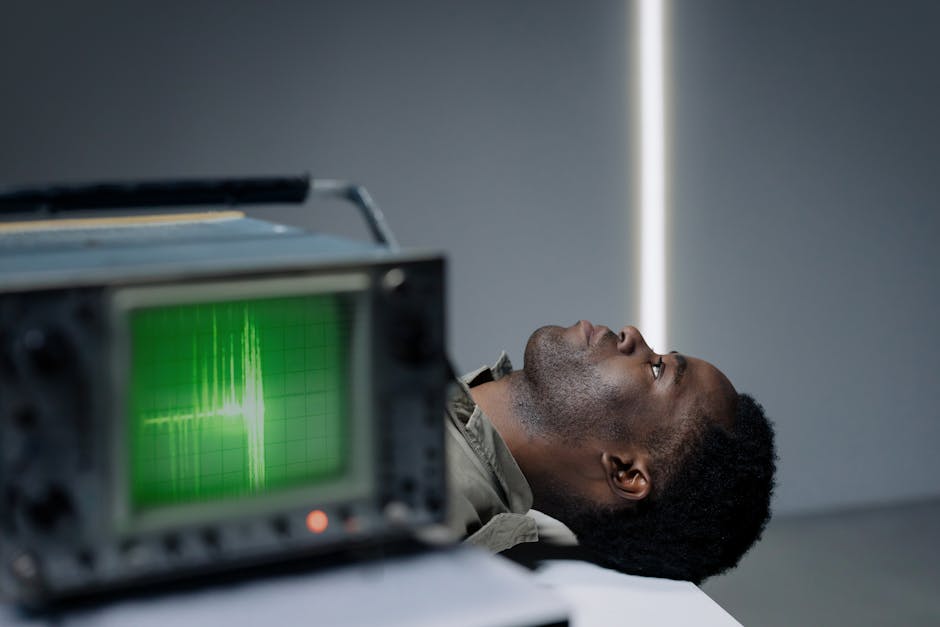
- Recent studies suggest that our brain’s decision-making process may not be as voluntary as we think.
- The brain’s readiness potential begins approximately 550 milliseconds before movement occurs, challenging the concept of free will.
- The Libet experiment found that neural commitment to a decision occurs before conscious awareness, raising questions about decision-making and consciousness.
- Hierarchical models parallel the brain’s decision-making process, with lower-level processes preceding higher-level decisions.
- Understanding the brain’s functions is crucial for grasping the complex relationships between the brain, consciousness, and decision-making.
The concept of free will has long been a topic of debate among philosophers, scientists, and scholars. Recent studies have shed new light on the brain’s decision-making process, suggesting that our choices may not be as voluntary as we think. A striking fact is that the brain’s readiness potential, which indicates the brain’s preparation for movement, begins approximately 550 milliseconds before the actual movement occurs. This phenomenon, first observed by Benjamin Libet in the 1980s, has significant implications for our understanding of free will and the human decision-making process.
The Libet Experiment: A Challenge to Free Will

The Libet experiment has been widely cited as evidence that free will is an illusion. The study found that the brain’s neural commitment to a decision occurs around 350 milliseconds before conscious awareness of the decision. This raises fundamental questions about the nature of decision-making and the role of consciousness in the process. As researchers continue to explore the intricacies of brain function, the findings of the Libet experiment remain a crucial reference point for understanding the complex relationships between the brain, consciousness, and decision-making.
Hierarchical Models: A Parallel to Brain Function

A fascinating parallel can be drawn between the brain’s decision-making process and the functioning of hierarchical models. In these models, lower-level processes often precede higher-level decision-making, mirroring the pattern observed in the Libet experiment. This structural similarity suggests that the illusion of free will may not be unique to brain function, but rather a general property of hierarchical systems. As artificial intelligence and machine learning continue to evolve, the study of hierarchical models provides valuable insights into the decision-making processes that underlie these systems.
Unpacking the Implications of Hierarchical Decision-Making
The discovery that hierarchical models exhibit a similar pattern to brain function has significant implications for our understanding of decision-making. If the illusion of free will is a general property of hierarchical systems, it challenges traditional notions of agency and control. This, in turn, raises important questions about the development of artificial intelligence and the potential consequences of creating systems that may be capable of making decisions without conscious oversight. As researchers delve deeper into the workings of hierarchical models, they must also consider the ethical implications of creating systems that may be seen as autonomous.
The Broader Implications of Free Will and Decision-Making
The potential consequences of the illusion of free will extend far beyond the realm of artificial intelligence. If our choices are not entirely voluntary, it challenges the notion of personal responsibility and the concept of moral agency. This, in turn, has significant implications for fields such as law, ethics, and social policy. As our understanding of decision-making and brain function evolves, it is essential to consider the broader implications of these findings and their potential impact on society.
Expert Perspectives
Experts in the field of neuroscience and artificial intelligence offer contrasting viewpoints on the implications of the Libet experiment and the parallel between brain function and hierarchical models. Some argue that the illusion of free will is a fundamental aspect of human decision-making, while others see it as a challenge to traditional notions of agency and control. As researchers continue to explore the intricacies of brain function and hierarchical models, a deeper understanding of the complex relationships between decision-making, consciousness, and free will will be crucial in informing the development of artificial intelligence and our understanding of human behavior.
Looking to the future, one of the most pressing questions is how the discovery of the illusion of free will will shape the development of artificial intelligence. Will the creation of autonomous systems challenge traditional notions of agency and control, or will it lead to a deeper understanding of the complex relationships between decision-making, consciousness, and free will? As researchers continue to explore the frontiers of brain function and hierarchical models, the answer to this question remains an open and intriguing one.