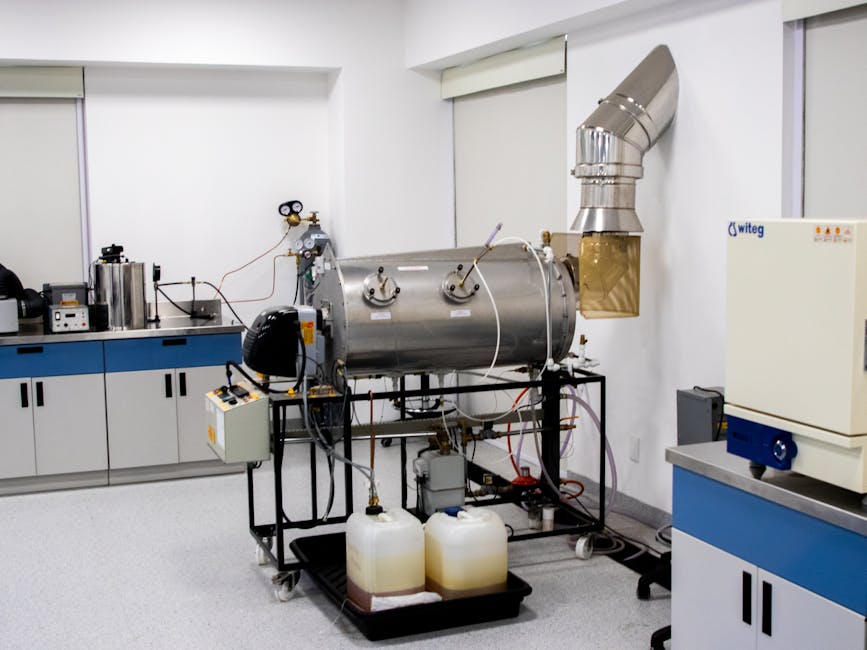
- A global helium shortage threatens the development of artificial intelligence and medical research.
- The disruptions in the Strait of Hormuz have exacerbated the existing strain on the global helium supply chain.
- Helium is a critical element in cooling systems for supercomputers, data centers, and MRI machines.
- The shortage of helium may impact the operation of the Large Hadron Collider and deep-sea diving.
- The unique properties of helium make it indispensable in various industrial and scientific applications.
The world is facing a critical shortage of helium, a gas that is not only essential for party balloons and airships but also plays a vital role in the development of artificial intelligence, medical research, and various industrial applications. With the global supply chain of helium already under strain, the recent disruptions in the Strait of Hormuz have further exacerbated the crisis, leaving many to wonder what the future holds for this crucial commodity. As the demand for helium continues to grow, driven by the booming AI industry and the increasing need for advanced medical technologies, the shortage of this invisible gas is becoming a pressing concern that requires immediate attention.
The Importance of Helium in Modern Technology

Helium is a critical element in many areas of modern technology, from the cooling systems of supercomputers and data centers to the production of semiconductors and fiber optic cables. It is also used in magnetic resonance imaging (MRI) machines, which rely on the gas to cool the superconducting magnets that generate the high-resolution images of the body. Furthermore, helium is essential for the operation of the Large Hadron Collider, the world’s most powerful particle accelerator, and for deep-sea diving, where it is used to prevent nitrogen narcosis. The unique properties of helium make it an indispensable component in many industrial and scientific applications, and its shortage is likely to have far-reaching consequences.
The Role of Helium in the AI Boom

The current AI boom is heavily reliant on helium, which is used to cool the complex systems of supercomputers and data centers that power machine learning algorithms. As the demand for AI technologies continues to grow, the need for helium is increasing exponentially, putting additional pressure on the already strained global supply chain. The shortage of helium is not only affecting the development of new AI systems but also threatening the operation of existing ones, which could have significant implications for industries that rely heavily on AI, such as finance, healthcare, and transportation. The AI industry’s dependence on helium highlights the need for a sustainable and reliable supply of this critical gas.
Understanding the Helium Shortage
The helium shortage is a complex issue that is driven by a combination of factors, including the depletion of natural helium reserves, the lack of new discoveries, and the increasing demand from emerging industries. The global helium market is dominated by a few large players, which has led to a lack of competition and investment in new production capacity. Additionally, the extraction and processing of helium are complex and expensive processes, which has limited the entry of new players into the market. As the shortage of helium continues to worsen, it is essential to understand the underlying causes of the crisis and to develop strategies to mitigate its effects.
Implications of the Helium Shortage
The implications of the helium shortage are far-reaching and could have significant consequences for various industries and sectors. The shortage of helium could lead to delays and disruptions in the development of new AI systems, which could have a ripple effect on the entire tech industry. Additionally, the shortage could affect the operation of medical research facilities and hospitals that rely on helium-cooled MRI machines, which could have serious consequences for patient care. The shortage of helium also highlights the need for sustainable and responsible management of critical resources, which is essential for ensuring the long-term viability of industries that rely on these resources.
Expert Perspectives
According to Sophia Hayes, professor of chemistry at Washington University in St. Louis, the helium shortage is a wake-up call for industries that rely on this critical gas. Hayes emphasizes the need for sustainable and responsible management of helium resources, which includes investing in new production capacity, improving extraction and processing technologies, and promoting the recycling and reuse of helium. Ian Sample, a science journalist, notes that the helium shortage is not only a technical issue but also a geopolitical one, as the global supply chain of helium is dominated by a few large players. Sample argues that the shortage of helium highlights the need for international cooperation and agreement on the management of critical resources.
As the world grapples with the helium shortage, it is essential to look to the future and to consider the potential consequences of this crisis. Will the shortage of helium lead to a slowdown in the development of AI technologies, or will new innovations and discoveries emerge to mitigate the effects of the crisis? What role will international cooperation and agreement play in addressing the helium shortage, and how will industries that rely on this critical gas adapt to the new reality? These are just a few of the questions that need to be answered as we navigate the complex and uncertain world of helium supply and demand.