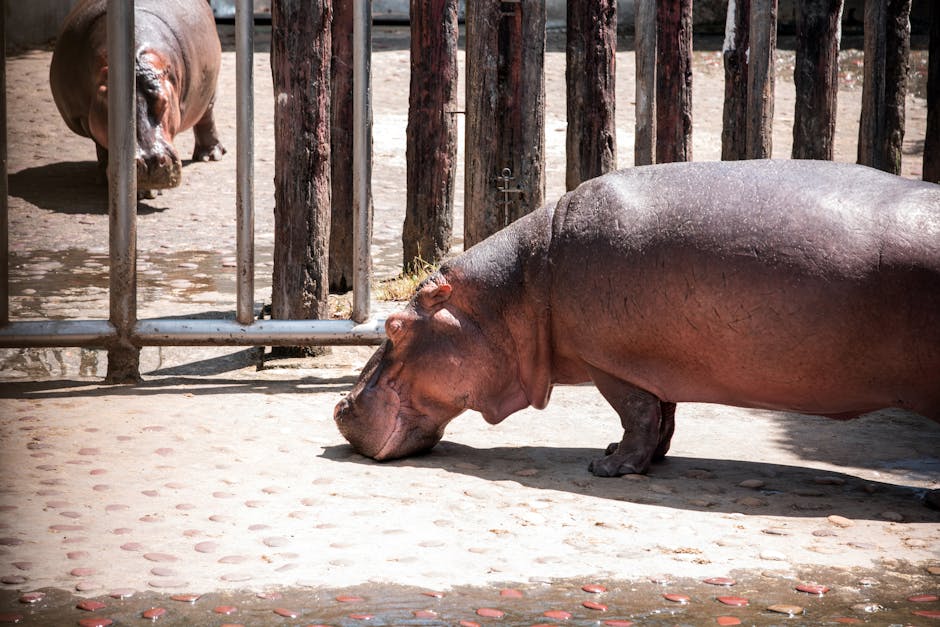
The Colombian government is facing a unique wildlife management challenge, as a colony of wild hippos, originally introduced to the country by the notorious drug lord Pablo Escobar, is set to be culled. With estimates suggesting that the population has grown to around 120 individuals, officials have announced plans to cull approximately 80 of the animals, citing concerns over the environmental and social impacts of the herd. This drastic measure has sparked debate among conservationists and local residents, who are torn between the need to protect the ecosystem and the desire to preserve the unusual legacy of Escobar’s exotic menagerie.
The Legacy of Escobar’s Menagerie

Pablo Escobar’s love of exotic animals was well-documented, and his Hacienda Napoles estate, located near Medellin, was home to a wide range of species, including hippos, rhinos, and elephants. After Escobar’s death in 1993, many of the animals were relocated to zoos or sanctuaries, but a small group of hippos remained on the loose, thriving in the warm and humid climate of the Magdalena River valley. Over the years, the hippos have become a familiar sight in the area, with some locals even viewing them as a tourist attraction. However, as the population has grown, so too have concerns over the impact of the hippos on the local ecosystem.
The Cull: A Necessary Measure?

According to Colombian officials, the cull is necessary to prevent the hippos from causing further damage to the environment and to protect human safety. The hippos are reported to be competing with native species for food and habitat, and there have been several incidents of aggressive behavior towards humans. The cull, which is set to be carried out by a team of wildlife experts, will involve the sedation and euthanasia of approximately 80 hippos, with the remaining animals to be relocated to zoos or sanctuaries. While some have welcomed the move as a necessary step to protect the environment, others have expressed concerns over the ethics of the cull and the potential impact on the local ecosystem.
Analysis: Causes, Effects, and Expert Angles
The decision to cull the hippos has sparked a wider debate over the introduction of non-native species to ecosystems and the challenges of managing wildlife populations. Experts point out that the hippos are an invasive species, which can cause significant damage to the environment and displace native species. Moreover, the hippos are also a potential threat to human safety, as they are known to be aggressive and territorial. On the other hand, some conservationists argue that the hippos could be seen as an opportunity to study the impact of invasive species on ecosystems and to develop new strategies for managing wildlife populations. As one expert noted, “The hippos are a symptom of a larger problem, which is the lack of effective regulation and management of exotic species in Colombia.”
Implications: Who is Affected and How
The cull is likely to have significant implications for the local community, which has grown accustomed to the presence of the hippos. Some residents have expressed concerns over the potential impact on tourism, which has become an increasingly important sector of the local economy. Others have raised concerns over the potential for the cull to be inhumane or ineffective, citing the need for a more comprehensive and sustainable solution to the problem. As the cull goes ahead, it is likely that the debate over the hippos will continue, with some arguing that the animals are a nuisance and others seeing them as an important part of the local heritage.
Expert Perspectives
Opinions on the cull are divided, with some experts arguing that it is a necessary measure to protect the environment and human safety, while others see it as a knee-jerk reaction that fails to address the underlying causes of the problem. As one expert noted, “The cull is a short-term solution that does not address the root causes of the problem, which is the lack of effective regulation and management of exotic species in Colombia.” Another expert argued that the hippos could be seen as an opportunity to develop new strategies for managing wildlife populations and promoting conservation. “The hippos are a unique case, which requires a comprehensive and sustainable solution that takes into account the needs of both humans and animals,” they said.
As the situation continues to unfold, it remains to be seen what the long-term implications of the cull will be. Will it be effective in reducing the population and mitigating the environmental impacts, or will it simply displace the problem to another area? Only time will tell, but one thing is certain – the story of Pablo Escobar’s wild hippos has sparked a wider debate over the complex and often contentious issue of wildlife management and conservation.