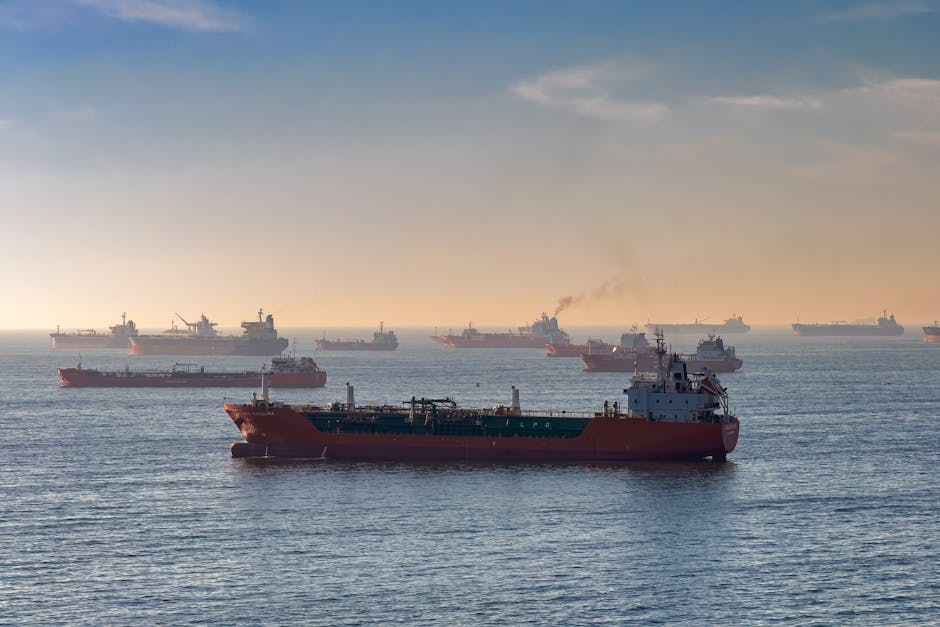
- President Trump ordered a blockade of the Strait of Hormuz, a vital waterway for global oil trade, citing Iran’s disruption of shipping lanes.
- The US Navy will enforce the blockade, expected to have far-reaching consequences for the global economy.
- The move marks a drastic escalation of the conflict between the US and Iran, with many experts warning of a full-scale war.
- The blockade is a response to Iran’s alleged disruption of shipping lanes and the failure of peace talks in Pakistan.
- The escalating tensions between the US and Iran have their roots in long-standing issues, including Iran’s nuclear program and support for militant groups.
The Strait of Hormuz, a vital waterway for global oil trade, has become the latest flashpoint in the escalating tensions between the US and Iran. In a move that has sent shockwaves across the world, President Trump has ordered a blockade of the strait, citing Iran’s alleged disruption of shipping lanes and the failure of peace talks in Pakistan. The US Navy has been tasked with enforcing the blockade, which is expected to have far-reaching consequences for the global economy. The move has been described as a drastic escalation of the conflict, with many experts warning of the potential for a full-scale war.
Background to the Crisis

The current crisis in the Strait of Hormuz has its roots in the long-standing tensions between the US and Iran. The two countries have been at odds over a range of issues, including Iran’s nuclear program, its support for militant groups in the region, and its growing influence in the Middle East. The situation took a turn for the worse in recent months, with the US imposing stringent sanctions on Iran and Iran responding by blocking the Strait of Hormuz. The failed peace talks in Pakistan were seen as a last-ditch effort to resolve the crisis through diplomacy, but the breakdown of those talks has led to the current escalation.
The Blockade: What Happened

According to reports, the US Navy has been tasked with enforcing the blockade of the Strait of Hormuz, which will effectively prevent Iranian ships from passing through the waterway. The move is seen as a response to Iran’s alleged disruption of shipping lanes, which has been blamed for a significant increase in oil prices. The US has also accused Iran of supporting militant groups in the region, which has further exacerbated tensions. The blockade is expected to have a major impact on global trade, with many countries relying on the Strait of Hormuz for their oil imports. The US has assured its allies that it will work to minimize the disruption to global trade, but the move is likely to have far-reaching consequences.
Analysis: Causes and Effects
The causes of the current crisis in the Strait of Hormuz are complex and multifaceted. At its root, the crisis is a manifestation of the long-standing tensions between the US and Iran, which have been exacerbated by a range of factors, including the US withdrawal from the Iran nuclear deal and the imposition of stringent sanctions. The effects of the blockade are likely to be far-reaching, with many countries affected by the disruption to global trade. The increase in oil prices is likely to have a major impact on the global economy, with many countries struggling to cope with the rising cost of energy. The blockade is also likely to have significant geopolitical implications, with many countries in the region affected by the escalation of tensions.
Implications: Who is Affected
The implications of the blockade of the Strait of Hormuz are far-reaching, with many countries affected by the disruption to global trade. The increase in oil prices is likely to have a major impact on the global economy, with many countries struggling to cope with the rising cost of energy. The blockade is also likely to have significant geopolitical implications, with many countries in the region affected by the escalation of tensions. The US has assured its allies that it will work to minimize the disruption to global trade, but the move is likely to have far-reaching consequences for countries such as China, Japan, and South Korea, which rely heavily on the Strait of Hormuz for their oil imports.
Expert Perspectives
Experts are divided on the implications of the blockade, with some warning of the potential for a full-scale war and others arguing that the move is a necessary response to Iran’s aggression. According to Dr. Sanam Vakil, a Middle East expert at Chatham House, the blockade is a ‘dangerous escalation’ of the conflict, which could have far-reaching consequences for the region. On the other hand, Dr. Michael Rubin, a resident scholar at the American Enterprise Institute, argues that the blockade is a ‘necessary response’ to Iran’s disruption of shipping lanes and its support for militant groups in the region.
As the situation continues to unfold, many are left wondering what the future holds for the region. Will the blockade lead to a full-scale war, or will it be a catalyst for a new round of diplomatic efforts? The answer to this question remains uncertain, but one thing is clear: the blockade of the Strait of Hormuz marks a significant escalation of the conflict between the US and Iran, and its implications will be felt for a long time to come. The international community will be watching the situation closely, as the world waits with bated breath to see what happens next.