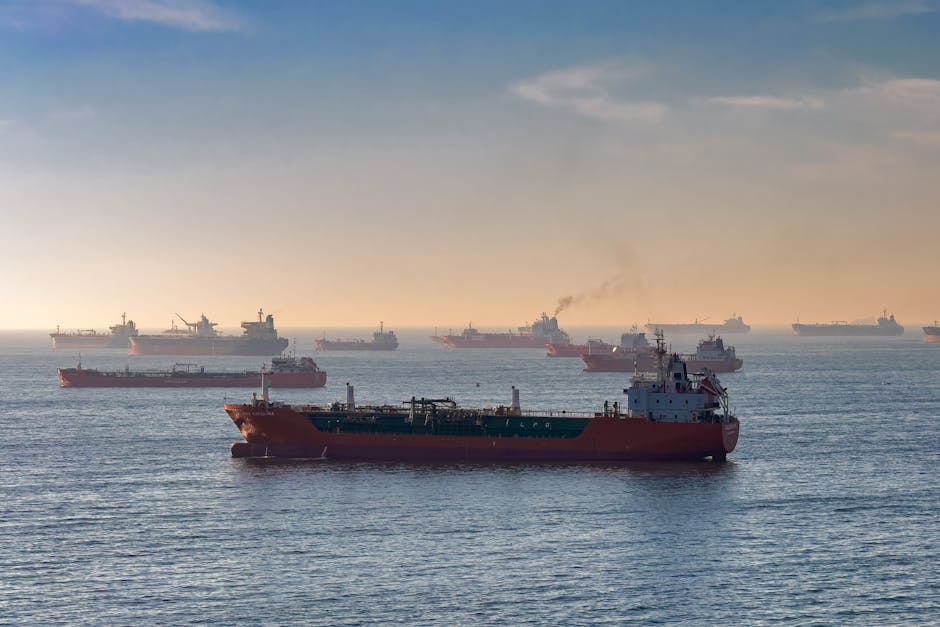
The global economy is on high alert as stocks plummeted following the announcement that the US navy has been instructed to interdict ships that pay Iran to pass through the Strait of Hormuz. This strategic waterway is a critical chokepoint for global oil supplies, with approximately 20% of the world’s oil passing through it every day. The move is a significant escalation of tensions between the US and Iran, and has sparked fears of a wider conflict in the region. As a result, investors are becoming increasingly risk-averse, leading to a sharp sell-off in global markets. The Dow Jones index fell by over 2% in a single day, while the price of oil surged by over 5% as traders priced in the risk of disruption to global supplies.
The Strait of Hormuz: A Critical Waterway

The Strait of Hormuz is a narrow waterway that connects the Persian Gulf to the Gulf of Oman, and is the only route by which oil tankers can pass from the Persian Gulf to the open ocean. The strait is approximately 90 miles long and 20 miles wide at its narrowest point, making it a highly congested and vulnerable waterway. The US and its allies have long been concerned about the potential for Iran to disrupt oil supplies by blocking the strait, and have taken steps to mitigate this risk. However, the latest move by the US to interdict ships that pay Iran to pass through the strait has raised the stakes significantly, and has sparked fears of a wider conflict in the region. The global economy is highly dependent on the free flow of oil through the strait, and any disruption to supplies could have significant consequences for economic growth and stability.
Key Players and Interests

The US, Iran, and other key players in the region have significant interests at stake in the Strait of Hormuz. The US has long been concerned about the potential for Iran to disrupt oil supplies, and has taken steps to mitigate this risk. Iran, on the other hand, sees the strait as a critical lifeline for its economy, and has threatened to block the waterway in response to US sanctions. Other key players in the region, including Saudi Arabia and the UAE, are also heavily dependent on the strait for their oil exports, and are likely to be affected by any disruption to supplies. The latest move by the US to interdict ships that pay Iran to pass through the strait has raised the stakes significantly, and has sparked fears of a wider conflict in the region. The US navy has a significant presence in the region, and is well-equipped to enforce the blockade. However, the risks of escalation are high, and the potential consequences of a wider conflict are significant.
Analysis and Implications
The decision by the US to interdict ships that pay Iran to pass through the Strait of Hormuz has significant implications for the global economy. The strait is a critical chokepoint for global oil supplies, and any disruption to supplies could have significant consequences for economic growth and stability. The move is also likely to escalate tensions between the US and Iran, and could potentially lead to a wider conflict in the region. The global economy is already facing significant headwinds, including a slowdown in trade and a decline in business investment. The latest move by the US has added to these concerns, and has sparked fears of a global economic downturn. The price of oil has surged in response to the news, and is likely to remain volatile in the coming days and weeks. The US dollar has also strengthened, as investors seek safe-haven assets in response to the uncertainty.
Global Consequences
The consequences of a blockade of the Strait of Hormuz would be far-reaching and significant. The global economy is highly dependent on the free flow of oil through the strait, and any disruption to supplies could have significant consequences for economic growth and stability. The price of oil would likely surge, leading to higher inflation and lower economic growth. The impact would be felt across the globe, with countries that are heavily dependent on oil imports being particularly affected. The US, China, and Europe would all be impacted, although the effects would be felt differently in each region. The US would likely see higher inflation and lower economic growth, while China would be affected by higher import costs and lower exports. Europe would be impacted by higher energy costs and lower economic growth, and would likely see a significant increase in unemployment.
Expert Perspectives
Experts are divided on the implications of the US move to interdict ships that pay Iran to pass through the Strait of Hormuz. Some see the move as a necessary step to prevent Iran from disrupting global oil supplies, while others see it as a provocative move that could escalate tensions in the region. ‘The US is taking a significant risk by interdicting ships that pay Iran to pass through the strait,’ said one expert. ‘The potential consequences of a wider conflict are significant, and could have far-reaching implications for the global economy.’ Others see the move as a necessary step to prevent Iran from gaining a strategic advantage in the region. ‘The US has to take a strong stance against Iran’s aggressive behavior,’ said another expert. ‘The strait is a critical waterway, and the US cannot allow Iran to disrupt global oil supplies.’
As the situation continues to unfold, investors and policymakers will be watching closely to see how events develop. The US has said that it will take all necessary steps to protect its interests in the region, while Iran has threatened to retaliate against any US aggression. The potential consequences of a wider conflict are significant, and could have far-reaching implications for the global economy. One key question is how China and other major economies will respond to the US move. Will they support the US, or will they seek to maintain good relations with Iran? The answer to this question could have significant implications for the global economy, and will be closely watched in the coming days and weeks.