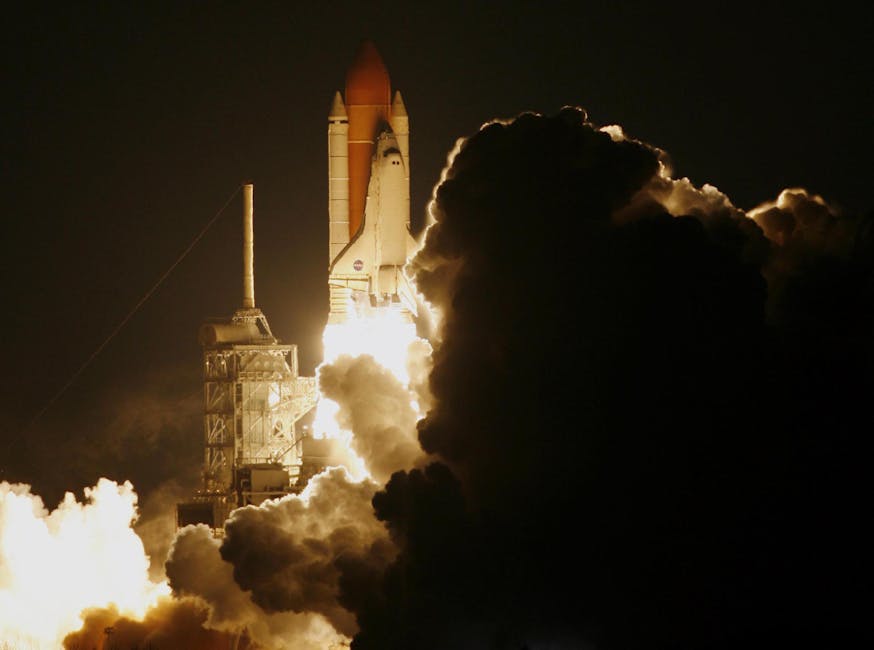
- The Artemis II mission marked a significant milestone in space exploration with a record-breaking moon flyby.
- NASA has successfully tested the Space Launch System (SLS) rocket and the Orion spacecraft for future deep space missions.
- The mission paves the way for future lunar and Mars missions, with NASA planning to send the first woman and the first person of color to the moon by 2025.
- The Artemis II crew spent several days in space conducting tests and experiments to ensure the spacecraft’s systems were functioning nominally.
- The mission’s success has re-established NASA’s presence in deep space, demonstrating a crucial step towards further space exploration.
The Artemis II mission has marked a significant milestone in space exploration, with the crew of four astronauts successfully completing a record-breaking moon flyby. As they returned home to a thunderous welcome in Houston, the astronauts couldn’t help but marvel at the experience, with one describing the Earth as ‘this lifeboat hanging in the universe’. This poignant remark encapsulates the awe-inspiring nature of space travel and the incredible feat achieved by the Artemis II crew. With their mission, NASA has taken a crucial step towards re-establishing its presence in deep space, paving the way for future lunar and Mars missions.
Historic Mission Overview

The Artemis II mission was a groundbreaking achievement, marking the first time a crewed spacecraft has flown by the moon in over 50 years. The mission was a crucial test of the Space Launch System (SLS) rocket and the Orion spacecraft, which will be used for future deep space missions. The crew of four astronauts, comprising seasoned space travelers and rookies, spent several days in space, conducting a series of tests and experiments to ensure the spacecraft’s systems were functioning nominally. The mission’s success has significant implications for the future of space exploration, with NASA planning to send the first woman and the first person of color to the moon by 2025.
Mission Highlights and Crew Experience

The Artemis II crew’s experience was nothing short of extraordinary, with the astronauts witnessing breathtaking views of the Earth and the moon. As they flew by the lunar surface, the crew conducted a series of scientific experiments, including collecting data on the moon’s gravity field and testing the spacecraft’s communication systems. The crew also had the opportunity to test the spacecraft’s systems, including the life support and propulsion systems, in preparation for future missions. The astronauts’ remarks at the welcome home event in Houston provided a glimpse into their incredible experience, with one astronaut describing the moment they saw the Earth rising over the lunar horizon as ‘a truly surreal experience’.
Analysis and Implications
The success of the Artemis II mission has significant implications for the future of space exploration. With the mission demonstrating the capability to send astronauts to the moon and return them safely to Earth, NASA is now poised to take the next step in its lunar ambitions. The agency plans to establish a sustainable presence on the lunar surface, with the goal of using the moon as a stepping stone for further human exploration of the solar system. The mission’s success also highlights the importance of international cooperation in space exploration, with NASA collaborating with space agencies around the world to achieve its goals. As the space agency looks to the future, it is clear that the Artemis II mission will play a critical role in shaping the course of human spaceflight.
Future of Space Exploration
The Artemis II mission has set the stage for a new era of space exploration, with NASA planning to send astronauts to the moon and beyond in the coming years. The mission’s success has also sparked renewed interest in space travel, with private companies such as SpaceX and Blue Origin working towards establishing a human presence in space. As the space agency looks to the future, it is clear that the Artemis II mission will be remembered as a pivotal moment in the history of space exploration. The mission’s success has demonstrated the capability to send astronauts to the moon and return them safely to Earth, paving the way for further human exploration of the solar system.
Expert Perspectives
The success of the Artemis II mission has been hailed by experts as a major achievement, with many praising the crew’s skill and dedication. Dr. Maria Zuber, NASA’s associate administrator for the Science Mission Directorate, described the mission as ‘a critical step towards establishing a sustainable presence on the lunar surface’. Meanwhile, Dr. Thomas Zurbuchen, NASA’s associate administrator for the Space Technology Mission Directorate, highlighted the mission’s significance, stating that ‘the Artemis II mission demonstrates the power of human exploration and the importance of pushing the boundaries of what is possible’.
As the space agency looks to the future, experts are eagerly anticipating the next steps in NASA’s lunar ambitions. With the Artemis II mission providing a crucial test of the Space Launch System rocket and the Orion spacecraft, the stage is now set for the first woman and the first person of color to walk on the moon. The question on everyone’s mind is what’s next for NASA’s lunar program, with many speculating about the potential for a manned mission to Mars in the coming decades. As the space agency continues to push the boundaries of human exploration, one thing is clear: the Artemis II mission will be remembered as a pivotal moment in the history of space travel.