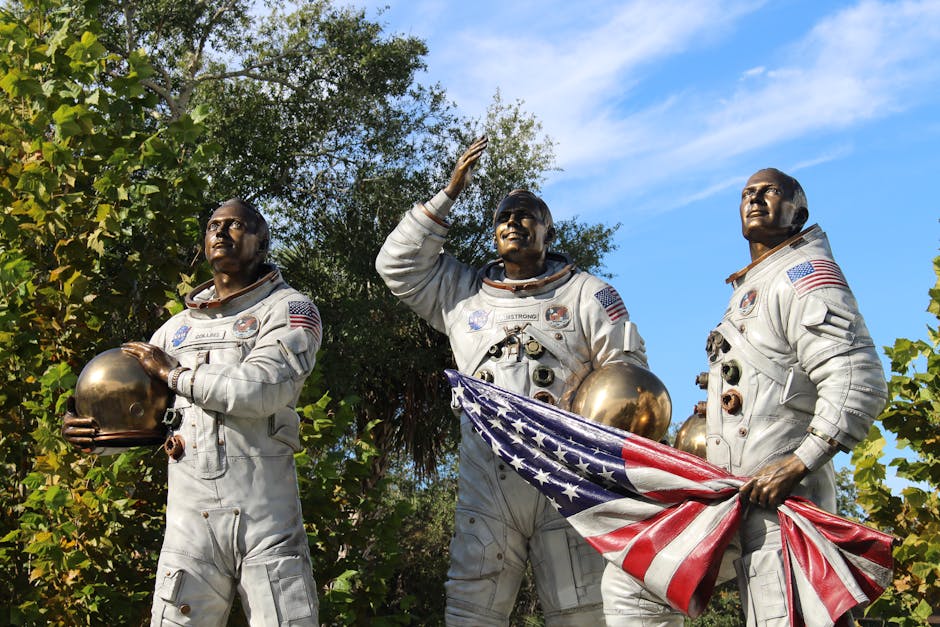
- The Artemis II mission is a significant milestone in human space exploration, but it also highlights the declining need for human presence in space.
- Robots and artificial intelligence are becoming increasingly sophisticated, making human space exploration less necessary for scientific discovery.
- The cost of sending humans to space is rapidly becoming prohibitively expensive, resembling an ultra-expensive sport rather than a scientific pursuit.
- A renewed space race between the US and China has sparked interest in space exploration, but may be driven more by national pride than scientific imperative.
- The role of humans in space exploration is being reevaluated as robots and automated systems become more efficient and cost-effective.
The recent launch of the Artemis II mission marks a significant milestone in human space exploration, with astronauts embarking on a journey to the moon. However, as we celebrate this achievement, it’s essential to consider the rapidly shrinking case for sending humans into space. With the advancement of robots and artificial intelligence, the need for human presence in space is becoming increasingly obsolete. Soon, the only reason left to send humans to the moon will be as an ultra-expensive sport, rather than a necessity for scientific discovery or exploration.
The Revival of the Apollo Spirit

The 2020s have seen a resurgence of interest in space exploration, with the US and China engaging in a newfound space race. The Artemis program, aimed at returning humans to the moon by 2025, has garnered significant attention and investment. However, beneath the surface of this excitement lies a more nuanced reality. As robots and automated systems become increasingly sophisticated, the role of humans in space exploration is being reevaluated. The question on everyone’s mind is: what’s the point of sending humans to space when robots can do the job more efficiently and at a fraction of the cost?
Advances in Robotics and AI

The past decade has witnessed tremendous progress in robotics and artificial intelligence, with significant implications for space exploration. Robots can now perform complex tasks, such as sampling and analysis, with greater precision and accuracy than humans. Moreover, they can withstand extreme environments, such as radiation and extreme temperatures, without the need for cumbersome protective gear. The Curiosity Rover, which has been exploring Mars since 2012, is a prime example of the capabilities of robotic space exploration. As technology continues to advance, it’s likely that robots will become even more adept at exploring space, further diminishing the need for human presence.
Key Players and Missions
The US, China, and other nations are investing heavily in space exploration, with a focus on lunar and Mars missions. NASA’s Artemis program, for instance, aims to establish a sustainable human presence on the moon, while China’s Chang’e 7 mission is slated to explore the moon’s south pole. Private companies, such as SpaceX and Blue Origin, are also making significant strides in space technology, with reusable rockets and lunar landers. However, as these missions progress, it’s essential to consider the role of humans in these endeavors and whether they are truly necessary for the advancement of scientific knowledge.
Analysis and Implications
The diminishing case for human space exploration has significant implications for the future of space travel. As robots become more capable, it’s likely that human missions will become increasingly expensive and unnecessary. The cost of sending humans to space is staggering, with estimates suggesting that a single mission to Mars could cost upwards of $500 billion. In contrast, robotic missions can be achieved at a fraction of the cost, with greater efficiency and accuracy. Furthermore, the risks associated with human space travel, such as radiation exposure and space debris, can be mitigated by using robots instead.
Expert Perspectives
Experts in the field are divided on the issue of human space exploration. Some argue that the presence of humans in space is essential for the advancement of scientific knowledge, while others contend that robots can perform the same tasks more efficiently. Martin Rees, the astronomer royal, and Donald Goldsmith, an astrophysicist, suggest that the only reason left to send humans to the moon will be as an ultra-expensive sport. In contrast, others argue that human presence in space is necessary for the development of new technologies and the inspiration of future generations.
As we look to the future of space exploration, it’s essential to consider the role of humans in these endeavors. Will we continue to prioritize human space travel, or will we shift our focus towards robotic exploration? The answer to this question will have significant implications for the direction of space research and the allocation of resources. One thing is certain, however: the case for human space exploration is rapidly shrinking, and it’s time to reevaluate our priorities in the pursuit of scientific discovery.