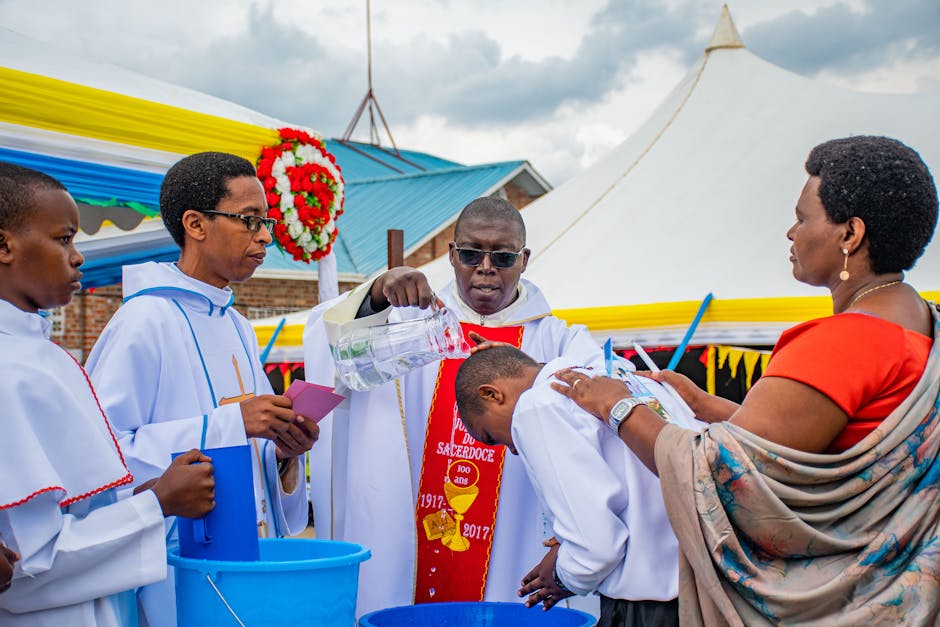
- Pope Leo’s 11-day Africa tour aims to promote peace, unity, and interfaith dialogue in four countries.
- The Catholic Church’s presence in Africa is growing, with over 230 million Africans identify as Catholics, nearly 20% of the global Catholic population.
- Pope Leo’s visit is crucial for the Church to strengthen its presence on the continent amidst rising global tensions and competition.
- The Church has invested heavily in African schools, hospitals, and institutions, gaining credibility and influence among African communities.
- Pope Leo’s message of hope, reconciliation, and unity is key to building on the Church’s momentum in Africa.
The Catholic Church’s influence in Africa continues to grow, with the continent being home to over 230 million Catholics, nearly 20% of the global Catholic population. As Pope Leo embarks on his 11-day, four-country tour of Africa, he will be visiting Algeria, Cameroon, Angola, and Equatorial Guinea, aiming to promote peace, unity, and interfaith dialogue. This trip marks a significant moment in the Church’s efforts to strengthen its presence on the continent, amidst rising global tensions and increasing competition from other Christian denominations. With the Church facing numerous challenges, including declining membership in Europe and the Americas, Pope Leo’s visit to Africa is seen as a crucial step in revitalizing the Church’s global influence.
Africa’s Growing Importance to the Catholic Church

The Catholic Church has long recognized the importance of Africa, with the continent being a major focus of missionary work and evangelization efforts. In recent years, the Church has invested heavily in building schools, hospitals, and other social institutions across Africa, aimed at promoting education, healthcare, and economic development. As a result, the Church has gained significant credibility and influence among African communities, with many seeing the Church as a trusted partner in promoting social justice and human dignity. With Pope Leo’s visit, the Church is seeking to build on this momentum, promoting a message of hope, reconciliation, and unity in a region often marked by conflict and division.
Key Stops on the Pope’s Tour

During his 11-day trip, Pope Leo will visit a number of key locations, including the cities of Algiers, Yaoundé, Luanda, and Malabo. In Algeria, the Pope will meet with government officials and religious leaders, discussing issues such as interfaith dialogue, religious freedom, and migration. In Cameroon, the Pope will visit a number of Catholic institutions, including schools and hospitals, highlighting the Church’s commitment to education and healthcare. In Angola and Equatorial Guinea, the Pope will meet with local bishops and clergy, discussing the challenges facing the Church in these countries, including poverty, corruption, and social inequality.
Analysis: The Pope’s Visit in Context
Pope Leo’s visit to Africa comes at a time of significant change and upheaval on the continent. With many African countries facing challenges such as poverty, conflict, and climate change, the Pope’s message of hope and unity is seen as particularly relevant. The visit also comes amidst rising tensions between the Catholic Church and other Christian denominations, with some critics accusing the Church of being out of touch with the needs and concerns of African communities. However, the Pope’s commitment to social justice and human dignity has won him significant support among many Africans, who see him as a champion of the poor and vulnerable. As the Pope navigates the complex landscape of African politics and society, his visit is likely to be closely watched by governments, religious leaders, and civil society organizations across the continent.
Implications of the Pope’s Visit
The implications of Pope Leo’s visit to Africa are far-reaching, with the potential to impact not only the Catholic Church but also the broader social and political landscape of the continent. With the Church playing a significant role in promoting education, healthcare, and economic development, the Pope’s visit is likely to have a positive impact on the lives of millions of Africans. The visit may also help to promote greater understanding and cooperation between different Christian denominations, as well as between Christians and people of other faiths. However, the visit also poses challenges, particularly in countries where the Church faces opposition or criticism from governments or other religious groups. As the Pope seeks to promote a message of peace and unity, he will need to navigate these challenges carefully, avoiding controversy while promoting the Church’s mission and values.
Expert Perspectives
Experts on African affairs and Catholic Church politics are watching the Pope’s visit with great interest, with some hailing it as a major milestone in the Church’s engagement with the continent. According to Dr. Kathryn Lancaster, a specialist on African Christianity, the Pope’s visit is a significant moment in the Church’s efforts to promote social justice and human dignity in Africa. However, other experts, such as Dr. John Taylor, a critic of the Church’s policies in Africa, argue that the visit is too focused on promoting the Church’s own interests, rather than addressing the real needs and concerns of African communities. As the Pope’s visit unfolds, these contrasting perspectives will likely continue to shape the debate about the Church’s role in Africa.
As the Pope’s visit comes to a close, many will be watching to see what impact it will have on the Catholic Church’s influence in Africa, as well as on the broader social and political landscape of the continent. Will the Pope’s message of hope and unity resonate with African communities, or will it be met with skepticism and criticism? What role will the Church play in promoting education, healthcare, and economic development in Africa, and how will it navigate the complex challenges facing the continent? These are just some of the questions that will be on the minds of experts, policymakers, and ordinary Africans as they follow the Pope’s journey across the continent.