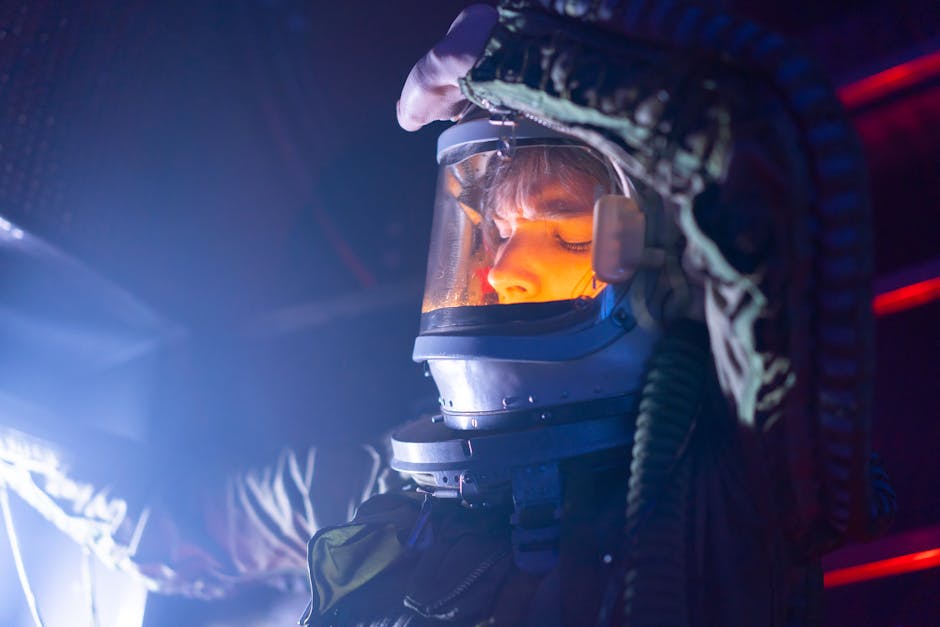
- NASA’s Artemis II mission is using emotional expression to make space travel more relatable and engaging for the public.
- The crew’s emotional accounts are highlighting the importance of emotional intelligence in space exploration and its impact on astronauts’ well-being.
- With over 1.2 million people watching the mission’s live stream, the public is eager to connect with astronauts on a personal level.
- The traditional approach to space exploration is being challenged by NASA’s inclusion of emotional expression in the Artemis II mission.
- Astronauts’ ability to express and manage emotions is crucial to their success and well-being in space.
NASA’s Artemis II mission has marked a significant milestone in space exploration, with its astronauts spreading ‘moon joy’ to the public through their emotional and expressive accounts of the journey. As the crew members travel through space, they have been sharing their experiences with mission control and the public, providing a unique glimpse into the human side of space travel. This approach has not only made the mission more engaging but also highlighted the importance of emotional expression in the scientific community. With over 1.2 million people watching the mission’s live stream, it is clear that the public is eager to connect with the astronauts on a personal level.
The Significance of Emotional Expression in Space Exploration

The inclusion of emotional expression in the Artemis II mission is a significant departure from the traditional approach to space exploration, which has often been characterized as colorless and plain. However, NASA’s lunar crew members have brought a new level of expressiveness to the mission, sharing their thoughts, feelings, and experiences with the public. This approach has not only made the mission more relatable but also highlighted the importance of emotional intelligence in space travel. As astronauts face unprecedented challenges in space, their ability to express and manage their emotions is crucial to their well-being and success. By sharing their emotional journeys, the crew members are providing a unique perspective on the human side of space exploration.
Key Players and Mission Objectives

The Artemis II mission is crewed by four experienced astronauts, each with their own unique background and expertise. The mission objectives include testing the Orion spacecraft and the Space Launch System (SLS) rocket, as well as conducting a series of scientific experiments in lunar orbit. The crew members have been working closely with mission control to ensure the success of the mission, and their emotional expressions have played a significant role in maintaining morale and motivation. As the mission progresses, the crew members will face numerous challenges, including navigating through space debris, managing resources, and conducting spacewalks. Their ability to work together as a team and express their emotions will be critical to overcoming these challenges.
Analysis of the Mission’s Emotional Impact
The Artemis II mission’s emphasis on emotional expression has significant implications for the scientific community. By sharing their emotional journeys, the crew members are providing a unique perspective on the human side of space exploration, which can help to inspire and motivate future generations of scientists and engineers. Furthermore, the mission’s focus on emotional intelligence can help to improve our understanding of the psychological factors that affect human performance in space. According to Dr. Maria Zuber, NASA’s associate administrator for the Science Mission Directorate, ‘the Artemis II mission is not just about exploring the moon, but also about exploring the human condition.’ By analyzing the crew members’ emotional expressions, scientists can gain valuable insights into the effects of space travel on the human mind and body.
Implications for Future Space Missions
The success of the Artemis II mission’s emotional expression approach has significant implications for future space missions. As space agencies and private companies plan for longer-duration missions to the moon and Mars, the importance of emotional intelligence and expression will only continue to grow. By prioritizing emotional expression and well-being, space agencies can help to ensure the success and safety of their crew members, while also inspiring and motivating the public to support space exploration. According to NASA’s administrator, Jim Bridenstine, ‘the Artemis II mission is a critical step towards establishing a sustainable human presence on the moon and beyond.’ By embracing emotional expression, NASA is taking a significant step towards achieving this goal.
Expert Perspectives
Experts in the field of space psychology have praised the Artemis II mission’s emphasis on emotional expression, citing its potential to improve our understanding of the human factors that affect space travel. Dr. Jack Stuster, a renowned space psychologist, notes that ‘the Artemis II mission is a groundbreaking example of how emotional expression can be used to improve crew performance and well-being in space.’ However, some experts have also raised concerns about the potential risks of emotional expression in space, citing the need for careful management and support. As the mission progresses, it will be important to continue monitoring the crew members’ emotional well-being and providing support as needed.
Looking ahead, the Artemis II mission’s emphasis on emotional expression is likely to have a lasting impact on the field of space exploration. As space agencies and private companies plan for future missions, they will need to consider the importance of emotional intelligence and expression in ensuring the success and safety of their crew members. With the Artemis II mission paving the way, it is likely that future space missions will prioritize emotional expression and well-being, leading to a new era of space exploration that is more human-centered and emotionally intelligent. As NASA’s associate administrator for the Science Mission Directorate notes, ‘the Artemis II mission is just the beginning of a new chapter in space exploration, one that will be characterized by a deeper understanding of the human condition and a greater emphasis on emotional expression.’