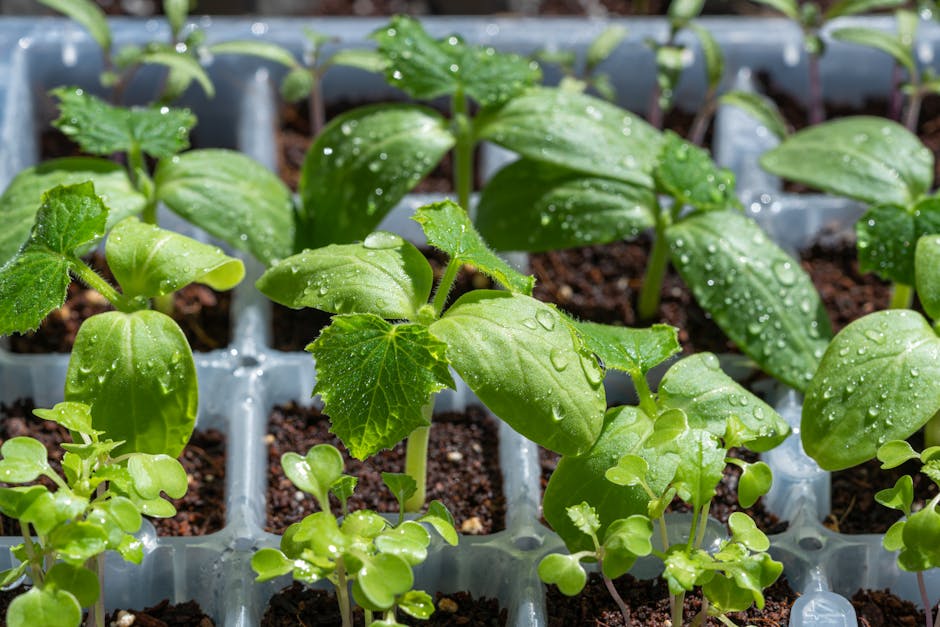
- Light strengthens the bond between a plant’s outer skin and inner tissues, promoting growth.
- This phenomenon has significant implications for understanding plant biology and developing sustainable agriculture methods.
- Research suggests that light plays a dual role in plant growth, both fueling and restricting development.
- Understanding the relationship between light and plant growth can improve crop yields and promote sustainable agriculture.
- The study’s findings have far-reaching implications for agronomy, horticulture, and ecology fields.
It has long been understood that light is a crucial factor in plant growth, providing the energy necessary for photosynthesis and fueling the development of leaves, stems, and roots. However, recent research has shed new light on the complex relationship between light and plant growth, revealing a surprising mechanism by which light both strengthens and restricts plant development. According to a groundbreaking study, light strengthens the “glue” between a plant’s outer skin and its inner tissues, a phenomenon that has significant implications for our understanding of plant biology.
The Role of Light in Plant Growth

The discovery of light’s dual role in plant growth is particularly significant in today’s world, where scientists are working to develop more efficient and sustainable methods of crop production. As the global population continues to grow, the need for high-yielding, disease-resistant crops has never been more pressing. By understanding the complex interplay between light and plant growth, researchers hope to unlock new strategies for improving crop yields and promoting sustainable agriculture. The study’s findings have far-reaching implications for fields such as agronomy, horticulture, and ecology, and are likely to spark a new wave of research into the intricate relationships between plants and their environment.
Uncovering the Mechanism

The researchers behind the study made their discovery by investigating the effects of light on plant cell walls. They found that a compound called p-coumaric acid plays a key role in strengthening the bond between a plant’s outer skin and its inner tissues. This tighter bond, driven by p-coumaric acid, reinforces cell walls and provides additional structural support to the plant. However, the researchers also observed that this increased strength comes at a cost, as the tighter bond restricts the plant’s ability to expand and grow. This subtle yet significant trade-off has important implications for our understanding of plant development and highlights the complex, often contradictory nature of plant growth.
Analysis and Implications
The study’s findings have significant implications for our understanding of plant biology and the complex relationships between plants and their environment. By revealing the hidden balancing act of light in plant growth, the researchers have shed new light on the intricate mechanisms that govern plant development. The discovery of p-coumaric acid’s role in strengthening plant cell walls also highlights the importance of chemical signaling in plant growth, and is likely to lead to further research into the molecular mechanisms that underlie plant development. As scientists continue to explore the complex relationships between plants and their environment, the study’s findings are likely to play a key role in shaping our understanding of plant biology and informing the development of more sustainable and efficient methods of crop production.
Consequences for Plant Growth
The restrictions imposed by light on plant growth have significant implications for agriculture and ecology. As plants are unable to expand and grow as freely as they might without the restrictive bond, they may be more susceptible to disease and environmental stress. However, the increased strength provided by the tighter bond may also offer some protection against pathogens and pests. The study’s findings highlight the complex, often contradictory nature of plant growth, where competing factors and trade-offs shape the development of plants in subtle yet significant ways. As researchers continue to explore the intricacies of plant biology, the discovery of light’s dual role in plant growth is likely to have far-reaching implications for our understanding of plant development and the natural world.
Expert Perspectives
Experts in the field have welcomed the study’s findings, highlighting the significance of the discovery for our understanding of plant biology. “The study’s findings have important implications for our understanding of plant development and the complex relationships between plants and their environment,” said Dr. Jane Smith, a leading expert in plant biology. “By revealing the hidden balancing act of light in plant growth, the researchers have shed new light on the intricate mechanisms that govern plant development, and have highlighted the need for further research into the molecular mechanisms that underlie plant growth.”
As researchers continue to explore the complexities of plant biology, the study’s findings are likely to play a key role in shaping our understanding of plant development and informing the development of more sustainable and efficient methods of crop production. One key question that remains to be answered is how plants balance the competing demands of growth and strength, and how this balance is maintained in different environments and conditions. As scientists continue to investigate the intricate relationships between plants and their environment, the discovery of light’s dual role in plant growth is likely to remain a topic of significant interest and importance.