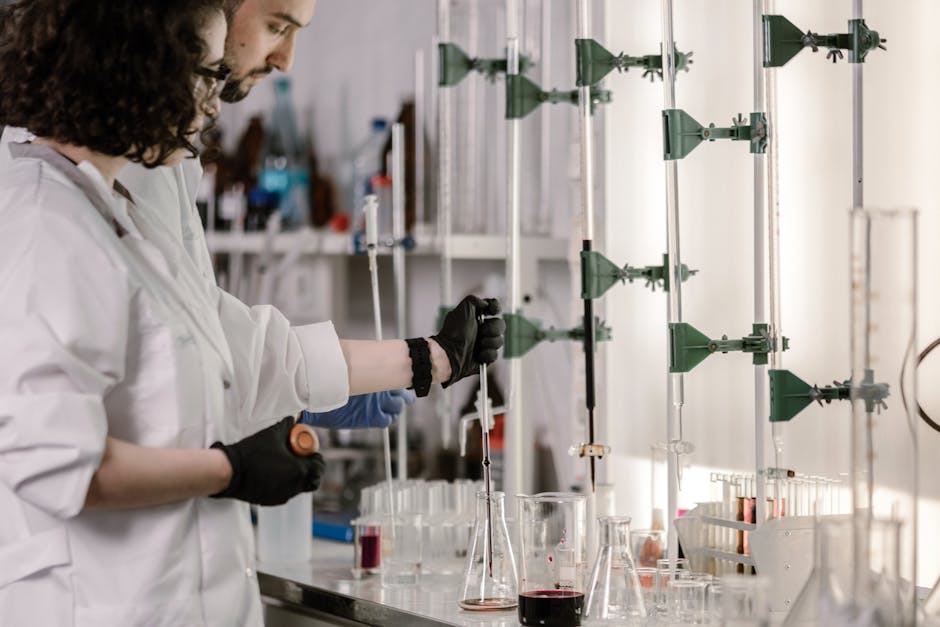
- Human scientists outperform AI agents in tackling complex tasks, according to a recent study published in Nature.
- Despite AI’s advancements in handling large datasets and recognizing patterns, it struggles with tasks requiring deep understanding and creativity.
- Human intelligence excels in nuanced contexts, informed decision-making, and innovative thinking, setting it apart from AI.
- The study highlights the importance of human involvement in scientific endeavors, emphasizing the importance of human intelligence in research.
- AI’s limitations underscore the need for a balanced approach, combining AI’s strengths with human intuition and expertise.
A striking fact has emerged from a recent study published in Nature, indicating that human scientists are still far more capable than artificial intelligence agents when it comes to tackling complex tasks. Despite the rapid advancement and integration of AI systems in various research fields, this study underscores the limitations of these systems and the unparalleled capabilities of human intelligence. With AI being increasingly embraced by researchers, this finding not only highlights the current state of AI development but also emphasizes the importance of human involvement in scientific endeavors. The study’s results are based on a comprehensive analysis of task performances, comparing human scientists with the best AI agents available, and the outcomes unequivocally favor human intelligence.
The Current State of AI in Research

The embrace of AI systems by researchers is not without reason; these systems have shown remarkable prowess in handling large datasets, recognizing patterns, and performing repetitive tasks with high accuracy and speed. However, the complexity of tasks that require deep understanding, creativity, and critical thinking remains a significant challenge for AI. This is where human scientists have consistently demonstrated superiority, leveraging their ability to understand nuanced contexts, make informed decisions based on incomplete data, and innovate through the combination of existing knowledge and novel insights. As AI continues to evolve, understanding its limitations and the unique strengths of human intelligence is crucial for maximizing the potential of both in advancing scientific knowledge.
Key Findings of the Study

The study in question involved a series of complex tasks designed to test the capabilities of both human scientists and AI agents. These tasks included data analysis, hypothesis generation, and the design of experimental protocols, all of which are fundamental components of the scientific research process. The results showed that while AI agents excelled in tasks that were narrowly defined and involved the manipulation of large datasets, they faltered when tasks required a deeper understanding of the research context, the formulation of novel hypotheses, or the interpretation of results in a broader theoretical framework. In contrast, human scientists consistently outperformed AI agents in these areas, demonstrating a superior ability to integrate information, think critically, and approach problems from innovative angles.
Analyzing the Causes and Effects
The disparity in performance between human scientists and AI agents can be attributed to several factors, including the complexity of the tasks, the nature of human intelligence, and the current limitations of AI technology. Human intelligence is characterized by its ability to learn, adapt, and apply knowledge in flexible and creative ways, skills that are still beyond the capabilities of even the most advanced AI systems. Furthermore, the development of AI is constrained by the data used to train these systems, and biases or limitations in this data can significantly impact the performance and reliability of AI in real-world applications. As researchers continue to develop and refine AI technologies, understanding these challenges will be essential for creating systems that can more effectively complement and enhance human capabilities.
Implications for Future Research
The implications of this study are profound, suggesting that while AI can be a powerful tool in scientific research, it is not a replacement for human intelligence. Instead, the future of research likely lies in the collaboration between humans and AI systems, where each contributes their unique strengths to advance our understanding of the world. This collaboration could lead to significant breakthroughs, as AI handles the mundane and data-intensive aspects of research, freeing human scientists to focus on higher-level thinking, creativity, and strategy. However, it also underscores the need for continued investment in human capital, ensuring that scientists have the skills and knowledge necessary to effectively partner with AI systems and interpret their outputs in a meaningful and actionable way.
Expert Perspectives
Experts in the field have offered contrasting viewpoints on the study’s findings, with some emphasizing the potential of AI to revolutionize research methodologies and others highlighting the irreplaceable value of human intuition and creativity. According to Dr. Maria Rodriguez, a leading researcher in AI development, “The future of science will undoubtedly involve a symbiotic relationship between humans and machines, but recognizing the strengths and weaknesses of each is crucial for harnessing their potential.” In contrast, Dr. John Taylor, a critic of over-reliance on AI, notes, “While AI can process information at speeds and scales previously unimaginable, the essence of scientific discovery often lies in the unquantifiable aspects of human curiosity and ingenuity.” These perspectives underscore the complexity of the issue and the need for a balanced approach that leverages the strengths of both human and artificial intelligence.
Looking forward, the key question is how researchers will navigate the evolving landscape of human-AI collaboration. As AI technologies continue to advance, there will be an increasing need for frameworks and methodologies that facilitate effective human-AI partnerships. This will require not only technological innovation but also a deep understanding of how humans and AI systems can complement each other, leading to new paradigms in research and discovery. The answer to this question will shape the future of scientific research, determining how we harness the power of both human and artificial intelligence to address the complex challenges facing our world.