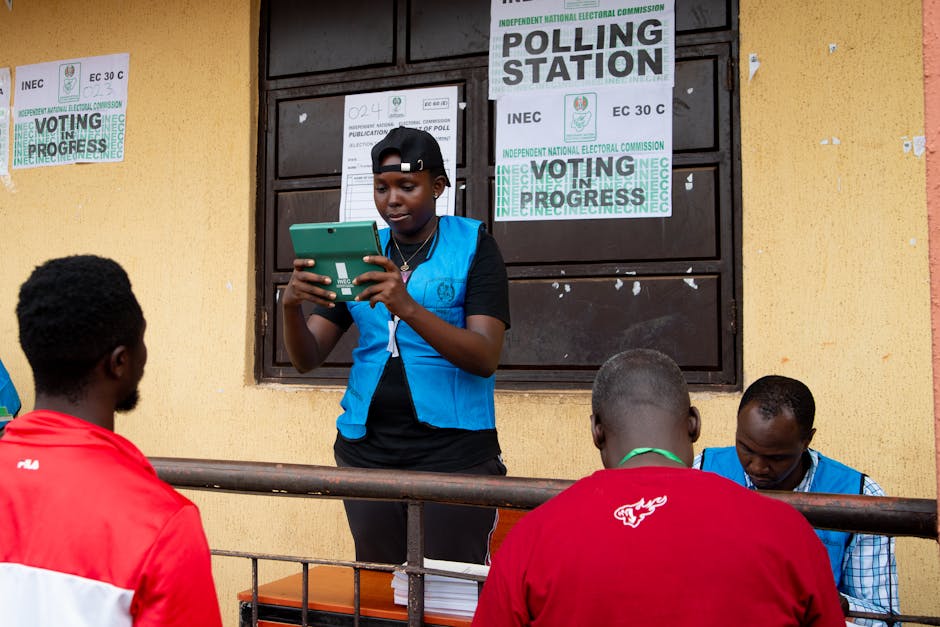
- Africa’s election fees have surged, making it difficult for low-income candidates to participate in the electoral process.
- High nomination fees have become a barrier to democracy, favoring only the wealthiest individuals to run for office.
- The cost of running for public office in Africa has increased exponentially, with some countries requiring $100,000 nomination fees.
- The majority of Africa’s population lives below the poverty line, making it challenging for them to participate in the democratic process.
- Soaring nomination fees are reshaping democracy in Africa, sparking concerns about the erosion of democratic principles.
According to recent data, the cost of running for public office in Africa has increased exponentially, with some countries requiring candidates to pay exorbitant nomination fees. This trend has sparked concerns about the erosion of democratic principles, as only the wealthiest individuals can afford to participate in the electoral process. In some cases, nomination fees have surged to as high as $100,000, effectively barring low-income candidates from running. This striking fact has significant implications for the future of democracy in Africa, where the majority of the population lives below the poverty line.
The Rising Cost of Democracy

The recent presidential elections in Djibouti and Benin have brought this issue to the forefront, highlighting how a costly electoral system is reshaping democracy in Africa. The elections, which took place over the weekend, have sparked intense debate about the role of money in politics and the impact of soaring nomination fees on the democratic process. As the African continent continues to grapple with issues of poverty, inequality, and democratic regression, the question on everyone’s mind is: what does the future hold for democracy in Africa? The answer, it seems, is inextricably linked to the ability of candidates to afford the hefty nomination fees.
A Tale of Two Elections

The stories of Alexis Mohamed and other aspiring candidates like him are a testament to the challenges posed by Africa’s costly electoral system. Mohamed, a longtime adviser to Djibouti’s president, Ismail Omar Guelleh, resigned last September, citing democratic regression in the country. He had hoped to stand against his former boss in the recent election but was unable to do so due to the prohibitively high nomination fees. Even if he had been able to afford the fees, Mohamed claims he would not have been able to return home to file his nomination papers or campaign freely without credible security guarantees. The same story is playing out in other African countries, where nomination fees have become a significant barrier to entry for potential candidates.
Unpacking the Issues
So, what are the key factors driving the surge in nomination fees, and how are they impacting the democratic process in Africa? According to experts, the main culprit is the lack of effective regulations and oversight mechanisms. In many African countries, the electoral commissions are given carte blanche to set nomination fees, which can lead to abuse and exploitation. Furthermore, the absence of campaign finance laws means that candidates are often forced to rely on their own resources or those of their sponsors, creating an uneven playing field. As a result, the democratic process is being hijacked by wealthy individuals and special interest groups, undermining the very principles of democracy.
Implications and Consequences
The implications of Africa’s soaring nomination fees are far-reaching and have significant consequences for the continent’s democratic trajectory. By limiting the pool of potential candidates to only those who can afford the fees, the electoral system is effectively disenfranchising low-income citizens and undermining the representation of marginalized groups. This, in turn, can lead to social unrest, political instability, and a decline in public trust in the democratic process. As the African continent continues to navigate the challenges of democratization, it is essential to address the issue of nomination fees and ensure that the electoral system is inclusive, transparent, and accountable to all citizens.
Expert Perspectives
Experts are divided on the best way to address the issue of soaring nomination fees in Africa. Some argue that the solution lies in implementing campaign finance laws and regulations to limit the amount of money that can be raised and spent by candidates. Others propose that nomination fees should be abolished altogether, citing the example of countries like Ghana, where the fees are relatively low. According to Dr. Kwame Dankwa, a political scientist at the University of Ghana, ‘the key is to create a level playing field, where all candidates have an equal opportunity to participate in the electoral process, regardless of their financial resources.’
As the debate rages on, one thing is clear: the future of democracy in Africa hangs in the balance. Will the continent be able to find a solution to the problem of soaring nomination fees, or will the democratic process continue to be hijacked by wealthy individuals and special interest groups? Only time will tell, but one thing is certain – the eyes of the world will be watching as Africa navigates this critical juncture in its democratic journey.