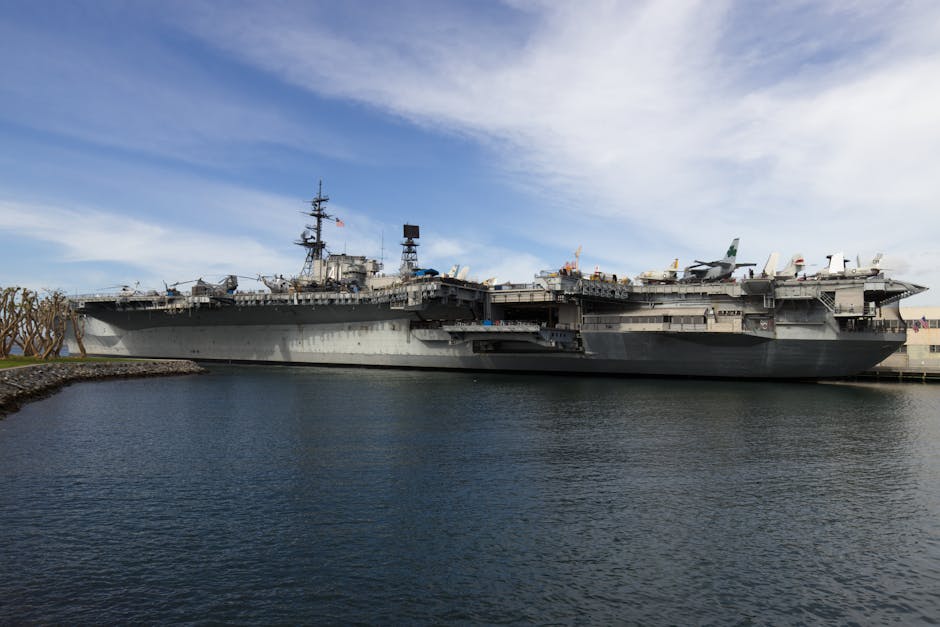
- Oil prices surge past $103 a barrel following US announcement of naval blockade of Iran.
- Global financial markets react with sharp decline in Asian stocks amid escalating tensions.
- Blockade aims to cripple Iran’s oil exports, raising concerns about potential for further conflict.
- Investors brace for prolonged market volatility as crisis deepens and uncertainty mounts.
- Impact of blockade on global oil supplies remains uncertain, but regional tensions escalate.
The price of oil has surged past $103 a barrel, reaching a new high for the year, after the US announced a naval blockade of Iran in a dramatic escalation of tensions between the two nations. The move, which aims to cripple Iran’s oil exports, has sent shockwaves through global financial markets, with Asian stocks falling sharply in response to the news. The blockade is the latest development in a long-standing dispute between the US and Iran, and it has raised concerns about the potential for further conflict in the region. As the situation continues to unfold, investors are bracing themselves for a potentially prolonged period of market volatility. The impact of the blockade on global oil supplies is still uncertain, but one thing is clear: the world is watching with bated breath as the crisis deepens.
The Blockade: A New Chapter in US-Iran Relations

The US naval blockade of Iran is the latest salvo in a decades-long struggle between the two nations, which has its roots in the 1979 Iranian Revolution. Since then, the US and Iran have been locked in a cycle of hostility, with periods of relative calm punctuated by outbreaks of violence and diplomatic tensions. The current crisis began to take shape last year, when the US withdrew from the Joint Comprehensive Plan of Action (JCPOA), a landmark nuclear deal that had been negotiated between Iran, the US, and other world powers. The US has since reimposed sanctions on Iran, which has responded by resuming its nuclear program and attacking oil tankers in the Gulf. The blockade is the latest escalation of this conflict, and it has raised fears of a wider war in the region. As the situation continues to deteriorate, it is clear that the US and Iran are engaged in a high-stakes game of chicken, with the global economy hanging precariously in the balance.
Key Players and Interests

The US naval blockade of Iran has drawn in a range of key players, each with their own interests and motivations. The US is seeking to cripple Iran’s oil exports, which are the lifeblood of the Iranian economy. Iran, on the other hand, is determined to resist the blockade and maintain its oil exports, which are essential for the country’s economic survival. Other nations, including China and the EU, are watching the situation with concern, as they have significant economic interests in the region. The blockade has also raised tensions with US allies in the Gulf, who are worried about the potential for a wider conflict. As the situation continues to unfold, it is clear that a range of complex interests and motivations are at play, and that the outcome is far from certain. The US and Iran are engaged in a delicate dance, with each side seeking to outmaneuver the other without triggering a wider war.
Analysis: Causes, Effects, and Data
The US naval blockade of Iran has significant implications for the global economy, and it is likely to have far-reaching effects on oil prices, trade, and financial markets. The blockade is likely to reduce Iran’s oil exports, which will tighten global oil supplies and drive up prices. This will have a disproportionate impact on nations that rely heavily on Iranian oil, such as China and India. The blockade will also disrupt global trade, as ships are forced to navigate around the blockade or find alternative routes. The impact on financial markets is already being felt, with Asian stocks falling sharply in response to the news. As the situation continues to unfold, it is clear that the blockade has the potential to trigger a wider economic crisis, with significant implications for global stability and security. The data is clear: the blockade is a high-risk strategy that has the potential to backfire, with devastating consequences for the global economy.
Implications: Who is Affected and How
The US naval blockade of Iran has significant implications for a range of nations and interests, from oil-importing countries to global shipping companies. The blockade will drive up oil prices, which will have a disproportionate impact on nations that rely heavily on Iranian oil. It will also disrupt global trade, as ships are forced to navigate around the blockade or find alternative routes. The impact on financial markets is already being felt, with Asian stocks falling sharply in response to the news. The blockade will also have significant implications for global stability and security, as it raises the risk of a wider conflict in the region. As the situation continues to unfold, it is clear that the blockade has the potential to affect a wide range of nations and interests, from the US and Iran to China, the EU, and beyond. The world is watching with bated breath as the crisis deepens, and the implications of the blockade become clearer.
Expert Perspectives
Experts are divided on the implications of the US naval blockade of Iran, with some arguing that it is a necessary step to prevent Iran’s nuclear program, while others argue that it is a reckless move that will trigger a wider war. Some analysts believe that the blockade will be effective in crippling Iran’s oil exports, while others argue that it will simply drive up oil prices and enrich other oil-producing nations. As the situation continues to unfold, it is clear that there are a range of perspectives on the blockade, and that the outcome is far from certain. One thing is clear, however: the blockade has raised the stakes in the region, and it has significant implications for global stability and security.
Looking ahead, the key question is what will happen next. Will the US and Iran engage in a wider conflict, or will they find a way to de-escalate the situation? The answer is far from clear, but one thing is certain: the world will be watching with bated breath as the crisis deepens. The US and Iran are engaged in a high-stakes game of chicken, and the outcome will have significant implications for global stability and security. As the situation continues to unfold, it is clear that the next few weeks and months will be critical in determining the outcome of the crisis, and the future of the region.