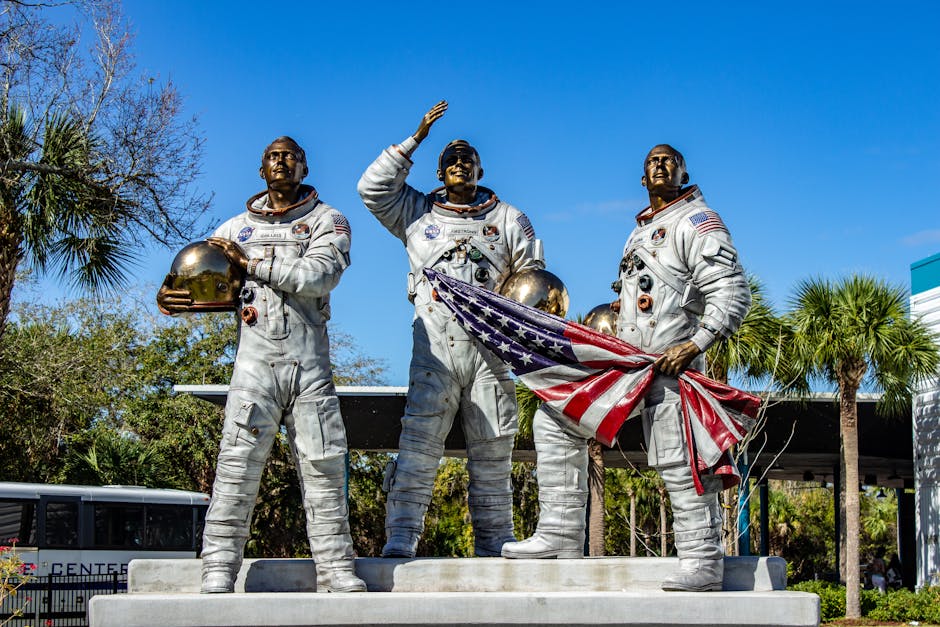
- NASA’s Artemis II mission marks a historic milestone in space exploration, with astronauts becoming the first people to travel around the lunar surface of the moon since 1972.
- The mission aims to test the capabilities of the Space Launch System (SLS) rocket and the Orion spacecraft, crucial components of future lunar missions.
- The Artemis II mission is a culmination of years of planning and preparation, driven by NASA’s ambitious goal to establish a sustainable presence on the lunar surface.
- The mission’s success will provide valuable insights into the challenges and opportunities of deep space travel and pave the way for future collaborations between space agencies and private companies.
- The Artemis II mission highlights the importance of human curiosity and the pursuit of knowledge in driving space exploration and discovery.
As NASA’s Artemis II mission embarks on a historic journey around the moon, astronauts will become the first people to travel around the lunar surface since 1972. This remarkable feat marks a significant milestone in space exploration, paving the way for future missions to the moon and beyond. The astronauts will head into a communications blackout at 6:44 p.m. Eastern time, leaving the world in anticipation of their successful return. With this mission, NASA aims to test the capabilities of the Space Launch System (SLS) rocket and the Orion spacecraft, crucial components of future lunar missions.
Preparing for a New Era in Space Exploration

The Artemis II mission is a culmination of years of planning and preparation, driven by NASA’s ambitious goal to establish a sustainable presence on the lunar surface. The mission’s success is crucial for the future of space exploration, as it will provide valuable insights into the challenges and opportunities of deep space travel. As the world watches the astronauts embark on this historic journey, the significance of the mission extends beyond the boundaries of space exploration, highlighting the importance of human curiosity and the pursuit of knowledge. The mission’s success will also pave the way for future collaborations between space agencies and private companies, fostering a new era of cooperation in space exploration.
Astronauts Embark on a Perilous Journey

The Artemis II mission will take the astronauts on a perilous journey around the far side of the moon, testing their skills and the capabilities of the Orion spacecraft. The mission will last for several days, during which the astronauts will conduct a series of experiments and gather crucial data on the lunar surface. The astronauts will have to navigate through the harsh conditions of space, including intense radiation and extreme temperatures, making the mission a true test of human endurance. The success of the mission will depend on the astronauts’ ability to work together as a team, relying on their training and experience to overcome any challenges that may arise during the journey.
Unraveling the Mysteries of the Moon
The Artemis II mission will provide scientists with a unique opportunity to study the lunar surface and gather valuable data on the moon’s composition and geology. The mission will include a series of experiments designed to study the lunar regolith, the moon’s exosphere, and the effects of space weather on the lunar surface. The data gathered during the mission will help scientists to better understand the moon’s history and evolution, shedding light on the mysteries of the lunar surface. The mission will also provide valuable insights into the potential resources available on the moon, including water ice and rare minerals, which could be used to support future human missions to the lunar surface.
Implications for Future Space Exploration
The success of the Artemis II mission will have significant implications for future space exploration, paving the way for manned missions to the moon and beyond. The mission will demonstrate the capabilities of the SLS rocket and the Orion spacecraft, providing a crucial stepping stone for future missions to Mars and other destinations in the solar system. The mission will also highlight the importance of international cooperation in space exploration, as NASA works with space agencies and private companies around the world to achieve its goals. As the world watches the astronauts return from their historic journey, the implications of the mission will be felt for years to come, inspiring a new generation of scientists, engineers, and explorers.
Expert Perspectives
Experts in the field of space exploration are eagerly watching the Artemis II mission, offering contrasting viewpoints on the significance and implications of the mission. While some experts believe that the mission marks a significant step forward in space exploration, others argue that the mission is a costly and unnecessary endeavor. According to Dr. Maria Zuber, a leading expert in space exploration, the Artemis II mission is a crucial step towards establishing a sustainable presence on the lunar surface, providing valuable insights into the challenges and opportunities of deep space travel. In contrast, Dr. Robert Zubrin, a prominent critic of NASA’s lunar program, argues that the mission is a waste of resources, distracting from more pressing issues in space exploration.
As the world waits for the astronauts to return from their historic journey, the question on everyone’s mind is what’s next for space exploration. Will the success of the Artemis II mission pave the way for a new era of space travel, or will it mark a temporary setback in the pursuit of human knowledge and exploration? Only time will tell, but one thing is certain – the Artemis II mission will be remembered as a significant milestone in the history of space exploration, inspiring future generations to reach for the stars.