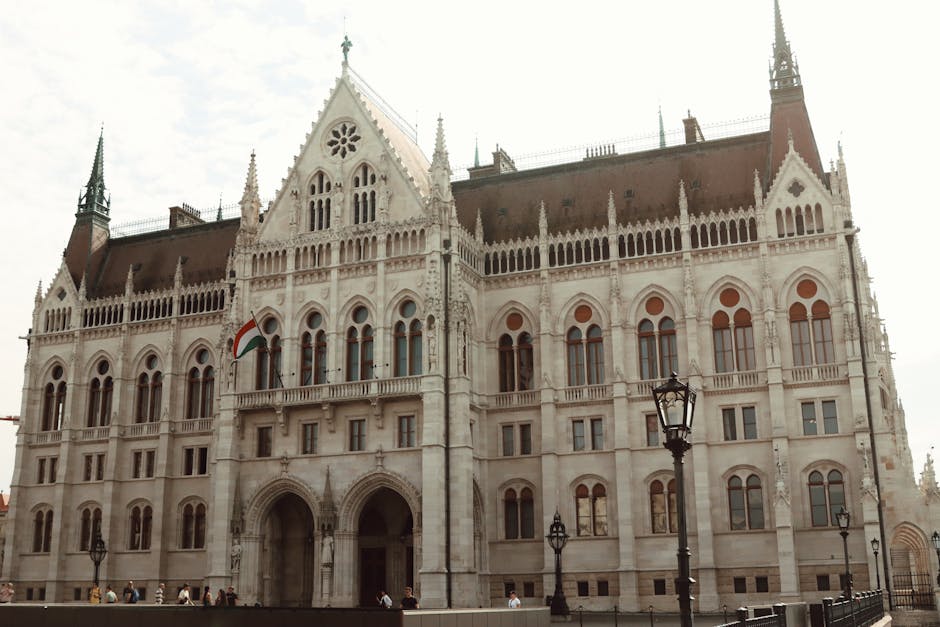
- Hungary’s new Prime Minister Peter Magyar vows to realign the country with Europe, signaling a significant shift in foreign policy.
- Magyar’s election comes at a time when Hungary faces numerous challenges, including a struggling economy and rising corruption.
- The new government aims to restore Hungary’s reputation as a valued member of the European community.
- European leaders welcome Magyar’s promise to address issues such as immigration and judicial independence.
- Hungary’s realignment with Europe is expected to have far-reaching implications for the country’s economy and politics.
Hungary has ushered in a new era of politics with the election of Peter Magyar as its prime minister, following a stunning victory that has sent shockwaves across the continent. In his first speech after being sworn in, Magyar told a rally of supporters that “Hungary wants to be a European country again”, signaling a significant shift in the country’s foreign policy and relations with the European Union. This statement is particularly noteworthy given the country’s previous stance on European integration, and it will be interesting to see how Magyar’s government navigates the complex web of EU politics.
A New Era for Hungarian Politics

The election of Peter Magyar as Hungary’s new prime minister matters now more than ever, as the country seeks to redefine its position on the European stage. Magyar’s victory comes at a time when Hungary is facing numerous challenges, including a struggling economy, rising corruption, and a growing sense of disillusionment among its citizens. By promising to realign Hungary with Europe, Magyar is attempting to address these challenges head-on and restore the country’s reputation as a valued member of the European community. This move is likely to be welcomed by European leaders, who have been critical of Hungary’s previous government and its stance on issues such as immigration and judicial independence.
Key Players and Policies

Peter Magyar’s government is expected to be comprised of a diverse range of politicians and experts, each bringing their own unique perspective and experience to the table. One of the key challenges facing Magyar’s government will be to tackle the issue of sex tape blackmail, which has been a major scandal in Hungarian politics in recent years. Magyar has promised to take a tough stance on corruption and to introduce new measures to protect citizens from blackmail and extortion. He has also vowed to increase transparency and accountability in government, and to restore the independence of the judiciary. These are ambitious goals, and it will be important to monitor the government’s progress in achieving them.
Analysis and Implications
The implications of Peter Magyar’s election as Hungary’s prime minister are far-reaching and complex. On the one hand, Magyar’s promise to realign Hungary with Europe is likely to be welcomed by European leaders and could potentially lead to increased cooperation and investment between Hungary and the EU. On the other hand, Magyar’s government will face numerous challenges in implementing its policies, including resistance from opposition parties and vested interests. Additionally, the issue of sex tape blackmail is a highly sensitive and complex one, and it will require careful handling and a nuanced approach to resolve. As such, it will be important to closely monitor the government’s progress in addressing these challenges and to hold it accountable for its actions.
Regional and Global Implications
The election of Peter Magyar as Hungary’s prime minister is likely to have significant implications for the country’s relations with its regional neighbors and the wider global community. Magyar’s promise to realign Hungary with Europe is likely to be seen as a positive development by many of Hungary’s regional neighbors, who have been critical of the country’s previous government and its stance on issues such as immigration and judicial independence. However, it is also likely to be viewed with skepticism by some, who may see Magyar’s government as being too closely aligned with European interests. As such, it will be important for Magyar’s government to carefully navigate these complex relationships and to balance the country’s national interests with its international obligations.
Expert Perspectives
Experts are divided on the implications of Peter Magyar’s election as Hungary’s prime minister, with some seeing it as a positive development for the country and others expressing skepticism. According to one expert, Magyar’s promise to realign Hungary with Europe is a “welcome change” and could potentially lead to increased cooperation and investment between Hungary and the EU. However, another expert cautioned that Magyar’s government will face numerous challenges in implementing its policies, including resistance from opposition parties and vested interests. As such, it will be important to closely monitor the government’s progress and to hold it accountable for its actions.
Looking to the future, it will be important to watch how Magyar’s government navigates the complex web of EU politics and how it addresses the numerous challenges facing the country. One open question is how Magyar’s government will balance the country’s national interests with its international obligations, and how it will respond to criticism and resistance from opposition parties and vested interests. As such, it will be important to closely monitor the government’s progress and to hold it accountable for its actions. Ultimately, the success or failure of Magyar’s government will depend on its ability to deliver on its promises and to restore the trust and confidence of the Hungarian people.