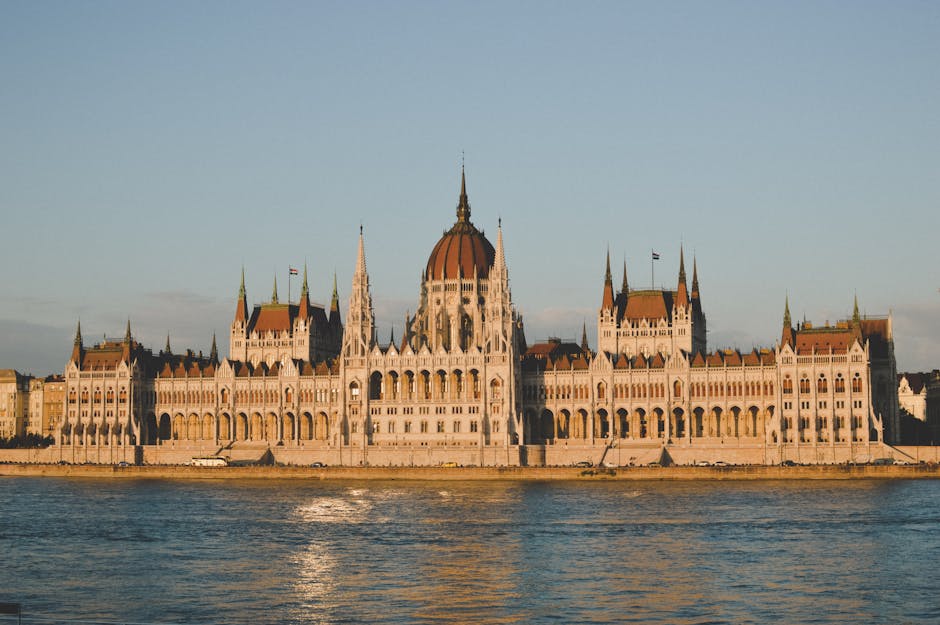
- Hungary’s shift in government signals a potential end to tensions and divisions under Viktor Orbán’s rule.
- Péter Magyar’s historic win marks a new path for Hungary, potentially redefining its position within the European community.
- Orbán’s experiment in conservative nationalism has run out of steam, leaving the country at a crossroads.
- The election victory highlights the need for a new direction that aligns with democratic norms and values.
- Péter Magyar’s campaign focused on unity, transparency, and a return to democratic values, resonating with the Hungarian people.
Hungary, a country once hailed as a beacon of democratic transition in Eastern Europe, has been governed by Viktor Orbán’s administration for over a decade. However, the recent historic win of Péter Magyar signals a significant shift in the country’s political landscape, potentially bringing an end to the tensions and divisions that have characterized Orbán’s rule. With Orbán’s experiment in conservative nationalism seemingly running out of steam, Hungary stands at a crossroads, poised to embark on a new path that could redefine its position within the European community.
A Decade of Controversy

Viktor Orbán’s tenure has been marked by controversy, from his government’s stance on immigration and his efforts to consolidate power, to the erosion of judicial independence and the press freedom. These actions have not only sparked internal dissent but have also strained Hungary’s relationships with its European allies. The country’s departure from the democratic norms and values that it once embraced has been a subject of concern for the international community, highlighting the need for a new direction that aligns with the principles of democracy and human rights.
Key Developments

The election that saw Péter Magyar emerge victorious is a pivotal moment in Hungarian history, marking a potential turning point away from the divisive policies of the Orbán era. Magyar’s campaign focused on unity, transparency, and a return to democratic values, resonating with a population exhausted by the constant political turmoil. The involvement of various stakeholders, including civil society organizations and opposition parties, in supporting Magyar’s candidacy underscores the widespread desire for change and the aspiration for a more inclusive and democratic Hungary.
Analysis and Implications
Experts analyze the outcome of the election as a clear signal of the Hungarian people’s desire for a change in governance and a shift away from the authoritarian tendencies of the previous administration. The causes of this shift are multifaceted, including economic factors, dissatisfaction with the government’s handling of the COVID-19 pandemic, and a growing awareness of the importance of democratic institutions and the rule of law. The effects of this change will be far-reaching, potentially leading to a reevaluation of Hungary’s position within the EU and its relationships with other member states, as well as internal reforms aimed at strengthening democratic checks and balances.
A New Era for Hungary
The implications of Péter Magyar’s win are profound, affecting not only the political elite but also the broader population. As Hungary embarks on this new path, it is expected that there will be efforts to address the socio-economic disparities that have widened under Orbán’s rule, as well as initiatives to restore the independence of the judiciary and the media. The road ahead will be challenging, requiring careful navigation of the complex political and economic landscape, but the prospect of peace and stability offers a beacon of hope for a nation that has been weary of conflict and division.
Expert Perspectives
Experts in the field offer contrasting viewpoints on the future of Hungary under Magyar’s leadership. Some see this transition as an opportunity for Hungary to reengage with European institutions and reaffirm its commitment to democratic principles, while others caution that the legacy of Orbán’s rule will not be easily overcome and that the path to reforms will be long and difficult. The diversity of opinions highlights the complexity of the situation and the need for a nuanced approach to understanding the challenges and opportunities that lie ahead.
Looking forward, the key question is how effectively the new government will be able to implement its vision for a more democratic and inclusive Hungary. The international community will be watching closely, eager to see if Hungary can indeed turn a new page and embark on a path of reconciliation and growth. The coming months will be crucial in determining the trajectory of this transition, with the success of Magyar’s government hanging in the balance. As Hungary navigates this critical juncture, the world waits with bated breath, hoping for a positive outcome that could have far-reaching implications for the region and beyond.