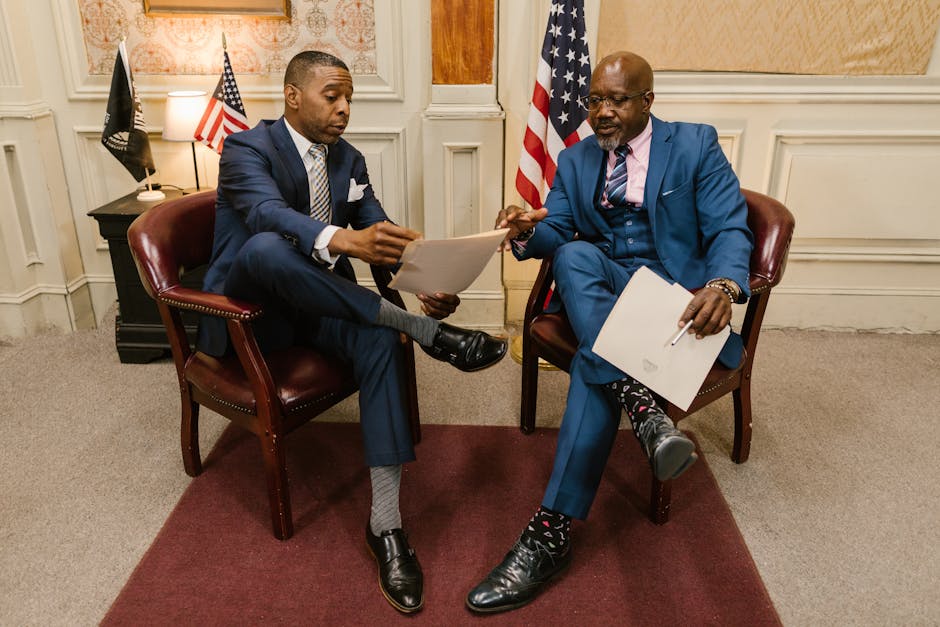
- The US and Iran have been locked in a decades-long struggle with tensions escalating in recent years.
- Vice President JD Vance led the highest-level talks between the two nations in nearly 50 years but failed to reach a deal.
- The failure of the talks has significant implications for the US, Iran, and the entire Middle East.
- Despite being a vocal opponent of the war in Iran, Vance’s efforts ultimately ended in failure.
- The consequences of failure will be severe, leaving the region on the brink of chaos.
The United States and Iran have been locked in a decades-long struggle, with tensions escalating in recent years. In a surprising move, Vice President JD Vance recently led the highest-level talks between the two nations in nearly 50 years. The talks, which were seen as a last-ditch effort to prevent all-out war, have ended in failure. Despite Vance’s best efforts, the two sides were unable to reach a deal, leaving the region on the brink of chaos. The failure of these talks has significant implications, not just for the United States and Iran, but for the entire Middle East. As the situation continues to deteriorate, one thing is clear: the consequences of failure will be severe.
The Road to Talks

The path to these talks was long and winding, with both sides engaging in a war of words and proxy battles for years. However, with the situation on the ground continuing to deteriorate, it became clear that something had to be done. Vice President Vance, who has been a vocal opponent of the war in Iran, saw an opportunity to make a difference. He worked tirelessly behind the scenes, using his diplomatic skills to bring the two sides to the table. The talks, which were held in secret, were seen as a rare glimmer of hope in an otherwise bleak landscape. Despite the challenges, Vance remained optimistic, believing that a deal could be reached if both sides were willing to compromise.
The Talks Themselves

The talks themselves were tense and dramatic, with both sides digging in their heels. The Iranian delegation, led by high-ranking officials, was adamant that the United States must lift all sanctions before any deal could be reached. The American side, on the other hand, insisted that Iran must first agree to halt its nuclear program. Despite the significant gaps between the two sides, Vice President Vance worked to find common ground. He proposed a series of compromise solutions, including a phased lifting of sanctions in exchange for Iranian concessions on its nuclear program. However, in the end, it was not enough. The Iranians refused to budge, and the talks ended in failure.
Analysis and Aftermath
The failure of these talks has significant implications, both for the region and for the world at large. The most immediate consequence is the escalating risk of conflict. With the diplomatic channel now closed, the likelihood of military action increases. The United States and its allies have already begun to mobilize their forces, and it is likely that Iran will respond in kind. The consequences of such a conflict would be catastrophic, with the potential to draw in other nations and spark a wider war. Furthermore, the failure of these talks also has significant economic implications. The sanctions regime, which was already having a devastating impact on the Iranian economy, will likely be tightened further. This will only increase the suffering of the Iranian people, who are already struggling to survive.
Implications and Consequences
The failure of these talks will have far-reaching consequences, affecting not just the United States and Iran, but the entire Middle East. The region is already a tinderbox, with numerous conflicts and tensions simmering just below the surface. The collapse of these talks will only add fuel to the fire, increasing the risk of a wider conflict. The humanitarian implications are also significant, with the potential for thousands of innocent civilians to be caught in the crossfire. As the situation continues to deteriorate, it is clear that the international community must act quickly to prevent a catastrophe. However, with the diplomatic channel now closed, it is unclear what options remain.
Expert Perspectives
Experts are divided on the implications of the failed talks. Some, such as former Secretary of State John Kerry, believe that the United States must now pursue a more aggressive diplomatic strategy, engaging with other nations in the region to find a solution. Others, such as Senator Ted Cruz, argue that the failure of these talks is a clear indication that the Iranian regime is not interested in negotiating, and that military action is now the only option. As the debate rages on, one thing is clear: the situation in Iran is critical, and something must be done to prevent a disaster.
As the situation in Iran continues to deteriorate, the world waits with bated breath to see what will happen next. Will the United States and its allies launch a military strike, or will they pursue a new diplomatic strategy? The answer to this question is far from clear, but one thing is certain: the consequences of failure will be severe. As Vice President Vance himself said, “The failure of these talks is a setback, but it is not the end. We will continue to work towards a solution, no matter how difficult it may seem.” The question is, what will that solution look like, and how will it be achieved?