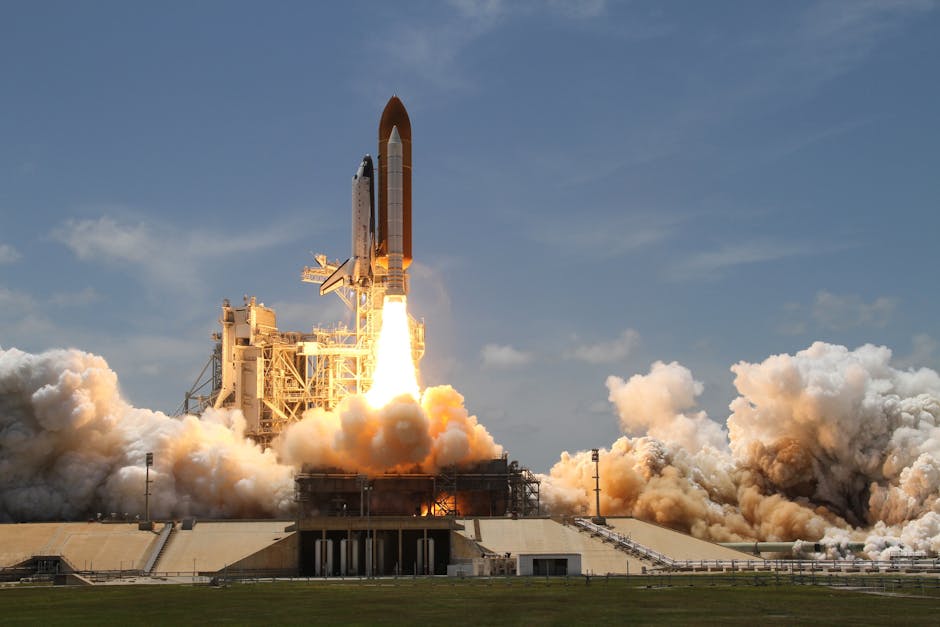
- The Artemis II mission broke the record for the farthest distance traveled from Earth, surpassing the Apollo 13 mission.
- The four-astronaut crew experienced technical malfunctions, breathtaking views, and intense emotional moments during their under 10-day journey.
- The mission marked a significant step forward in NASA’s plans to return humans to the lunar surface and eventually send them to Mars.
- The Artemis II mission demonstrated NASA’s ability to push the boundaries of space exploration and overcome challenges.
- The mission achieved a remarkable milestone in the development of deep space travel, paving the way for future exploration.
The Artemis II mission has made history by breaking the record for the farthest distance traveled from Earth, surpassing the Apollo 13 mission’s record. The four-astronaut crew has experienced an array of challenges, including technical malfunctions, breathtaking views, and intense emotional moments, all within a span of under 10 days. As the team begins their journey back home, the world is eagerly awaiting their return and the valuable insights they will bring back from their extraordinary journey. With this mission, NASA has taken a significant step forward in its ambitions to return humans to the lunar surface and eventually send them to Mars.
Background and Significance

The Artemis II mission is a crucial step in NASA’s plans to establish a sustainable presence on the lunar surface. The mission’s success is a testament to the agency’s ability to push the boundaries of space exploration and overcome the numerous challenges that come with it. The record-breaking distance achieved by the Artemis II crew is not only a remarkable achievement but also a significant milestone in the development of deep space travel. As the world looks to the future of space exploration, the Artemis II mission serves as a beacon of hope and inspiration, demonstrating what can be achieved through determination, hard work, and collaboration.
Mission Details and Crew Experiences

The Artemis II crew, consisting of four experienced astronauts, embarked on their historic journey aboard the Orion spacecraft. The mission has been marked by several notable events, including a successful flyby of the Moon and the deployment of several scientific instruments. The crew has also experienced the thrill of witnessing stunning views of the Earth and the Moon, which have been described as ‘overwhelming’ and ‘breathtaking.’ Despite the challenges posed by technical malfunctions, the crew has demonstrated remarkable resilience and adaptability, underscoring the importance of human ingenuity and determination in the pursuit of space exploration.
Analysis and Implications
The success of the Artemis II mission has significant implications for the future of space exploration. The mission’s achievements demonstrate the feasibility of deep space travel and pave the way for future lunar and Mars missions. The data collected during the mission will provide valuable insights into the effects of space travel on the human body and the performance of spacecraft systems. Furthermore, the mission’s success will help to inform the development of future spacecraft and mission plans, ensuring that NASA is well-equipped to tackle the challenges of space exploration. As the world looks to the future of space travel, the Artemis II mission serves as a powerful reminder of what can be achieved through collaboration, innovation, and determination.
Implications and Future Directions
The Artemis II mission has far-reaching implications for the future of space exploration, with potential benefits extending beyond the realm of space travel. The mission’s success demonstrates the power of human ingenuity and collaboration, inspiring future generations to pursue careers in science, technology, engineering, and mathematics (STEM). The mission’s achievements also underscore the importance of continued investment in space exploration, highlighting the potential for space travel to drive innovation, economic growth, and societal progress. As the world looks to the future, the Artemis II mission serves as a powerful reminder of the importance of exploring and understanding our universe.
Expert Perspectives
According to Ian Sample, the Guardian’s science editor, the Artemis II mission is a significant step forward for NASA and the future of space exploration. Sample notes that the mission’s success is a testament to the agency’s ability to overcome the challenges of deep space travel and push the boundaries of human knowledge. In contrast, other experts have raised concerns about the risks and challenges associated with space travel, highlighting the need for continued investment in safety measures and technological innovation. Despite these differing perspectives, there is a broad consensus that the Artemis II mission is a historic achievement that will have a lasting impact on the future of space exploration.
As the Artemis II crew returns to Earth, the world will be watching with bated breath, eager to learn more about their extraordinary journey. The mission’s success raises important questions about the future of space travel, including the potential for lunar and Mars missions, the development of new spacecraft and technologies, and the role of human exploration in the pursuit of scientific knowledge. As we look to the future, one thing is clear: the Artemis II mission is a significant step forward for humanity, marking a new era in space exploration and inspiring future generations to reach for the stars.