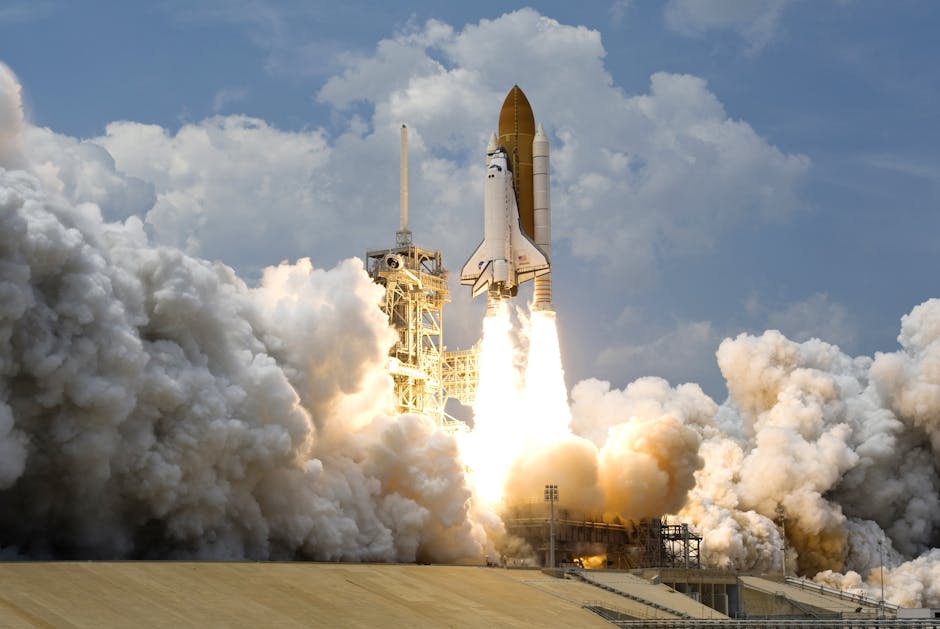
- The Artemis II crew has broken the distance record set by the Apollo 13 crew in 1970, marking a significant step forward in space exploration.
- The Orion spacecraft traveled over 270,000 miles from Earth, a testament to the incredible engineering and technological advancements made in space exploration.
- The Artemis II mission is a critical step in NASA’s plans to establish a sustainable presence on the lunar surface by 2025.
- The mission tested the Orion spacecraft and the Space Launch System (SLS) rocket, which will be used for future lunar missions.
- The crew’s journey is not just about breaking records, but about expanding our understanding of the universe and paving the way for future generations of space explorers.
The Artemis II crew has made history by breaking the distance record set by the Apollo 13 crew in 1970. The milestone was achieved when the Orion spacecraft, carrying three American astronauts and one Canadian astronaut, traveled farther than any human-rated spacecraft has gone before. This remarkable achievement marks a significant step forward in NASA’s ambitious plan to return humans to the lunar surface by 2025. The record-breaking distance of over 270,000 miles from Earth is a testament to the incredible engineering and technological advancements that have been made in space exploration. As the Artemis II mission continues to push the boundaries of space travel, it is clear that this journey is not just about breaking records, but about expanding our understanding of the universe and paving the way for future generations of space explorers.
Reaching for the Stars

The Artemis II mission is a critical step in NASA’s plans to establish a sustainable presence on the lunar surface. The mission is designed to test the Orion spacecraft and the Space Launch System (SLS) rocket, which will be used for future lunar missions. The crew, consisting of three American astronauts and one Canadian astronaut, has been training for years to prepare for this historic journey. As the spacecraft continues on its trajectory, the crew will conduct a series of tests and experiments to ensure the safety and success of future missions. The significance of this mission cannot be overstated, as it marks a major milestone in the pursuit of space exploration and discovery. With the Artemis II mission, NASA is not only pushing the boundaries of space travel but also inspiring a new generation of scientists, engineers, and explorers.
A New Frontier

The Artemis II crew’s achievement is a result of years of hard work and dedication by thousands of individuals involved in the mission. The crew, which includes astronauts from NASA and the Canadian Space Agency, has undergone rigorous training to prepare for the challenges of space travel. The Orion spacecraft, which is designed to carry humans on deep space missions, has performed flawlessly, demonstrating its capabilities and paving the way for future missions. As the spacecraft continues to travel through space, the crew will encounter numerous challenges, including extreme temperatures, radiation, and isolation. Despite these challenges, the crew remains focused on their mission, conducting experiments and gathering data that will help scientists better understand the effects of space travel on the human body.
Analyzing the Data
The Artemis II mission is not just about breaking records; it is also about collecting valuable data and insights that will help scientists and engineers improve future missions. The crew is conducting a range of experiments, including tests on the effects of space radiation on the human body and the performance of the Orion spacecraft’s life support systems. The data collected during this mission will be crucial in helping NASA develop strategies to mitigate the risks associated with deep space travel. Additionally, the mission is providing scientists with a unique opportunity to study the effects of space travel on the human body, which will be essential for future long-duration missions to the Moon and beyond. As the mission continues, scientists will be analyzing the data in real-time, providing valuable insights that will help shape the future of space exploration.
Implications and Opportunities
The success of the Artemis II mission has significant implications for the future of space exploration. The mission demonstrates that NASA is capable of sending humans on deep space missions, paving the way for future lunar and Mars missions. The achievement also highlights the importance of international cooperation in space exploration, with the Canadian Space Agency playing a critical role in the mission. As the world looks to the future of space travel, the Artemis II mission serves as a reminder of the incredible achievements that can be accomplished through collaboration and determination. The mission is not just about breaking records; it is about inspiring future generations to pursue careers in science, technology, engineering, and mathematics (STEM) and to become the next generation of space explorers.
Expert Perspectives
Experts in the field of space exploration are hailing the Artemis II mission as a major success, with many praising the crew’s bravery and the mission’s significance. Dr. Maria Zuber, NASA’s Associate Administrator for the Science Mission Directorate, noted that the mission is a critical step towards establishing a sustainable presence on the lunar surface. Meanwhile, Dr. James Garvin, Chief Scientist at NASA’s Goddard Space Flight Center, emphasized the importance of the mission’s scientific discoveries, stating that the data collected will be essential for future missions. As the mission continues, experts will be closely watching the crew’s progress, analyzing the data, and providing insights into the implications of the mission’s success.
Looking to the future, the success of the Artemis II mission raises important questions about the next steps in space exploration. As NASA looks to return humans to the lunar surface by 2025, the agency will need to address numerous challenges, including developing sustainable life support systems and mitigating the risks associated with deep space travel. The Artemis II mission is a significant step forward, but it is only the beginning of a long and challenging journey. As the world watches with bated breath, one thing is clear: the future of space exploration is brighter than ever, and the Artemis II mission is just the starting point for a new era of discovery and exploration.