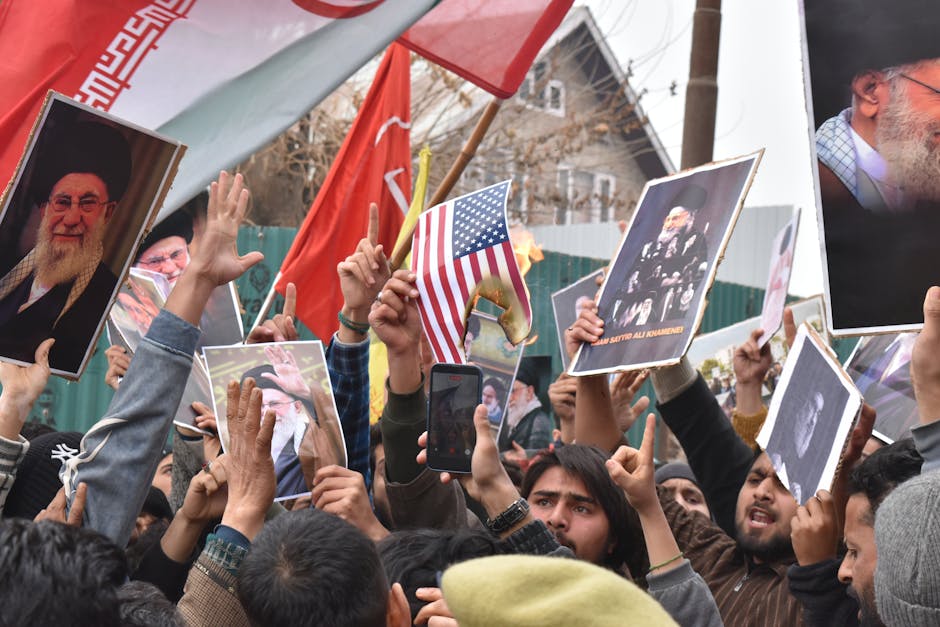
- US-Iran talks require a long-term perspective, as a single round of negotiations won’t yield a comprehensive solution.
- Diplomacy between the two nations has been fraught with decades of tension and mistrust, making meaningful progress challenging.
- The talks represent a positive development, despite the low expectations for immediate results.
- Understanding the complex historical and cultural context of the US-Iran relationship is essential for analyzing the talks.
- The international community must approach the talks with realistic expectations, acknowledging the arduous path to progress.
The recent talks between the US and Iran in Islamabad have sparked a flurry of interest and speculation about the potential for a diplomatic breakthrough. However, as one former Pakistani diplomat notes, “diplomacy is not an event, it’s a process, it takes time.” This sage advice serves as a reminder that expectations from these talks should be realistic, and that the path to meaningful progress will likely be long and arduous. With decades of tension and mistrust between the two nations, it is unlikely that a single round of talks will yield a comprehensive solution. Nevertheless, the fact that the talks are taking place at all is a positive development, and one that warrants careful attention and analysis.
Background and Context

The US-Iran relationship has been fraught with tension for decades, with periods of heightened hostility punctuated by brief moments of diplomatic engagement. The current talks in Islamabad represent the latest attempt to find common ground and address the numerous points of contention between the two nations. As the international community watches with bated breath, it is essential to understand the complex historical and cultural context that underpins this conflict. From the 1979 Iranian Revolution to the present day, the US and Iran have been locked in a struggle for influence and power in the Middle East, with each side seeking to advance its own interests and protect its own security. Against this backdrop, the talks in Islamabad take on a significance that extends far beyond the bilateral relationship itself, with implications for regional stability and global security.
The Talks in Islamabad

The talks in Islamabad bring together high-level representatives from the US and Iran, with the aim of finding a way forward on a range of critical issues, including nuclear proliferation, terrorism, and regional security. While the details of the discussions remain closely guarded, it is clear that the US is seeking to address concerns about Iran’s nuclear program, while Iran is pushing for an end to crippling economic sanctions and a recognition of its rights as a sovereign nation. As the talks unfold, it is likely that both sides will need to make difficult compromises and concessions in order to achieve a meaningful breakthrough. The presence of Pakistani diplomats and officials as facilitators and hosts adds an additional layer of complexity to the talks, highlighting the important role that regional powers can play in promoting dialogue and understanding.
Analysis and Implications
From a geopolitical perspective, the talks in Islamabad represent a crucial test of the ability of the US and Iran to engage in constructive diplomacy, despite their many differences. If successful, the talks could pave the way for a new era of cooperation and collaboration, with far-reaching implications for the Middle East and beyond. However, the challenges and obstacles that lie ahead should not be underestimated, and it is likely that the road to a lasting agreement will be marked by setbacks and reversals. As one expert notes, the key to success will lie in the ability of both sides to adopt a flexible and pragmatic approach, one that balances competing interests and priorities with a commitment to finding common ground. With the fate of the region hanging in the balance, the stakes could hardly be higher.
Regional Consequences
The outcome of the talks in Islamabad will have significant implications for the wider region, with potential consequences for the security and stability of countries from Turkey to Saudi Arabia. As the US and Iran navigate their complex and often contentious relationship, other regional powers will be watching closely, seeking to advance their own interests and protect their own security. The role of Pakistan as a host and facilitator of the talks is particularly noteworthy, highlighting the country’s growing importance as a regional player and its potential to serve as a bridge between different cultures and civilizations. As the talks unfold, it is likely that other regional powers will seek to play a more active role, either in support of or in opposition to the US-Iran dialogue.
Expert Perspectives
Experts and analysts are divided on the prospects for success in the US-Iran talks, with some expressing cautious optimism and others warning of the dangers of unrealistic expectations. As one former diplomat notes, “the key to success will lie in the ability of both sides to manage expectations and to find creative solutions to the challenges that lie ahead.” Others emphasize the need for a comprehensive and inclusive approach, one that addresses the full range of issues and concerns that have contributed to the conflict. Despite these differences in perspective, there is a widespread recognition of the importance of the talks and the potential for a diplomatic breakthrough to have a transformative impact on the region.
As the talks in Islamabad continue, it is essential to maintain a careful and nuanced perspective, one that balances hope and optimism with a realistic appreciation of the challenges that lie ahead. What will be the key indicators of success or failure in the talks? How will the international community respond to any breakthrough or setback? And what will be the long-term consequences of the US-Iran dialogue for the Middle East and beyond? These are just a few of the questions that will need to be addressed in the days and weeks to come, as the world watches with bated breath the unfolding drama of the US-Iran talks.