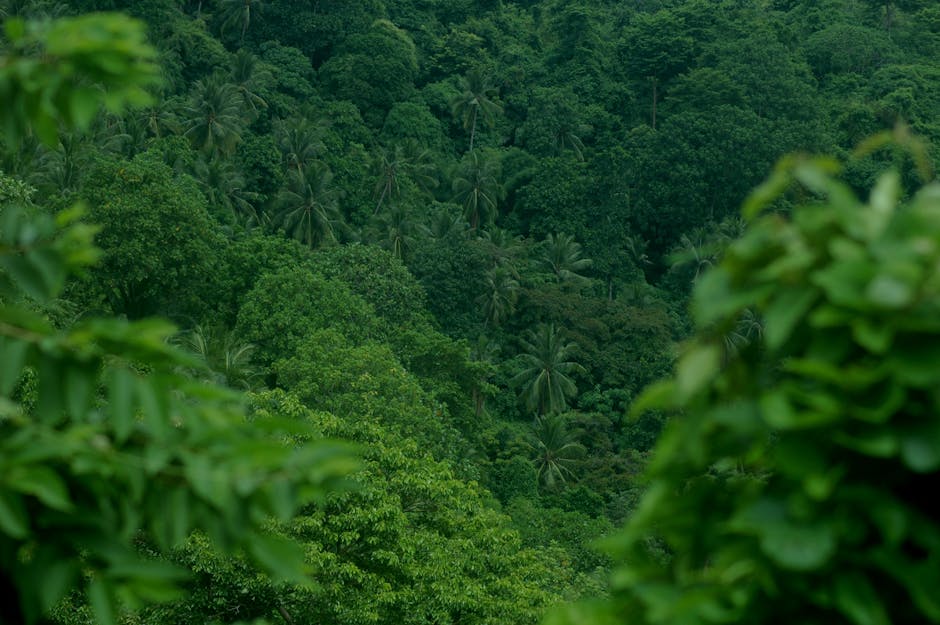
- Tropical rainforests may be more resilient than thought, able to resist and recover from human disturbance.
- Protecting naturally regenerating secondary forests can help reverse biodiversity losses.
- Degraded forests can be restored to their former glory with the right management.
- A new study suggests that even degraded forests can be restored to their former glory with the right management.
- Conservation efforts can target specific areas to maximize their impact in preserving biodiversity.
The world’s tropical rainforests are often seen as fragile and vulnerable to human disturbance, but a new study suggests that these ecosystems may be more resilient than previously thought. Researchers found that 16 taxonomic groups in a lowland tropical forest were able to resist and recover from anthropogenic disturbance, highlighting the potential of protecting naturally regenerating secondary forests to reverse biodiversity losses. This striking finding has significant implications for conservation efforts, as it suggests that even degraded forests can be restored to their former glory with the right management. The study, published in the journal Nature, provides a beacon of hope for the world’s most biodiverse ecosystems, which are facing unprecedented threats from human activity.
Background and Context

The loss of biodiversity in tropical rainforests is a major concern, as these ecosystems are home to a vast array of plant and animal species. Human activities such as deforestation, logging, and agriculture have led to widespread habitat destruction and fragmentation, resulting in population declines and even extinctions. However, the new study suggests that the situation may not be as dire as previously thought. By assessing the resilience of different taxonomic groups in a lowland tropical forest, the researchers were able to identify areas where conservation efforts could be targeted to maximum effect. This approach could help to reverse biodiversity losses and restore the health of these critical ecosystems.
Methodology and Key Findings

The study focused on a lowland tropical forest in which 16 taxonomic groups were assessed for their resilience to anthropogenic disturbance. The researchers used a combination of field observations and statistical analysis to determine the impact of human activity on these groups, and to identify areas where they were able to resist and recover from disturbance. The results showed that many of the taxonomic groups were able to recover quickly from disturbance, suggesting that the forest ecosystem as a whole is more resilient than previously thought. The study also highlighted the importance of protecting naturally regenerating secondary forests, which can provide a vital habitat for many species and help to restore biodiversity.
Causes, Effects, and Data Analysis
The study’s findings have significant implications for our understanding of the causes and effects of biodiversity loss in tropical rainforests. By analyzing data on the impact of human activity on different taxonomic groups, the researchers were able to identify key areas where conservation efforts could be targeted to maximum effect. For example, the study found that certain species of trees and animals were more resilient to disturbance than others, suggesting that conservation efforts could be focused on these species to help restore the health of the ecosystem. The study also highlighted the importance of considering the complex interactions between different species and their environments, as these interactions can have a major impact on the resilience of the ecosystem as a whole.
Implications and Future Directions
The study’s findings have significant implications for conservation efforts in tropical rainforests. By protecting naturally regenerating secondary forests and targeting conservation efforts at key species and ecosystems, it may be possible to reverse biodiversity losses and restore the health of these critical ecosystems. The study also highlights the importance of continued research and monitoring, as the resilience of tropical rainforests is likely to be influenced by a complex array of factors, including climate change, habitat fragmentation, and human activity. As such, it is essential that conservation efforts are tailored to the specific needs of each ecosystem, and that researchers continue to monitor and assess the impact of human activity on these ecosystems.
Expert Perspectives
Experts in the field have welcomed the study’s findings, highlighting the importance of protecting and restoring tropical rainforests. However, some have also cautioned that the study’s results should be interpreted with caution, as the resilience of these ecosystems can vary widely depending on the specific context. For example, some experts have noted that the study’s findings may not be applicable to all tropical rainforests, and that further research is needed to fully understand the complex interactions between human activity and ecosystem resilience. Despite these caveats, the study’s findings provide a valuable insight into the potential of conservation efforts to restore the health of tropical rainforests.
Looking to the future, it is clear that the conservation of tropical rainforests will remain a major challenge. However, the study’s findings provide a beacon of hope, suggesting that even degraded forests can be restored to their former glory with the right management. As such, it is essential that researchers, policymakers, and conservationists continue to work together to protect and restore these critical ecosystems, and to ensure that the natural world is preserved for future generations. One open question that remains is how to balance the needs of human development with the need to protect and conserve tropical rainforests, and it is likely that this will be a major area of research and debate in the years to come.