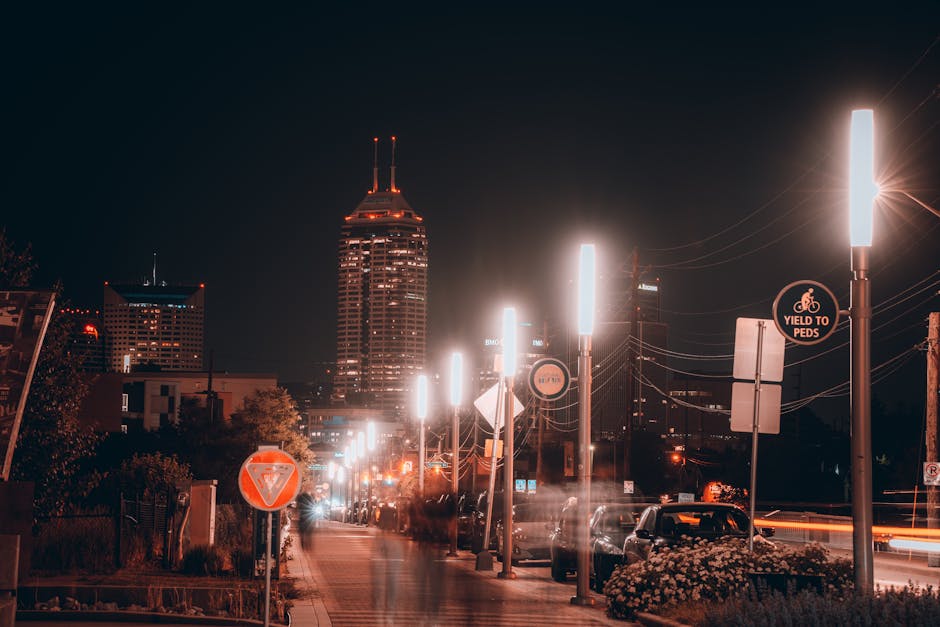
- The world is experiencing a 2% annual increase in nighttime brightness due to urbanization and artificial lighting.
- Regional variations exist, with some areas becoming darker due to energy-saving efforts and new lighting technologies.
- Satellite analysis reveals that nighttime brightness changes are happening faster and more unevenly than expected.
- Rapid urbanization in countries like China and India is driving the increase in nighttime brightness.
- The adoption of LED lighting contributes to the increase in nighttime brightness, but also exacerbates light pollution.
The world is experiencing a steady increase in nighttime brightness, with the Earth’s overall light emissions growing by 2% annually. This trend is largely driven by rapid urbanization, particularly in countries like China and India, where the proliferation of artificial lighting is transforming the nighttime landscape. However, this global trend masks significant regional variations, with some areas actually becoming darker due to energy-saving efforts and the adoption of new lighting technologies. The most detailed satellite analysis to date reveals that these changes are happening faster and more unevenly than expected, with far-reaching implications for the environment, human health, and the economy.
Urbanization and the Lighting Revolution

The rapid growth of cities is a major driver of the increase in nighttime brightness. As urban populations expand, so too does the demand for artificial lighting, which is used to illuminate homes, businesses, and public spaces. This trend is particularly pronounced in countries like China and India, where urbanization is occurring at an unprecedented rate. The widespread adoption of LED lighting, which is more energy-efficient and longer-lasting than traditional lighting technologies, is also contributing to the increase in nighttime brightness. However, while LED lighting has many benefits, it also has the potential to exacerbate light pollution, which can have negative impacts on the environment and human health.
Regional Variations and the Role of Energy-Saving Efforts

Despite the overall trend of increasing nighttime brightness, there are significant regional variations. In some parts of Europe, for example, energy-saving efforts and the adoption of new lighting technologies have led to a decrease in light emissions. This is particularly true in countries like Germany and the UK, where there is a strong focus on reducing energy consumption and mitigating the impacts of climate change. In contrast, other regions, such as the Middle East and North Africa, are experiencing rapid increases in nighttime brightness due to urbanization and economic growth. These regional variations highlight the complexity of the issue and the need for nuanced policies that take into account local contexts and priorities.
Causes and Effects of Nighttime Brightness
The causes and effects of nighttime brightness are complex and multifaceted. On the one hand, artificial lighting has many benefits, including improved safety and security, enhanced economic activity, and increased quality of life. On the other hand, excessive light pollution can have negative impacts on the environment, including disrupting natural ecosystems and contributing to climate change. Furthermore, exposure to artificial light at night has been linked to a range of health problems, including sleep disorders, obesity, and increased risk of chronic diseases like diabetes and heart disease. Understanding the causes and effects of nighttime brightness is critical to developing effective policies and strategies for mitigating its negative impacts.
Implications and Consequences
The implications of the increasing nighttime brightness are far-reaching and have significant consequences for the environment, human health, and the economy. For example, the disruption of natural ecosystems can have cascading effects on biodiversity and ecosystem services, while the negative impacts on human health can result in significant economic burdens. Furthermore, the increased energy consumption associated with artificial lighting contributes to greenhouse gas emissions and climate change. As the world continues to urbanize and develop, it is essential to consider the implications of nighttime brightness and to develop strategies for mitigating its negative impacts while maximizing its benefits.
Expert Perspectives
Experts have differing opinions on the issue of nighttime brightness, reflecting the complexity and nuance of the topic. Some argue that the benefits of artificial lighting, including improved safety and security, outweigh the negative impacts, while others emphasize the need for more sustainable and environmentally-friendly approaches to lighting. For example, some experts advocate for the use of smart lighting technologies that can adjust to natural light levels and minimize waste, while others argue for more radical approaches, such as the adoption of dark-sky preserves and lighting-free zones. These contrasting viewpoints highlight the need for ongoing research and debate on the issue of nighttime brightness.
As the world continues to evolve and develop, it is likely that the issue of nighttime brightness will remain a topic of discussion and debate. One key question is how to balance the benefits of artificial lighting with the need to mitigate its negative impacts on the environment and human health. Another question is how to ensure that the benefits of lighting are equitably distributed, particularly in areas where access to energy and lighting is limited. As researchers and policymakers, it is essential to continue monitoring trends and developments in nighttime brightness, and to work towards developing effective and sustainable solutions that prioritize both human well-being and environmental protection.