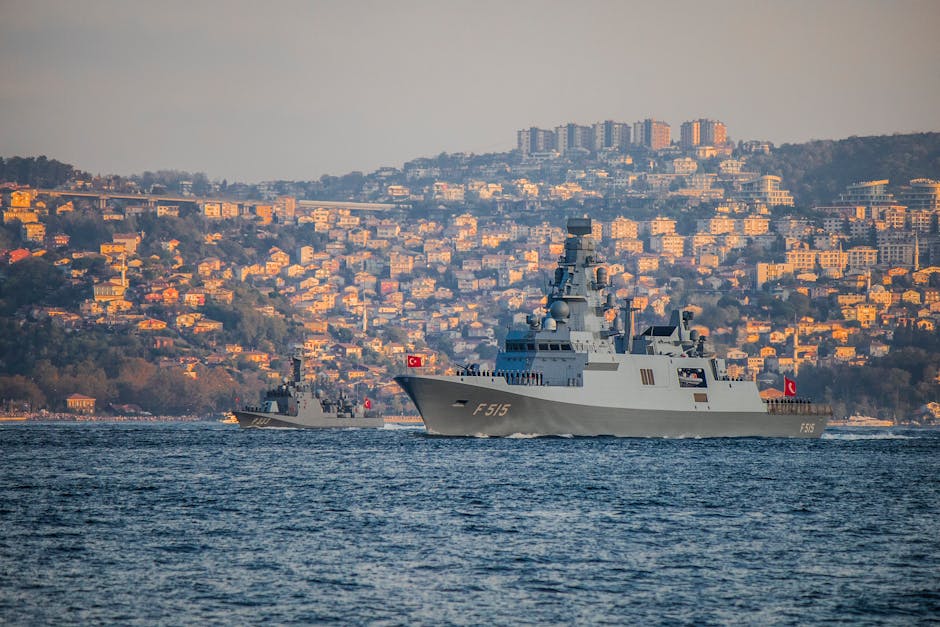
- The Strait of Hormuz is a critical waterway for global oil trade, with about 20% of world oil passing through it.
- Tensions between the US and Iran have escalated, with the US demanding immediate reopening and Iran refusing unless there’s a peace deal.
- The dispute is rooted in historical tensions, with Iran claiming the strait is part of its territorial waters, while the US views it as an international waterway.
- The standoff has significant implications for global oil markets and regional stability, impacting economies worldwide.
- Key players in the dispute include the US, Iran, and the international community, each with differing interests and strategies.
The Strait of Hormuz, a critical waterway connecting the Persian Gulf to the Arabian Sea, has become a major point of contention between the US and Iran. With approximately 20% of the world’s oil passing through this narrow strait, control of the waterway is crucial for global energy security. Recently, tensions have escalated as the US demanded that Iran immediately reopen the strait to all maritime traffic, while Iran insisted that it would only do so after a final peace deal, according to Iranian officials. This standoff has significant implications for global oil markets and regional stability.
Historical Context of the Strait of Hormuz Dispute

The dispute over the Strait of Hormuz is not new, but it has taken on increased urgency in recent months. The strait has long been a source of tension between Iran and the US, with both countries vying for control of the waterway. The current crisis began when Iran threatened to close the strait in response to US sanctions and military build-ups in the region. Iran’s leaders argue that the strait is an integral part of their country’s territorial waters and that they have the right to regulate traffic through it. The US, on the other hand, maintains that the strait is an international waterway and that all ships have the right to pass through it freely.
Key Players and Interests

The standoff over the Strait of Hormuz involves a complex array of players and interests. The US is determined to maintain its dominance in the region and ensure the free flow of oil through the strait. Iran, meanwhile, is seeking to assert its influence and protect its sovereignty. Other regional players, such as Saudi Arabia and the United Arab Emirates, are also closely watching the situation, as they have significant economic and strategic interests at stake. The European Union, which has been trying to salvage the Iran nuclear deal, is also involved, as it seeks to prevent a wider conflict in the region.
Analysis of the Crisis
Analysts believe that the crisis over the Strait of Hormuz is driven by a combination of factors, including Iran’s desire to resist US pressure and the US desire to contain Iranian influence in the region. The dispute is also linked to the broader issue of Iran’s uranium stockpiles, which the US sees as a threat to regional stability. The International Atomic Energy Agency (IAEA) has reported that Iran’s uranium stockpiles have exceeded the limits set by the nuclear deal, which has heightened concerns about Iran’s nuclear ambitions. As the crisis deepens, there are fears that it could lead to a wider conflict in the region, with potentially devastating consequences for global oil markets and regional stability.
Implications of the Crisis
The implications of the crisis over the Strait of Hormuz are far-reaching and have significant consequences for global oil markets and regional stability. If the strait is closed, it could lead to a significant increase in oil prices, which would have a major impact on the global economy. The crisis also has significant implications for regional stability, as it could lead to a wider conflict between the US and Iran, with potentially devastating consequences for the region. The European Union and other regional players are urging calm and restraint, but the situation remains highly volatile and unpredictable.
Expert Perspectives
Experts are divided on the best way to resolve the crisis over the Strait of Hormuz. Some argue that the US should take a tougher stance against Iran, while others believe that a more diplomatic approach is needed. According to Dr. Sanam Vakil, a specialist on Iranian affairs, “The US needs to recognize that Iran is not going to back down easily and that a more nuanced approach is needed to resolve the crisis.” On the other hand, Dr. Michael Rubin, a specialist on US-Iran relations, argues that “The US needs to take a firm stance against Iran’s aggressive behavior and ensure that the strait remains open to all maritime traffic.”
As the crisis continues to unfold, it remains to be seen how the situation will be resolved. The US and Iran are engaged in a game of brinksmanship, with neither side willing to back down. The international community is watching the situation closely, as the consequences of a wider conflict in the region could be devastating. One thing is certain, however: the crisis over the Strait of Hormuz is a major test of the international system and the ability of global powers to manage conflict and maintain stability in a critical region.