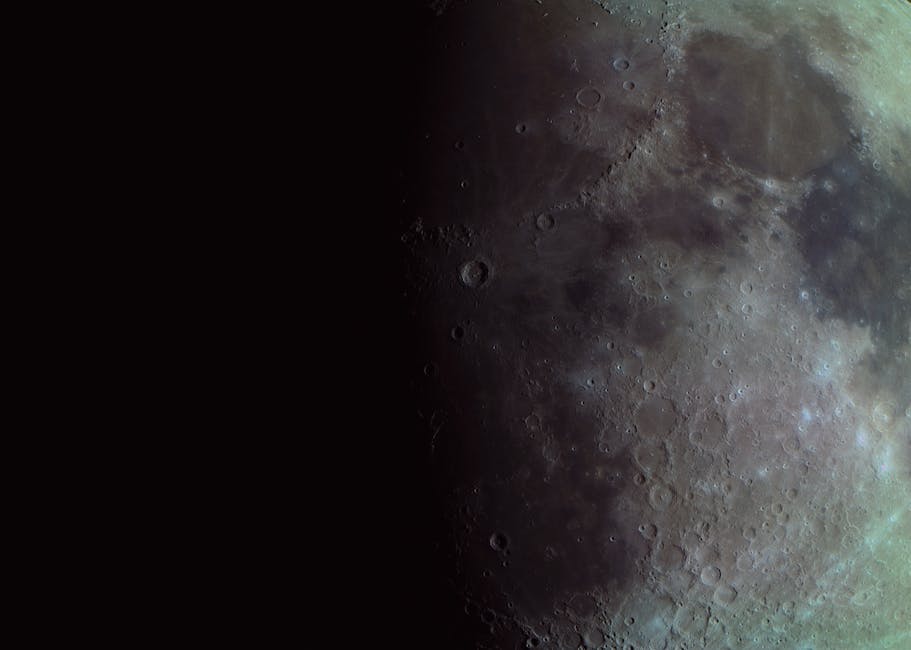
- The ‘dark side of the moon’ is a misnomer, as the far side receives the same amount of solar illumination as the near side.
- The far side of the moon has unexplored terrain and holds scientific secrets, making it a focal point for modern lunar exploration.
- Tidal locking causes the same face of the moon to always be visible from Earth, leading to the misconception of the ‘dark side’.
- The term ‘far side’ was coined by scientists to accurately describe the hidden lunar landscape.
- Understanding the distinction between the ‘dark side’ and ‘far side’ is crucial for framing the true nature of lunar exploration.
For decades, the term “dark side of the moon” has captured the public’s imagination, evoking images of a mysterious, unlit expanse. However, this popular phrase is a misnomer. The side of the moon that is perpetually shielded from Earth’s view is more accurately referred to as the “far side.” Unlike the commonly held belief, the far side is not devoid of sunlight; it receives the same amount of solar illumination as the near side. The real intrigue lies in its unexplored terrain and the scientific secrets it holds, making it a focal point for modern lunar exploration.
The Misnomer of the ‘Dark Side’

The misconception of the ‘dark side’ of the moon stems from the phenomenon of tidal locking, where the moon’s rotational period matches its orbital period around Earth. This means that the same face of the moon is always visible from Earth, leading to the notion that the opposite side is in perpetual darkness. In reality, the far side experiences the same phases of sunlight and shadow as the near side. The term ‘far side’ was coined by scientists to more accurately describe this hidden lunar landscape. Understanding this distinction is crucial for framing the true nature of lunar exploration and the scientific challenges it presents.
Why the Far Side Matters Now

The far side of the moon has become a critical area of interest due to its unique geological features and the potential for groundbreaking scientific discoveries. Unlike the near side, which has been extensively studied, the far side remains largely uncharted territory. Recent missions, such as China’s Chang’e-4 lander, have provided unprecedented insights into the far side’s composition and structure. These findings are reshaping our understanding of the moon’s formation and evolution, and they may hold clues to the early history of the solar system. The far side’s relative isolation from Earth’s radio interference also makes it an ideal location for future radio telescopes, which could open new windows into the cosmos.
Key Discoveries on the Far Side
One of the most significant discoveries on the far side of the moon was made by the Chang’e-4 mission in 2019. This mission successfully landed on the Von Kármán crater, located within the South Pole-Aitken basin, one of the largest and oldest impact craters in the solar system. The lander and its rover, Yutu-2, have since sent back a wealth of data, including evidence of ancient volcanic activity and the presence of materials that are rare on the near side. These findings suggest that the far side has a different geological history, which could provide valuable insights into the moon’s internal structure and the forces that shaped it. The mission also detected the first confirmed signs of water ice in the region, a discovery that has implications for future lunar habitation and resource utilization.
Scientific Analysis and Expert Insights
The far side of the moon presents a unique environment for scientific study, characterized by its rugged terrain and lack of maria (dark, flat areas formed by ancient lava flows). The absence of maria on the far side has puzzled scientists, who have proposed several theories to explain this geological anomaly. One hypothesis suggests that the far side’s crust is thicker, making it more difficult for lava to breach the surface. Another theory posits that the near side experienced more asteroid impacts, leading to the formation of maria. Data from the Chang’e-4 mission and other recent studies are helping to refine these theories. Dr. Maria Zuber, a planetary scientist at MIT, notes that the far side’s unique features offer a pristine record of the moon’s early history, which is crucial for understanding the broader context of planetary formation in the solar system.
Implications for Future Exploration
The exploration of the far side of the moon has far-reaching implications for both scientific research and practical applications. The potential for discovering water ice and other resources could significantly impact future missions to the moon, making it a more viable destination for sustained human presence. Additionally, the far side’s radio-quiet environment makes it an attractive location for constructing advanced radio telescopes, which could revolutionize our ability to observe distant galaxies and phenomena that are difficult to study from Earth. The insights gained from these missions will not only enhance our knowledge of the moon but also contribute to broader astronomical and planetary science research.
Expert Perspectives
While the scientific community is enthusiastic about the potential of the far side, there are differing views on the best approach to exploration. Some experts, like Dr. James Head from Brown University, advocate for a more systematic and long-term study, emphasizing the need for continuous data collection and analysis. Others, such as Dr. Clive Neal from the University of Notre Dame, believe that the far side should be a priority for human missions, given its resource potential and the strategic advantages it offers for future space endeavors. These contrasting perspectives highlight the multifaceted nature of lunar exploration and the importance of balancing scientific curiosity with practical objectives.
As the world turns its gaze toward the far side of the moon, several key questions remain. How will the discoveries on the far side influence our understanding of the moon’s role in the solar system? What technological advancements are needed to facilitate sustained human presence on this uncharted territory? These questions, along with ongoing missions and future plans, will shape the next chapter in lunar exploration and scientific discovery.