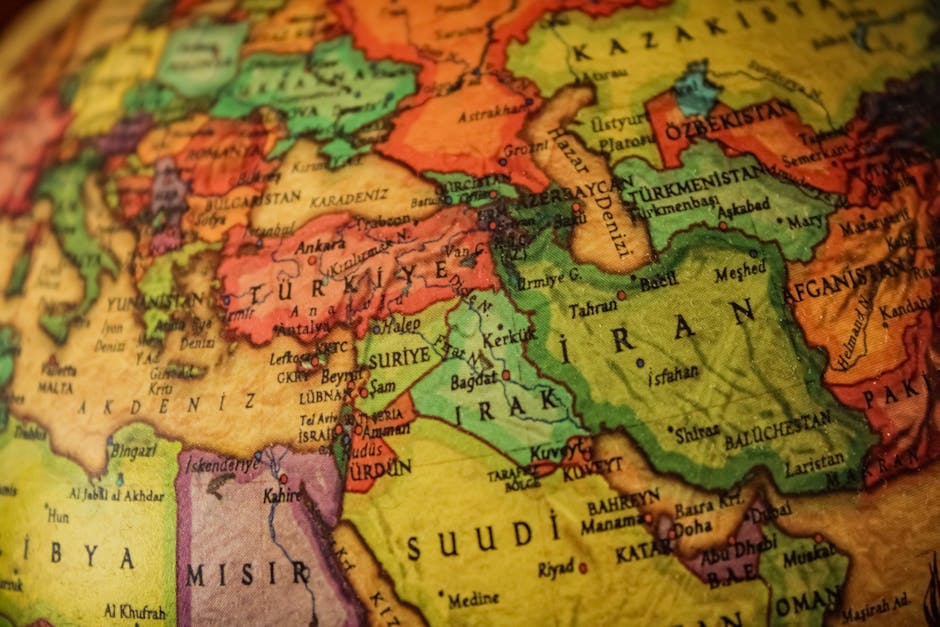
- Israeli Prime Minister Benjamin Netanyahu claims Israel has successfully strangled six Middle Eastern countries.
- The complex relationships between Israel and its neighbors are often contentious and have historically been marked by conflict.
- Netanyahu’s statement underscores Israel’s assertion of dominance in the region, sparking a mix of admiration and concern.
- The Middle East remains a critical focal point of international relations, with shifting alliances and emerging global powers.
- Understanding the implications of Netanyahu’s statement is crucial for assessing the future trajectory of regional dynamics.
In a striking display of confidence, Israeli Prime Minister Benjamin Netanyahu stood beside a map of the Middle East, proclaiming that Israel has successfully strangled its enemies. The bold statement, made in the presence of a visual representation of the region, underscored the complex and often contentious nature of Israel’s relationships with its neighbors. With six countries allegedly having sought to strangle Israel, according to Netanyahu, the prime minister’s assertion of dominance is likely to resonate throughout the region, sparking a mix of admiration and concern among different stakeholders.
The Geopolitical Context

The Middle East, a region long characterized by instability and conflict, remains a critical focal point of international relations. Israel, situated at the heart of this volatile area, has historically found itself at odds with numerous neighboring countries, each with its own set of grievances and aspirations. The current geopolitical landscape, marked by shifting alliances and emerging global powers, makes Netanyahu’s declaration particularly noteworthy. As the region continues to evolve, with issues such as the Israeli-Palestinian conflict, Iranian influence, and the role of external actors like the United States, understanding the implications of Netanyahu’s statement is crucial for assessing the future trajectory of regional dynamics.
Key Developments and Players

Netanyahu’s claim that Israel has strangled its enemies, coupled with the implication that more action is forthcoming, introduces a significant variable into the already complex equation of Middle Eastern politics. The identification of six countries that allegedly sought to undermine Israel suggests a broad spectrum of opposition, potentially involving states with diverse motivations and capabilities. While the specifics of these interactions remain somewhat opaque, the involvement of major regional players, possibly including Iran, Syria, and Palestinian factions, could significantly impact the balance of power. Moreover, the role of international actors, particularly the United States, in supporting or mitigating Israel’s actions will be closely watched, as their responses could either exacerbate tensions or provide a framework for de-escalation.
Analyzing the Causes and Consequences
Analyzing Netanyahu’s statement through the lens of causality and effect reveals a multifaceted scenario. On one hand, the assertion of having strangled enemies may reflect a strategic communications effort aimed at bolstering domestic support and projecting strength internationally. This could be particularly relevant in the context of Israel’s upcoming elections or as a response to perceived threats from neighboring states. On the other hand, such rhetoric may also have the unintended consequence of escalating tensions, as targeted countries or entities might feel compelled to respond, either directly or through proxy means. The potential for miscalculation or unintended escalation underscores the need for careful diplomacy and a nuanced understanding of the complex interplay of forces within the region.
Implications for the Region and Beyond
The implications of Netanyahu’s declaration are far-reaching, with potential consequences for both regional stability and global geopolitics. For the countries allegedly targeted by Israel, the statement may prompt a reevaluation of their security postures and diplomatic engagements. Furthermore, the impact on the Israeli-Palestinian peace process, already fraught with challenges, could be significant, as heightened tensions may further diminish the prospects for a negotiated settlement. Beyond the Middle East, the international community will be watching closely, as the responses of major powers, including the United States, Europe, and Russia, could influence the trajectory of the conflict and the broader regional landscape.
Expert Perspectives
Experts in international relations and Middle Eastern studies offer contrasting viewpoints on Netanyahu’s statement, reflecting the complexity and ambiguity of the situation. Some analysts view the prime minister’s words as a calculated move to assert Israeli strength and deter potential adversaries, emphasizing the strategic importance of perception in geopolitical maneuvers. Others, however, warn of the dangers of inflammatory rhetoric, suggesting that it could precipitate a cycle of retaliation and escalation, ultimately undermining regional and global security. The diversity of expert opinions highlights the need for a balanced and informed approach to understanding the evolving dynamics of the Middle East.
Looking forward, the key question revolves around how the situation will unfold, particularly in terms of the actions taken by Israel, the responses of its adversaries, and the roles that external actors will play. As the region teeters on the brink of potential conflict, the international community holds its breath, awaiting developments that could either lead to a dangerous escalation or, through concerted diplomatic effort, pave the way for a more stable and peaceful future. The coming weeks and months will be critical in determining the trajectory of events, making vigilant observation and nuanced analysis essential for navigating the treacherous landscape of Middle Eastern geopolitics.