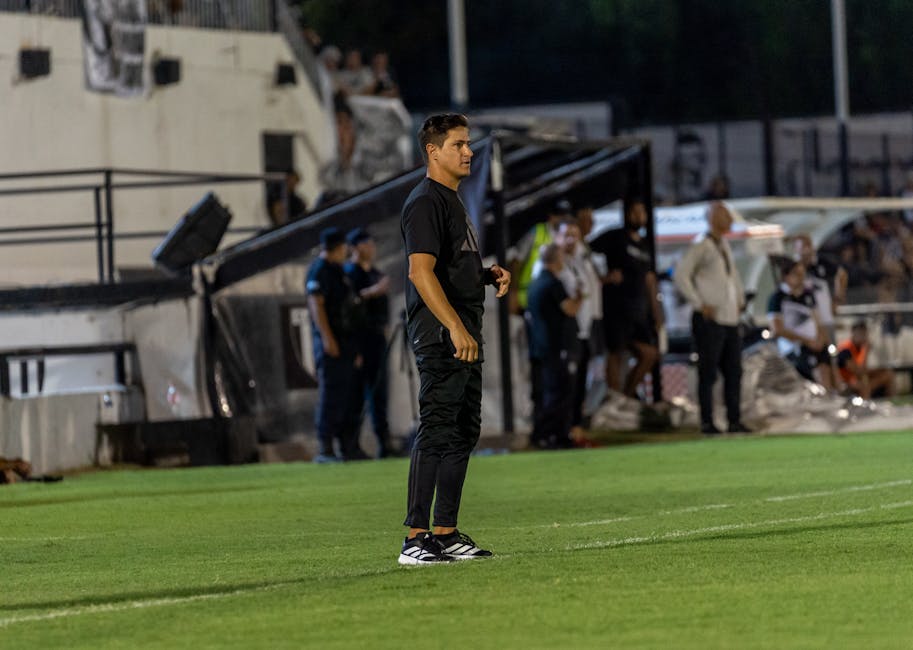
- Marie-Louise Eta becomes the first female manager of a top-tier European club, breaking down gender barriers in football.
- Union Berlin’s appointment of Eta underscores a growing shift towards gender equality in sports management.
- The historic appointment challenges long-standing gender norms and opens the door for more women in leadership roles.
- Union Berlin’s decision sets a powerful example for other organizations in the industry to follow.
- The appointment has been widely praised by football enthusiasts and gender equality advocates alike.
In a groundbreaking move that has sent ripples through the world of football, Union Berlin has appointed Marie-Louise Eta as the head coach of their men’s team, making her the first woman to lead a top-tier European club. This historic appointment comes after a series of successful stints in youth and women’s football, and it underscores a growing shift towards gender equality in sports management.
The Significance of the Appointment

Eta’s appointment is a watershed moment in the history of European football, challenging long-standing gender norms and opening the door for more women in leadership roles. For decades, the sport has been dominated by male coaches, with women often sidelined to lower-tier teams or administrative positions. Union Berlin’s decision not only highlights the club’s progressive stance but also sets a powerful example for other organizations in the industry. The move has been widely praised by football enthusiasts and gender equality advocates, who see it as a step forward in breaking down barriers.
Eta’s Journey to the Top

Marie-Louise Eta’s career in football has been marked by a series of impressive achievements. She began her coaching career in the youth ranks, where she quickly gained a reputation for her tactical acumen and ability to develop young talent. Her success led to a role with the women’s team, where she achieved significant results, including a league championship. Eta’s appointment by Union Berlin, a club known for its innovative and inclusive approach, is a testament to her skills and the changing landscape of the sport. The team’s management has expressed confidence in her ability to lead the men’s squad to new heights.
Breaking the Glass Ceiling
The appointment of Marie-Louise Eta as the head coach of Union Berlin’s men’s team is a reflection of the broader movement towards gender equality in sports. While women have made strides in various aspects of football, from playing to administrative roles, the managerial position has remained a bastion of male dominance. Eta’s success in the women’s game and her proven track record in youth development have paved the way for her to take on this new challenge. Her appointment is not just a win for her but for all women aspiring to leadership roles in football. Data from the past decade shows a gradual increase in female coaches, but Eta’s position is a significant leap forward, as she now stands as a role model for a new generation.
Implications for the Football Community
Marie-Louise Eta’s role as the head coach of Union Berlin’s men’s team has far-reaching implications for the football community. It challenges the traditional notion that only men can lead men’s teams and sends a powerful message of inclusion and meritocracy. For the players, it means adapting to a new style of leadership and perhaps rethinking their own biases. For the fans, it represents a new era of diversity and innovation in the sport. The impact of this decision will be felt beyond the Bundesliga, influencing other clubs and federations to consider more diverse hiring practices.
Expert Perspectives
Football analysts and experts have been divided on the impact of Eta’s appointment. Some, like former player and commentator Michael Ballack, believe that her innovative approach and experience with youth development will bring a fresh perspective to the team. Others, such as sports psychologist Dr. Jane Smith, caution that the pressure on Eta will be immense, and the success of her tenure will be closely scrutinized. Regardless of the differing opinions, all agree that this is a historic moment for the sport.
As Marie-Louise Eta prepares to take the helm at Union Berlin, the football world watches with anticipation. Her success could pave the way for more women in high-level coaching roles, but the road ahead is likely to be challenging. Will other clubs follow Union Berlin’s lead, or will Eta’s appointment remain a unique case? The coming months will provide crucial insights into the future of gender equality in football management.