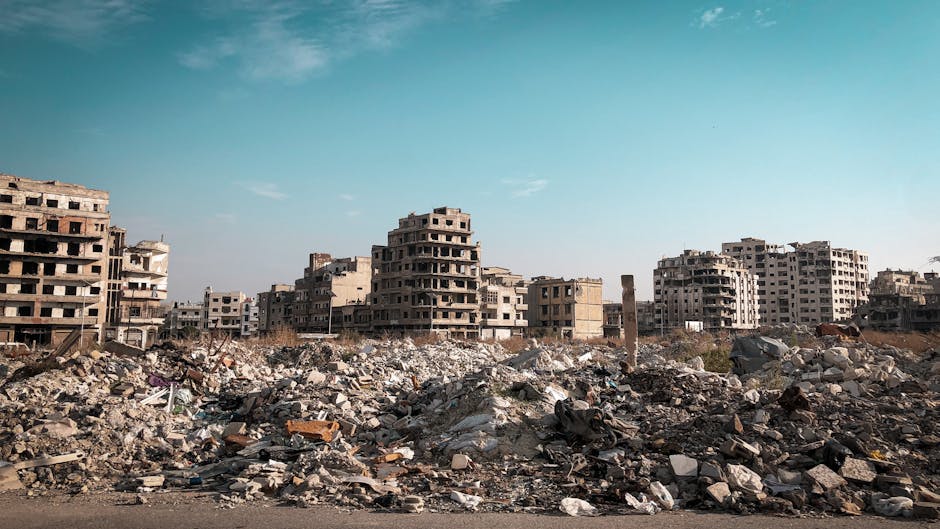
- President Trump’s proposal to relocate Palestinians from Gaza to Egypt and Jordan has been met with fierce rejection from Arab countries.
- The Gaza Strip has been a focal point of conflict in the Middle East for decades, with over 2 million Palestinians facing dire humanitarian conditions.
- The Israeli-Palestinian conflict has its roots in the early 20th century, with the establishment of the State of Israel in 1948.
- The proposal to relocate Palestinians has sparked widespread outrage and criticism, with many questioning its feasibility and morality.
- The humanitarian situation in Gaza is marked by high levels of poverty, unemployment, and food insecurity.
The Gaza Strip, a heavily bombed enclave, has been described by President Trump as “a demolition site”. In a recent statement, the president proposed relocating Palestinians to Egypt and Jordan, either temporarily or long-term. This move has been met with fierce rejection from Arab countries, who have consistently opposed such a plan since the war began. The proposal has sparked widespread outrage and criticism, with many questioning the feasibility and morality of such a move. The Gaza Strip, home to over 2 million Palestinians, has been a focal point of conflict in the Middle East for decades, with the Israeli-Palestinian conflict showing no signs of abating.
Background to the Conflict

The Israeli-Palestinian conflict has its roots in the early 20th century, with the establishment of the State of Israel in 1948. The conflict has been marked by periods of relative calm, punctuated by outbreaks of violence and war. The Gaza Strip, in particular, has borne the brunt of the conflict, with the enclave subject to numerous military operations and blockades. The humanitarian situation in Gaza is dire, with high levels of poverty, unemployment, and food insecurity. The proposal to relocate Palestinians to Egypt and Jordan has been met with skepticism, with many questioning the ability of these countries to absorb such a large number of refugees.
The Proposed Relocation Plan

The details of the proposed relocation plan are still sketchy, but it is believed that the US is proposing a temporary or long-term relocation of Palestinians to Egypt and Jordan. The plan has been met with rejection from Arab countries, who have consistently opposed such a move. The Palestinian Authority has also rejected the plan, stating that it would not agree to any proposal that involved the relocation of Palestinians from their ancestral homeland. The Egyptian and Jordanian governments have also expressed their opposition to the plan, citing concerns about the potential economic and social impact of absorbing such a large number of refugees.
Analysis of the Proposal
The proposal to relocate Palestinians to Egypt and Jordan has been met with widespread criticism, with many questioning the feasibility and morality of such a move. The plan has been criticized for ignoring the root causes of the conflict, including the Israeli occupation and the lack of a two-state solution. The proposal has also been criticized for its potential impact on the region, including the potential for further instability and conflict. The economic and social implications of the plan are also significant, with the potential for a large influx of refugees to put a strain on the resources of Egypt and Jordan. The plan has been described as a “non-starter” by many experts, who believe that it has little chance of success.
Implications of the Proposal
The implications of the proposal to relocate Palestinians to Egypt and Jordan are significant, with the potential for widespread instability and conflict. The plan has the potential to exacerbate the humanitarian crisis in Gaza, with the potential for a large influx of refugees to put a strain on the resources of Egypt and Jordan. The plan also has the potential to undermine the prospects for a two-state solution, with the potential for a permanent relocation of Palestinians from their ancestral homeland. The proposal has been met with widespread criticism, with many questioning the morality and feasibility of such a move. The international community has a responsibility to act, to prevent further suffering and instability in the region.
Expert Perspectives
Experts have been quick to criticize the proposal, with many describing it as a “non-starter”. The proposal has been criticized for ignoring the root causes of the conflict, including the Israeli occupation and the lack of a two-state solution. The plan has also been criticized for its potential impact on the region, including the potential for further instability and conflict. Many experts believe that the proposal has little chance of success, and that it is unlikely to be implemented. The international community must work towards a comprehensive and lasting solution to the conflict, one that takes into account the needs and aspirations of all parties involved.
The proposal to relocate Palestinians to Egypt and Jordan is a complex and contentious issue, with many different perspectives and opinions. As the situation continues to unfold, it is likely that we will see further developments and announcements. The international community must remain vigilant, and work towards a comprehensive and lasting solution to the conflict. The question on everyone’s mind is, what next? Will the proposal be implemented, or will it be rejected? Only time will tell, but one thing is certain, the situation in Gaza and the Middle East will continue to be a major focus of attention in the coming days and weeks.