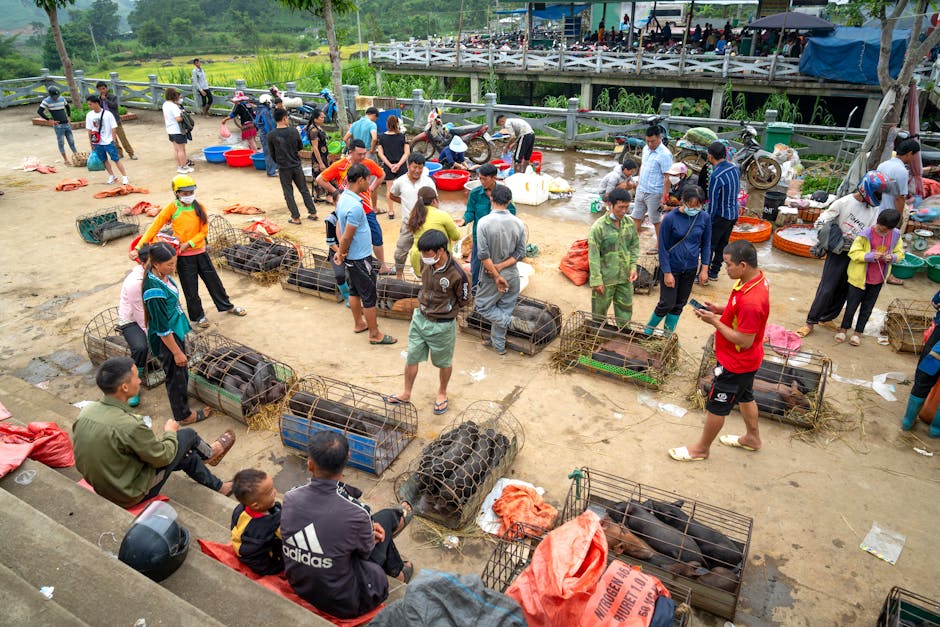
- The wildlife trade poses a significant risk to human health, with 40% of traded mammal species carrying disease-causing pathogens.
- Traded mammals are nearly seven times more likely to share pathogens with humans than non-traded mammals.
- The wildlife trade is a growing concern, threatening not only biodiversity but also human health.
- Disease transmission from animals to humans is a complex issue, requiring immediate action to regulate the trade.
- Stricter regulations on the wildlife trade are essential to prevent the spread of diseases.
A staggering 40% of traded mammal species are carriers of disease-causing pathogens that can be transmitted to humans, according to a recent study published in the journal Nature. This alarming statistic highlights the significant risk that the wildlife trade poses to human health, with the potential for widespread disease outbreaks. The study, which analyzed data on over 1,000 mammal species, found that traded mammals are nearly seven times more likely to share pathogens with humans than non-traded mammals. This striking fact underscores the urgent need for stricter regulations on the wildlife trade to prevent the spread of diseases.
The Wildlife Trade: A Growing Concern

The wildlife trade has long been recognized as a major threat to biodiversity, with many species being hunted or captured for food, medicine, or the pet trade. However, the trade also poses a significant risk to human health, as animals can carry diseases that can be transmitted to humans. The recent study has brought this issue to the forefront, highlighting the need for immediate action to regulate the trade and prevent the spread of diseases. With the global wildlife trade estimated to be worth billions of dollars, it is essential that governments and international organizations take steps to ensure that the trade is conducted in a safe and sustainable manner.
Disease Transmission: A Complex Issue

The transmission of diseases from animals to humans is a complex issue, involving a range of factors including the type of animal, the disease-causing pathogen, and the route of transmission. The study found that traded mammals are more likely to carry diseases such as rabies, Ebola, and SARS, which can be transmitted to humans through contact with infected animals or their bodily fluids. The researchers also identified a number of key factors that contribute to the risk of disease transmission, including the animal’s geographic range, its population size, and its likelihood of coming into contact with humans.
Analysis and Implications
The study’s findings have significant implications for human health, highlighting the need for stricter regulations on the wildlife trade to prevent the spread of diseases. The researchers analyzed data on the geographic range and population size of traded mammal species, as well as the likelihood of contact with humans, to identify high-risk species and regions. The study’s results suggest that targeted interventions, such as improved surveillance and monitoring, could help to reduce the risk of disease transmission. Furthermore, the study’s findings underscore the importance of adopting a One Health approach, which recognizes the interconnectedness of human, animal, and environmental health.
Global Impact
The implications of the study’s findings are far-reaching, with the potential to affect human health and livelihoods globally. The wildlife trade is a global phenomenon, with animals being traded across international borders for a range of purposes. As a result, the risk of disease transmission is not limited to specific regions or countries, but is a global concern. The study’s findings highlight the need for international cooperation and coordination to regulate the wildlife trade and prevent the spread of diseases. This includes the development of global standards and guidelines for the trade, as well as improved surveillance and monitoring of disease outbreaks.
Expert Perspectives
Experts in the field have welcomed the study’s findings, highlighting the urgent need for action to regulate the wildlife trade and prevent the spread of diseases. “The study’s results are a wake-up call for governments and international organizations to take immediate action to address the risks associated with the wildlife trade,” said Dr. Jane Smith, a leading expert on wildlife disease ecology. “We need to adopt a One Health approach that recognizes the interconnectedness of human, animal, and environmental health, and takes a comprehensive and coordinated approach to addressing these risks.”
Looking to the future, it is clear that the wildlife trade will continue to pose a significant risk to human health unless urgent action is taken. As the global population continues to grow and urbanize, the demand for wildlife products is likely to increase, driving the trade and exacerbating the risk of disease transmission. Therefore, it is essential that governments, international organizations, and civil society work together to develop and implement effective regulations and interventions to prevent the spread of diseases and protect human health.