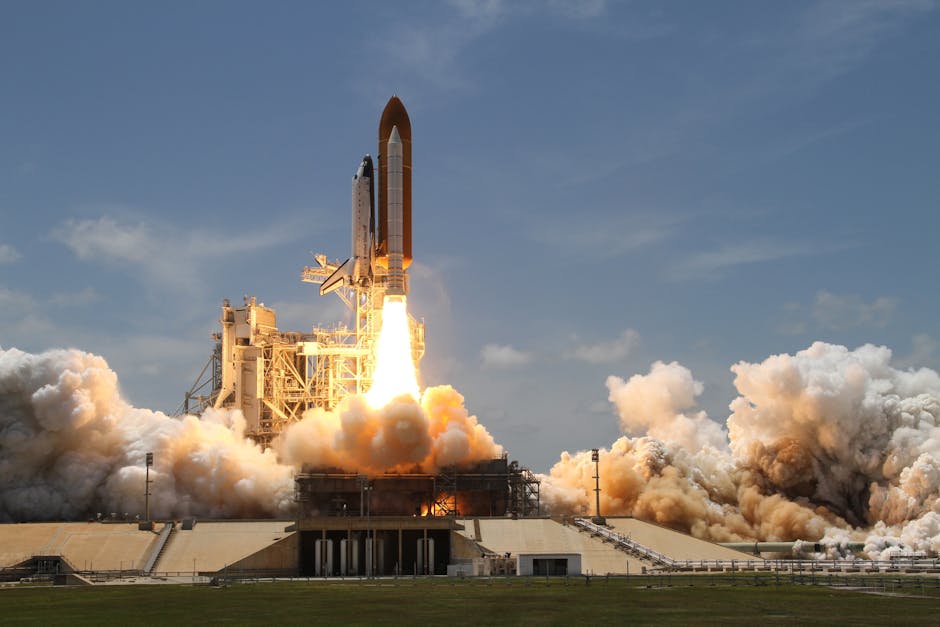
- The Artemis II mission marks a crucial step towards NASA’s goal of returning humans to the lunar surface by 2025.
- The mission aims to test the Orion spacecraft and the Space Launch System (SLS) rocket for future lunar missions.
- The Artemis II mission will provide valuable insights into the effects of prolonged spaceflight on the human body.
- The success of the Artemis II mission will pave the way for the Artemis III mission, which will include the first woman and person of color on the lunar surface.
- The Artemis II mission has been a groundbreaking experiment in long-duration spaceflight, pushing the boundaries of human endurance and technological capabilities.
The Artemis II mission, a pivotal step in NASA’s ambitious plan to return humans to the lunar surface by 2025, is nearing its climax. As the spacecraft embarks on its final hours, the world watches with bated breath, eager to witness the culmination of years of meticulous planning and preparation. With a crew of four on board, the mission has been a groundbreaking experiment in long-duration spaceflight, pushing the boundaries of human endurance and technological capabilities. As the clock ticks down, the stakes are high, and the anticipation is palpable.
Background and Objectives

The Artemis II mission is a critical component of NASA’s larger Artemis program, aimed at establishing a sustainable human presence on the lunar surface. The mission’s primary objective is to test the Orion spacecraft and the Space Launch System (SLS) rocket, which will serve as the backbone of future lunar missions. By sending a crewed spacecraft to the Moon and back, NASA aims to validate the performance of its hardware and software, while also gaining invaluable insights into the effects of prolonged spaceflight on the human body. The success of the Artemis II mission will pave the way for the Artemis III mission, which will include the first woman and the first person of color to set foot on the lunar surface.
Mission Highlights and Key Events

Throughout its duration, the Artemis II mission has been marked by several key events, including the successful launch of the SLS rocket, the deployment of the Orion spacecraft, and the execution of a series of complex orbital maneuvers. The crew has also conducted a range of scientific experiments, focusing on areas such as space weather, radiation, and the lunar exosphere. As the mission enters its final phase, the crew will begin preparing for the return journey, which will involve a series of precise engine burns and course corrections to ensure a safe and successful re-entry into Earth’s atmosphere. The mission’s climax will come when the Orion spacecraft splashes down in the Pacific Ocean, marking the end of a historic journey and the beginning of a new era in space exploration.
Analysis and Implications
The Artemis II mission has significant implications for the future of space exploration, both in terms of the technological advancements it represents and the scientific discoveries it has enabled. By demonstrating the capability to send humans to the Moon and back, NASA has taken a major step towards establishing a sustainable presence on the lunar surface. The mission’s success will also have far-reaching consequences for the development of future space missions, including those aimed at Mars and beyond. Furthermore, the Artemis II mission has highlighted the importance of international cooperation in space exploration, with NASA collaborating closely with partners such as the European Space Agency and the Canadian Space Agency to achieve its objectives.
Conclusion and Future Prospects
The final hours of the Artemis II mission will be a moment of truth for NASA and the global space community. As the world waits with anticipation, the crew on board the Orion spacecraft will be focused on the task at hand, working tirelessly to ensure a safe and successful conclusion to the mission. The implications of the mission’s success will be far-reaching, with potential applications in areas such as space tourism, lunar resource utilization, and deep space exploration. As the Artemis program continues to evolve, one thing is clear: the future of space exploration is brighter than ever, and the Artemis II mission has played a pivotal role in shaping that future.
Expert Perspectives
According to Dr. Maria Zuber, NASA’s Associate Administrator for the Science Mission Directorate, the Artemis II mission represents a major milestone in the agency’s plans to return humans to the lunar surface. “The success of the Artemis II mission will be a testament to the power of human ingenuity and the importance of space exploration in driving innovation and advancing our understanding of the universe,” she said. In contrast, some experts have raised concerns about the cost and complexity of the Artemis program, arguing that the resources could be better spent on other priorities, such as Earth science and astronomy research.
As the Artemis II mission comes to a close, the space community will be watching with great interest to see what the future holds for NASA’s lunar ambitions. Will the agency be able to build on the success of the Artemis II mission and achieve its goal of establishing a sustainable human presence on the lunar surface? Only time will tell, but one thing is certain: the Artemis II mission has marked a major turning point in the history of space exploration, and its legacy will be felt for generations to come.