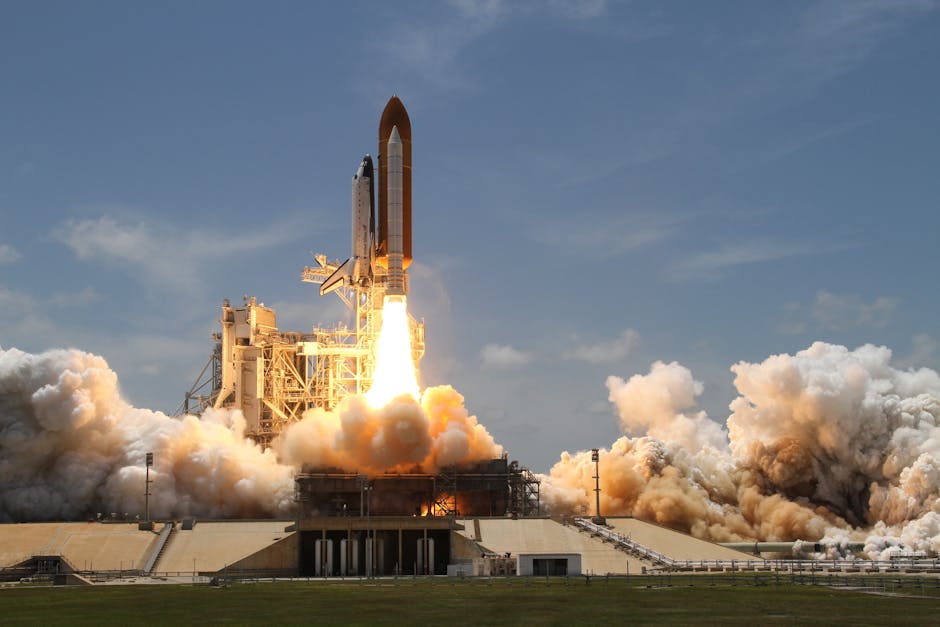
- NASA’s Artemis II mission successfully completed a lunar flyby, paving the way for future human exploration of the lunar surface and beyond.
- The mission tested the capabilities of the Space Launch System (SLS) rocket and the Orion spacecraft.
- The spacecraft must withstand intense heat and friction during re-entry into the Earth’s atmosphere.
- The Artemis II mission has been years in the making, with significant resources and expertise invested into its development.
- The mission’s re-entry phase poses a unique set of challenges, requiring careful planning and execution to ensure a safe and successful splashdown.
As the world watches with bated breath, NASA’s Artemis II mission is nearing its grand finale – a splashdown on Earth that will mark the end of a historic journey to the Moon. With astronauts having successfully completed their lunar flyby, the spacecraft is now gearing up for re-entry into the Earth’s atmosphere, a feat that requires precision and skill. The Artemis II mission has been a groundbreaking endeavor, paving the way for future human exploration of the lunar surface and beyond. As the spacecraft prepares for its return, the world is holding its breath, eager to witness the culmination of this remarkable achievement.
The Journey to the Moon

The Artemis II mission has been years in the making, with NASA having invested significant resources and expertise into its development. The mission’s primary objective was to send astronauts on a lunar flyby, testing the capabilities of the Space Launch System (SLS) rocket and the Orion spacecraft. With the mission having achieved its objectives, the focus now shifts to the re-entry phase, which poses a unique set of challenges. The spacecraft must withstand intense heat and friction as it enters the Earth’s atmosphere, requiring careful planning and execution to ensure a safe and successful splashdown. As the world waits with anticipation, the Artemis II team is working tirelessly to ensure that every aspect of the re-entry is meticulously planned and executed.
Key Mission Details

The Artemis II mission has been a complex and highly sophisticated endeavor, involving the collaboration of thousands of engineers, scientists, and technicians. The mission’s crew, comprising experienced astronauts, has undergone rigorous training to prepare for the challenges of space travel. The Orion spacecraft, designed to carry humans on deep space missions, has performed flawlessly, providing a safe and reliable platform for the astronauts. As the spacecraft prepares for re-entry, the mission team is closely monitoring its systems, ensuring that every aspect of the spacecraft is functioning nominally. With the spacecraft’s systems performing within nominal parameters, the stage is set for a successful splashdown, marking the end of a remarkable journey to the Moon.
Analysis and Implications
The success of the Artemis II mission has significant implications for the future of space exploration. The mission has demonstrated the capabilities of the SLS rocket and the Orion spacecraft, paving the way for future human missions to the lunar surface. The data collected during the mission will be crucial in informing the development of future missions, providing valuable insights into the challenges and opportunities of deep space travel. As the space agency looks to the future, the Artemis II mission will serve as a vital stepping stone, enabling NASA to push the boundaries of human exploration and achieve its ambitious goals for space travel. With the mission’s success, the world is one step closer to realizing the dream of establishing a sustainable human presence on the lunar surface.
Re-entry and Recovery
The re-entry phase of the Artemis II mission is a critical and complex process, requiring precise planning and execution. The spacecraft must withstand intense heat and friction as it enters the Earth’s atmosphere, posing significant challenges to its structural integrity. The mission team has developed sophisticated systems to mitigate these risks, including a heat shield designed to protect the spacecraft from the intense heat generated during re-entry. As the spacecraft prepares for splashdown, the recovery team is on standby, ready to retrieve the spacecraft and its crew, marking the end of a remarkable journey to the Moon. The successful recovery of the spacecraft will be a testament to the skill and expertise of the mission team, demonstrating the capabilities of the Orion spacecraft and the SLS rocket.
Expert Perspectives
Experts in the field of space exploration are hailing the Artemis II mission as a major breakthrough, marking a significant step towards establishing a sustainable human presence on the lunar surface. According to Dr. Maria Zuber, NASA’s Associate Administrator for the Science Mission Directorate, “The Artemis II mission has been a resounding success, demonstrating the capabilities of the SLS rocket and the Orion spacecraft. The mission has paved the way for future human missions to the lunar surface, and we are eager to build on this success in the years to come.” As the space agency looks to the future, experts are emphasizing the need for continued investment and support for space exploration, highlighting the significant benefits and opportunities that it presents.
As the Artemis II mission comes to a close, the world is left to ponder the implications of this remarkable achievement. What does the future hold for space exploration, and how will the success of the Artemis II mission shape the course of human spaceflight? As experts and enthusiasts alike look to the future, one thing is clear – the Artemis II mission has marked a significant step towards a new era of space exploration, one that promises to be filled with discovery, innovation, and wonder. With the mission’s success, the world is one step closer to realizing the dream of establishing a sustainable human presence on the lunar surface, and the possibilities are endless.