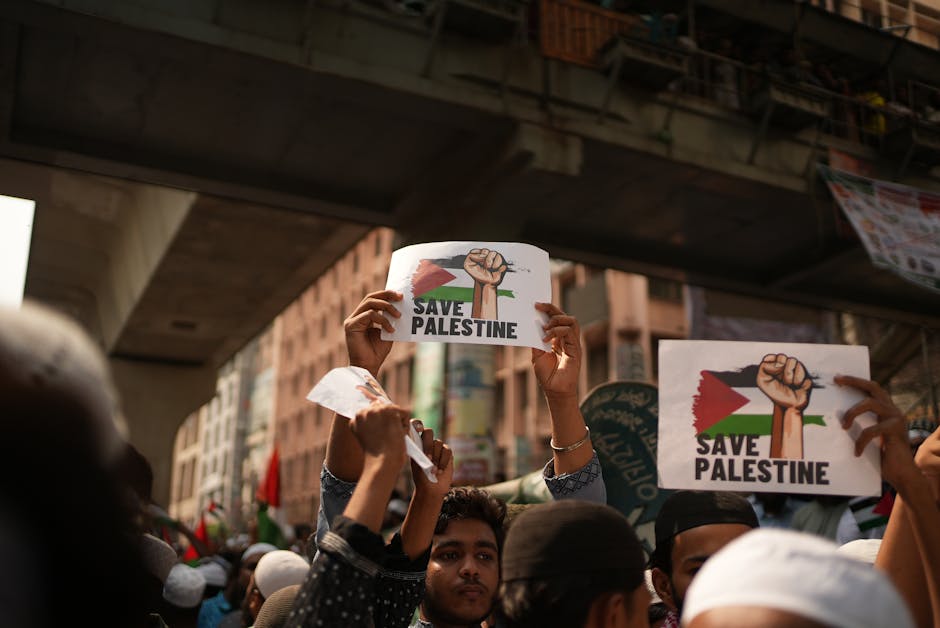
- South Korea’s president has publicly criticized Israel’s treatment of Palestinians, sparking a diplomatic row between the two nations.
- Israel is facing increased international scrutiny over its actions in the occupied territories, with many countries calling for a two-state solution.
- The Israeli government has long been accused of human rights abuses against the Palestinian population, further straining its relationships with other countries.
- The row with South Korea is the latest example of diplomatic fallout Israel is facing over its policies in the region.
- The international community is growing increasingly frustrated with the lack of progress towards a two-state solution in the Israeli-Palestinian conflict.
A striking fact has emerged in the midst of the ongoing Israeli-Palestinian conflict: South Korea’s president has publicly expressed disappointment over Israel’s response to global criticism regarding its treatment of Palestinians. This development has sparked a row between the two nations, with Israel facing increased scrutiny over its actions in the occupied territories. The Israeli government has long been accused of human rights abuses against the Palestinian population, and the South Korean president’s comments have added fuel to the fire. With the international community increasingly vocal about the need for a two-state solution, Israel’s relationship with other countries is under the microscope. The row with South Korea is just the latest example of the diplomatic fallout Israel is facing over its policies in the region.
Background to the Dispute

The current dispute between Israel and South Korea has its roots in the long-standing Israeli-Palestinian conflict. The issue of Palestinian abuse has been a contentious one for decades, with Israel facing criticism from the international community over its treatment of the Palestinian population. The South Korean president’s comments are significant because they reflect a growing trend of countries speaking out against Israel’s actions in the occupied territories. The global community has become increasingly frustrated with the lack of progress towards a two-state solution, and Israel’s response to criticism has been seen as inadequate. As a result, countries like South Korea are beginning to take a more vocal stance on the issue, which is contributing to the growing diplomatic tensions between Israel and other nations.
Key Details of the Row

The row between Israel and South Korea began when the South Korean president stated that it was disappointing that Israel does not ‘even once reflect on criticisms from around the world’. The comments were seen as a rebuke of Israel’s response to global criticism, and they have sparked a heated debate between the two nations. Israel has long maintained that it is committed to peace and is willing to negotiate a two-state solution, but its actions in the occupied territories have been widely criticized. The South Korean president’s comments have been supported by other countries, which have also expressed concerns about Israel’s treatment of the Palestinian population. As the dispute continues to escalate, it remains to be seen how Israel will respond to the growing criticism from the international community.
Analysis of the Conflict
An analysis of the conflict reveals that the row between Israel and South Korea is part of a larger trend of diplomatic tensions between Israel and other countries. The Israeli government’s actions in the occupied territories have been widely criticized, and the global community is becoming increasingly frustrated with the lack of progress towards a two-state solution. The South Korean president’s comments reflect a growing sense of urgency among countries to address the issue of Palestinian abuse and to find a solution to the conflict. Experts point out that the dispute is not just about Israel’s relationship with South Korea, but also about its relationship with the broader international community. As the conflict continues to escalate, it is likely that we will see more countries speaking out against Israel’s actions in the occupied territories.
Implications of the Dispute
The implications of the dispute between Israel and South Korea are far-reaching. The row has significant implications for Israel’s relationships with other countries, particularly in Asia. South Korea is an important economic partner for Israel, and the dispute could have significant economic consequences. Furthermore, the dispute has implications for the broader Middle East peace process. The international community is looking for a solution to the Israeli-Palestinian conflict, and the row between Israel and South Korea is a setback to these efforts. As the dispute continues to escalate, it remains to be seen how it will affect the prospects for a two-state solution and the broader regional stability.
Expert Perspectives
Experts have weighed in on the dispute, with some arguing that the South Korean president’s comments are a significant development in the Israeli-Palestinian conflict. Others have pointed out that the dispute is part of a larger trend of diplomatic tensions between Israel and other countries. According to one expert, ‘the row between Israel and South Korea reflects a growing sense of frustration among countries with Israel’s actions in the occupied territories’. Another expert notes that ‘the dispute has significant implications for Israel’s relationships with other countries and for the broader Middle East peace process’.
Looking to the future, it remains to be seen how the dispute between Israel and South Korea will be resolved. One open question is how Israel will respond to the growing criticism from the international community. Will the Israeli government take steps to address the concerns of the global community, or will it continue to maintain its current stance on the issue? The answer to this question will have significant implications for the prospects of a two-state solution and for the broader regional stability. As the dispute continues to unfold, it is likely that we will see more countries speaking out against Israel’s actions in the occupied territories, which will only add to the pressure on the Israeli government to change its policies.