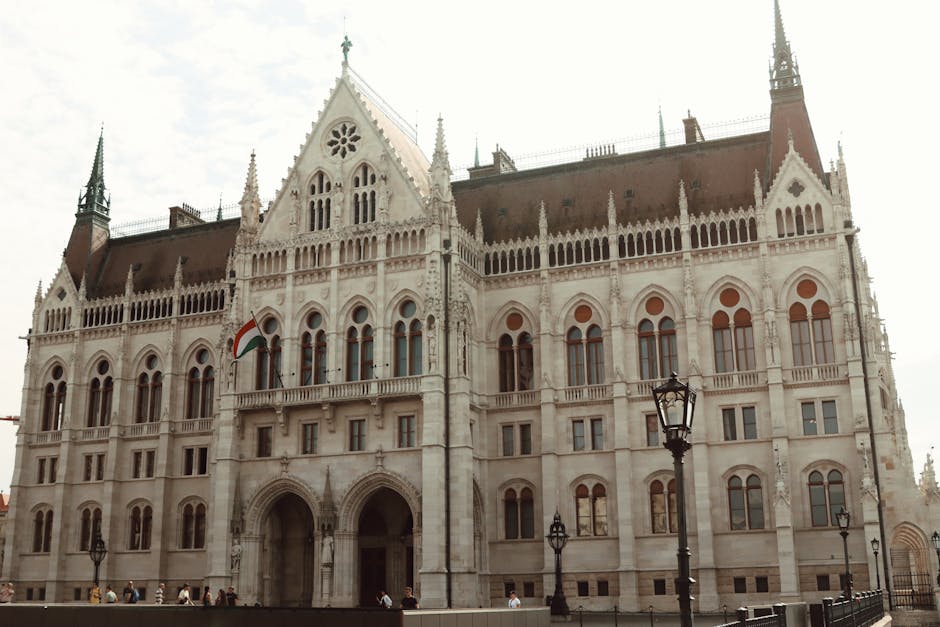
- Hungary’s parliamentary election has significant implications for its relations with the EU and its democratic trajectory.
- Prime Minister Viktor Orban’s Fidesz party is facing its first closely contested election, with a united opposition challenging its dominance.
- Hungarians are dissatisfied with corruption, economic inequality, and the government’s handling of the COVID-19 pandemic.
- The opposition has united behind a single candidate, Peter Marki-Zay, to unseat Orban and his party.
- The election has been marked by controversy, including allegations of undermining democratic institutions and the rule of law.
- → The Path to Sunday’s Election
- →
The key details of the election revolve around the main players and the issues that are driving the campaign. Orban’s Fidesz party is facing off against the united opposition, which includes a broad spectrum of parties from the left to the right. The opposition has focused its campaign on issues such as corruption, the need for greater transparency and accountability in government, and improving the economy to benefit all Hungarians, not just a select few. Meanwhile, Orban has campaigned on his record, highlighting his government’s achievements in areas such as job creation and border security, while also employing divisive rhetoric to mobilize his base.
Analysis of the Election’s Dynamics - → Implications for Hungary and Beyond
- → Expert Perspectives
As Hungary prepares to go to the polls on Sunday, Prime Minister Viktor Orban is facing the first closely contested parliamentary election of his tenure, with his Fidesz party’s dominance being challenged by a united opposition. This election is being keenly watched, not just within Hungary but across Europe, as it has significant implications for the country’s relations with the European Union and its democratic trajectory. Orban, known for his nationalist and populist policies, has been in power since 2010, and his rule has been marked by controversy, including allegations of undermining democratic institutions and the rule of law.
The Path to Sunday’s Election

The background to this election is complex, with Hungary’s political landscape having evolved significantly over the past decade. Orban’s Fidesz party has enjoyed a supermajority in the parliament, allowing it to pass laws with relative ease, including those that have been criticized for consolidating power and limiting civil liberties. However, the opposition, which has historically been fragmented, has managed to unite behind a single candidate, Peter Marki-Zay, in a bid to unseat Orban and his party. This unity, coupled with growing dissatisfaction among Hungarians over issues such as corruption, economic inequality, and the government’s handling of the COVID-19 pandemic, has made the election more competitive than anticipated.
The key details of the election revolve around the main players and the issues that are driving the campaign. Orban’s Fidesz party is facing off against the united opposition, which includes a broad spectrum of parties from the left to the right. The opposition has focused its campaign on issues such as corruption, the need for greater transparency and accountability in government, and improving the economy to benefit all Hungarians, not just a select few. Meanwhile, Orban has campaigned on his record, highlighting his government’s achievements in areas such as job creation and border security, while also employing divisive rhetoric to mobilize his base.
Analysis of the Election’s Dynamics

An analysis of the election’s dynamics reveals a complex interplay of factors that will influence the outcome. The election is not just about Orban or his party; it is also about the future direction of Hungary and its place within Europe. The European Union has been critical of Orban’s government over its erosion of democratic norms and the rule of law, and the outcome of the election will be closely watched in Brussels. Moreover, the election has significant implications for the balance of power within the EU, as Hungary has been a key player in the bloc’s internal debates, often aligning itself with other conservative and nationalist governments.
Implications for Hungary and Beyond
The implications of this election are far-reaching, affecting not just Hungary but the broader European political landscape. A victory for the opposition could signal a shift towards a more liberal and pro-European orientation for Hungary, potentially altering the country’s relationships with its EU partners. On the other hand, if Orban’s Fidesz party manages to secure another term, it could embolden other nationalist and populist movements across Europe, potentially leading to further polarization and challenges to the EU’s cohesion and democratic values.
Expert Perspectives
Experts offer contrasting viewpoints on the potential outcomes and implications of the election. Some see the election as a critical moment for Hungarian democracy, with the potential to either consolidate authoritarian tendencies or usher in a new era of democratic renewal. Others highlight the election’s significance for the European Union, suggesting that the outcome could influence the trajectory of EU policy and the balance of power within the bloc. Additionally, there are those who caution that regardless of the outcome, Hungary’s relations with the EU and its internal political dynamics will remain complex and potentially contentious.
Looking forward, the question on everyone’s mind is what the future holds for Hungary and its relations with the European Union. Will the election mark a turning point in Hungary’s democratic development, or will it reinforce existing trends? The answer to this question will depend on a variety of factors, including the election’s outcome, the responses of the EU and other international actors, and the internal dynamics within Hungary. As the country prepares to go to the polls, one thing is certain: the outcome of this election will have significant and far-reaching implications, both for Hungary and for the broader European project.