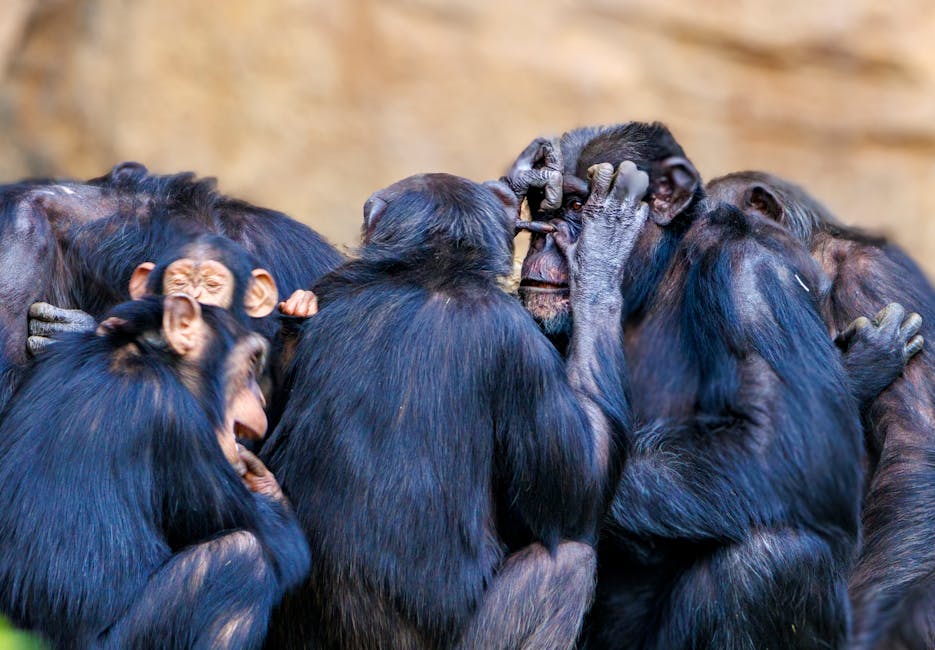
- Wild chimpanzees have been observed engaging in coordinated attacks, a behavior never seen before in their species.
- The Ngogo chimpanzee group, one of the largest and most studied in the world, has been divided following the attacks.
- Researchers believe the attacks may have been triggered by a combination of factors, including competition for resources and social dynamics.
- Chimpanzees displayed nervous behavior and reassurance- seeking before the attacks, indicating a complex social structure.
- The observed behavior raises questions about the complexities of chimpanzee social structures and the motivations behind their actions.
A shocking incident of coordinated attacks between two groups of wild chimpanzees has been recorded in Uganda’s Kibale national park. The event, which occurred in June 2015, was observed by primatologist Aaron Sandel, who was studying the Ngogo chimpanzee group at the time. According to Sandel, the chimpanzees displayed nervous behavior as other members of their wider group approached, grimacing and touching each other for reassurance.
Coordinated Attacks and Community Division

The observed behavior was followed by a series of coordinated attacks between the two groups of chimpanzees, resulting in a division of the community. The attacks were characterized by strategic planning and cooperation among the chimps, with each group targeting specific members of the opposing group. This level of coordination and organization has never been seen before in wild chimpanzees, and researchers are still working to understand the motivations behind this behavior.
Background and Context

The Ngogo chimpanzee group, which is one of the largest and most well-studied chimpanzee communities in the world, has been the subject of extensive research for several decades. The group’s social dynamics and behavior have been well-documented, but this recent incident of internal conflict has raised new questions about the complexities of chimpanzee social structures. Researchers believe that the attacks may have been triggered by a combination of factors, including competition for resources and social status.
What to Watch
As researchers continue to study the divided chimpanzee community, they are eagerly awaiting the next developments in this unprecedented situation. The team is expected to release further findings on the long-term effects of the conflict on the chimps’ behavior and social structures. Additionally, the study’s results may have significant implications for our understanding of human conflict and cooperation, and could potentially inform strategies for resolving disputes and promoting peaceful coexistence.